Haylie Pfeffer

Haylie Pfeffer, Digital Editor, holds a degree in equine studies with a concentration in communications and a minor in social media marketing. She is a Pennsylvania native and, as a horse owner herself, has a passion for helping owners provide the best care for their horses. When she is not writing or in the barn, she is spending time with her dog, Clementine.

Articles by: Haylie Pfeffer

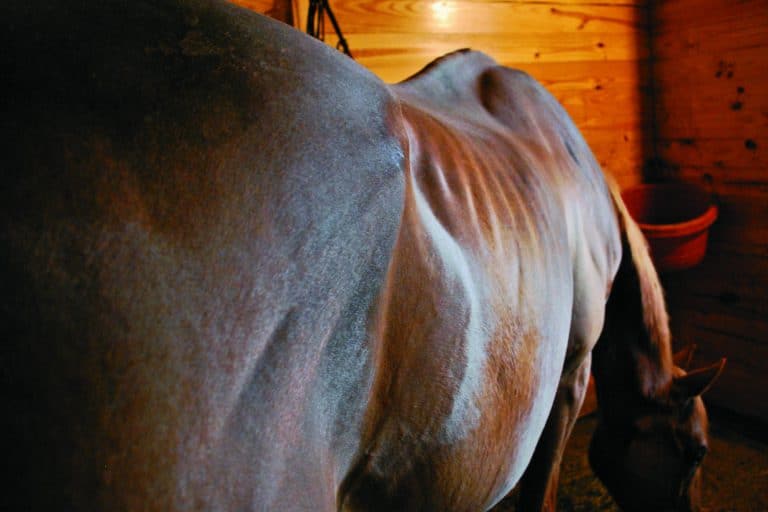
Shock Wave One Year Later

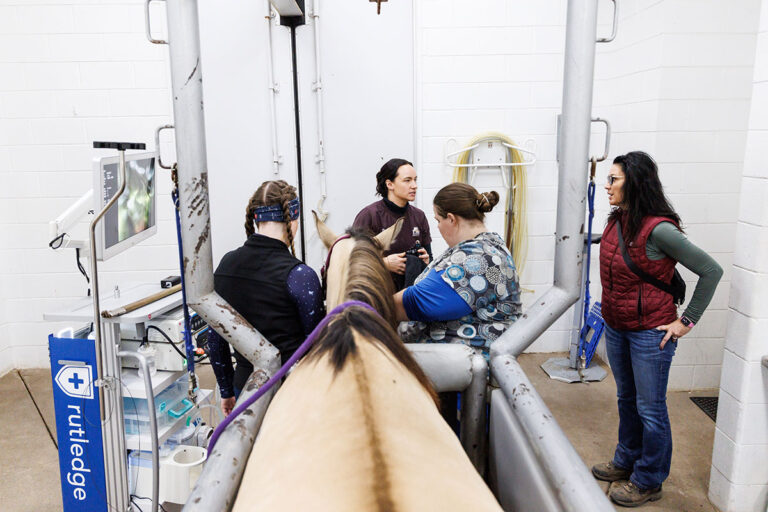
Scott McClure, DVM, PhD, an assistant professor in the Department of Veterinary Clinical Sciences at Iowa State University, has been at the helm of much of the shock wave therapy research performed in horses over the past five years. At HMT’s
Read More

Horses Need Special Winter Care Too

From the University of Illinois College of Veterinary Medicine Veterinary Extension/CEPS

Most animals that live outside need special care during cold months, and horses are no exception.

Maintenance of the hooves is as important during the winter months as it is the rest of the year. Many horses encounter problems with their feet in winter because the owner fails to

Read More

Track Surface Conditions Influence Likelihood of Racing Fractures

Track surface conditions play an important role in the risk of bone fractures in racing Thoroughbreds. Unfavorable conditions of turf and dirt impair the natural shock-absorbing mechanisms of the equine limb,”P>Track surface conditions play an important role in the risk of bone fractures in racing Thoroughbreds. Unfavorable conditions of turf and dirt impair the natural shock-absorbing mechanisms of th”>Track surface conditions play an important role in the risk of bone fractures in racing Thoroughbreds. Unfavorable conditions of turf and dirt impair the natural shock-absorbing mec”Track surface conditions play an important role in the risk of bone fractures in racing Thoroughbreds. Unfavorable conditions of turf and dirt impair the natural shock-a”FONT face=Times New Roman>Track surface conditions play an important role in the risk of bone fractures in racing Thoroughbreds. Unfavorable conditions of turf and dirt impair the natu”ONT face=Times New Roman>Track surface conditions play an important role in the risk of bone fractures in racing Thoroughbreds. Unfavorable conditions of turf and dirt impai”NT face=Times New Roman>Track surface conditions play an important role in the risk of bone fractures in racing Thoroughbreds. Unfavorable conditions of turf and d”T face=Times New Roman>Track surface conditions play an important role in the risk of bone fractures in racing Thoroughbreds. Unfavorable conditions of tu” face=Times New Roman>Track surface conditions play an important role in the risk of bone fractures in racing Thoroughbreds. Unfavorable condition”face=Times New Roman>Track surface conditions play an important role in the risk of bone fractures in racing Thoroughbreds. Unfavorable con”ace=Times New Roman>Track surface conditions play an important role in the risk of bone fractures in racing Thoroughbreds. Unfavorabl”ce=Times New Roman>Track surface conditions play an important role in the risk of bone fractures in racing Thoroughbreds. Unfavo”e=Times New Roman>Track surface conditions play an important role in the risk of bone fractures in racing Thoroughbreds. Unf”=Times New Roman>Track surface conditions play an important role in the risk of bone fractures in racing Thoroughbreds. U”Times New Roman>Track surface conditions play an important role in the risk of bone fractures in racing Thoroughbreds. “Times New Roman>Track surface conditions play an important role in the risk of bone fractures in racing Thoroughbreds. “imes New Roman>Track surface conditions play an important role in the risk of bone fractures in racing “mes New Roman>Track surface conditions play an important role in the risk of bone fractu”es New Roman>Track surface conditions play an important role in the risk o”s New Roman>Track surface conditions play an important role i” New Roman>Track surface conditions play an impor”New Roman>Track surface conditions pla”ew Roman>Track surface condi”w Roman>Track surfa” Roman>Trac”Roman

Read More

EHV-1 Kills Two Michigan Racehorses

At least two horses at Northville Downs Standardbred racetrack in Northville, Mich., contracted equine herpesvirus type 1 (EHV-1) and were euthanatized. The first case was discovered Dec. 14, when a 6-year-old Standardbred gelding began exhibiting classic signs of the neurological form of herpesvirus type-1 (EHV-1) myeloencephalopathy (EHM). After the horse was taken to the Diagnostic Center

Read More

AQHA Set to Drug Test An Additional 300 Shows

The American Quarter Horse Association (AQHA) will test for performance-enhancing medications at approximately 300 approved shows. The efforts to protect the American Quarter Horse comes from a recommendation made by a drug and medications task

Read More

Crunching the Numbers: California’s Equine WNV Mortality Rate

California horse owners have been keenly aware of the problem presented by West Nile virus (WNV) in 2004, but the problem took a deadly turn last year. The virus was discovered in all but one of the Golden State’s 58 counties, leaving only Del Norte County without any reported cases.

According to the California Department of Health Services, 42.2% of reported equine WNV cases in 2004

Read More

Britain’s EVA Case Described

Britain’s Department of Environment, Farming and Rural Affairs (Defra) has announced that its recent case of equine viral arteritis (EVA) occurred in a non-Thoroughbred stallion which was passing through the country from Holland to New Zealand.

The 5-year-old Warmblood stallion was in quarantine at the time at the National Stud in Newmarket when a routine blood test in October reveale

Read More

Fetotomy in the Mare

Even if a fetus is dead before foaling is finished, the time spent manipulating the fetus is still critical. If you are far from an equine hospital where a Cesarean section could be performed to extract the fetus, a fetotomy might be your best option to save the life and future fertility of the mare.

“The aim of a fetotomy is to rapidly decrease the size of a fetus such that safe

Read More

AAEP Announces Unwanted Horse Summit

The American Association of Equine Practitioners (AAEP) has announced plans for hosting an Unwanted Horse Summit. The Summit, a one-day conference bringing equine industry leaders together to address the problem of unwanted horses, will take place Tuesday, April 19, 2005, during the American Horse Council’s annual meeting in Washington, D.C.

“Just as in the dog and cat populations,

Read More

Leptospirosis in Central Kentucky

High incidences of leptospirosis-induced abortions in Central Kentucky horses could be caused by a tandem effect of temperature and precipitation in certain years, said Capt. David Hall of the U.S. Air Force, who defended his Masters thesis on the subject at the University of Kentucky’s Gluck Equine Research Center in Lexington on Dec. 15.

Leptospirosis is one of the most widespread

Read More

Equine Viral Arteritis Detected in Suffolk, U.K.

The United Kingdom’s Department for the Environment, Food, and Rural Affairs (Defra) announced Dec. 17 that it imposed restrictions on Oct. 29 on a 5-year-old stallion on a premises in the Newmarket area of Suffolk following a positive blood test result for equine viral arteritis (EVA). The horse’s semen was tested, the outcome of which was also positive.

The stallion has been in

Read More

How Racehorses Make the Transition to Stallions

The millions and millions of dollars on the table for successful stallions make it imperative that the training they receive for their second careers be exact, coordinated to give the young stallion the right environment and encouragement to ply his new trade.

Read More

Advances in Artificial Insemination

Artificial insemination (AI) is becoming an increasingly popular method for breeding horses, and with that comes advances in the timing methods used to inseminate mares. “Breeders have embraced the use of transported cooled semen for all the benefits associated with shipping semen to mares as opposed to shipping valuable mares and foals to stallions for live cover or on-farm AI,” said Paul R.

Read More

AAEP 50th Annual Convention Enjoys Record Attendance

Nearly 6,300 veterinary professionals, guests and exhibitors attended the American Association of Equine Practitioners’ (AAEP) 50th Annual Convention in Denver, Colo., breaking the meeting’s attendance record once again. The convention, held Dec. 4-8, featured nearly 100 scientific presentations, a sold-out trade show and successful equine health seminar for horse owners.

“Once again,

Read More

More From The Horse

Fine art horse nose with black copy space
checking horse for ulcers
feeding healthy hard keepers
horse nose

Stay on top of the most recent Horse Health news with

FREE weekly newsletters from TheHorse.com

Sponsored Content

Weekly Poll

sponsored by:

What is your biggest challenge when caring for horses in hot weather?
50 votes · 50 answers

Readers’ Most Popular

The Horse
Privacy Overview

This website uses cookies so that we can provide you with the best user experience possible. Cookie information is stored in your browser and performs functions such as recognising you when you return to our website and helping our team to understand which sections of the website you find most interesting and useful.