Haylie Pfeffer

Haylie Pfeffer, Digital Editor, holds a degree in equine studies with a concentration in communications and a minor in social media marketing. She is a Pennsylvania native and, as a horse owner herself, has a passion for helping owners provide the best care for their horses. When she is not writing or in the barn, she is spending time with her dog, Clementine.

Articles by: Haylie Pfeffer

FEI Task Force on Doping and Medication Policy Appointed

At its recent meeting in Buenos Aires, Argentina, the Federation Equestre Internationale (FEI, the international governing body of equine sport) Bureau decided to establish a task force to reassess the policies necessary for the elimination of abusive and illegal performance enhancing drugs and to review the general medication control of horses.

The Task Force will be composed of the

Read More

New Discovery Treats Antibiotic-Resistant Bacteria

A new scientific discovery soon could provide an alternative to antibiotics for treating bacterial infections in horses. In the September issue of Nature, microbiologists at the University of California, Los Angeles, reported that bacteriophages–viruses that infect bacteria–can be genetically engineered to seek out and destroy specific types of disease-causing bacteria.

At

Read More

New Supplement Targets Digestive Tract Health

A new product has been designed to counteract the effects of stress and support the health of the entire equine digestive tract. SUCCEED is a new supplement, introduced by Freedom Health, that the company says has been shown to be safe for all ages and types of horses, including foals and pregnant mares has been released.

Many horses undergo various types of stress on a daily basis,

Read More

Nutritional Link to Equine Behavior

Today’s equine management practices can be a recipe for disaster. For a horse, stall life and two meals a day might be like living in a prison, and that lifestyle might contribute to delinquencies and health problems in horses.

“These meals often contain a large soluble carbohydrate component and a low fiber component which allow the horse to consume the food rapidly, leaving a long

Read More

Australian Mystery Disease Update

On Dec. 1, we received additional information from the Hunter Valley Equine Research Centre (HVERC), a research facility adjacent to Scone racetrack in the heart of the Australian breeding area, on a problem that is causing sporadic abortions throughout the area in mid- to late-term pregnancies. This disease has been termed equine amnionitis and fetal loss (EAFL). Some researchers and

Read More
Eighth Equine WNV Case of 2012 Confirmed in Kentucky

Allergic Reactions: Types and Treatment

Many things can trigger allergic reactions, among them environmental allergens such as dust, pollen, and mold; insect bites; substances in feeds; things put on or touched by the horse; or injections.

Read More

What Is Stringhalt?

My 29-year-old Quarter Horse gelding has been diagnosed with a condition that my veterinarian called “stringhalt.” What causes this condition? What is the treatment and prognosis?

Read More

Joint Supplements and Vitamins

I have a 2-year-old Quarter Horse gelding who has been in training for three months. When should I start giving him a joint supplement? Also, when should I begin giving him a vitamin supplement?

Read More

Sleeping Patterns

I think my 11-year-old mare isn’t getting enough sleep. What should I do so that she’ll sleep more?

Read More

Seven Deadly Sins

No matter a horse’s talent, if he consistently engages in difficult, damaging, or dangerous behavior, he risks being found guilty of being a “problem horse.” He then will serve time wearing uncomfortable devices designed to break or hinder an unacceptable behavior, being handed corporal punishment by a frustrated handler, or being given capital punishment via a trip to auction and on to the

Read More

Feeling Good About Giving

Once again, ’tis the season, and in most horsey households no gift list is complete until the names of equine friends appear right along with Uncle Joe and Cousin Mary Sue. As we do for our human friends and relatives, we want to get just the right gift–one that pleases both giver and receiver.

Needless to say, the Internet is a virtual wonderland of equine products and gift ideas. So

Read More

GastroGard vs. a Generic Drug

It has been reported that more than 80% of highly trained horses will develop gastric ulcers. But only one anti-ulcer drug, GastroGard, has been found to significantly decrease the risk of developing moderate to severe gastric ulcers during training (see Research Reports, The Horse, August 2004,

Read More

MRI for Confirming DDF Tendonitis

Tendonitis of the deep digital flexor tendon (DDFT) in horses is a newly recognized cause of foot pain. Radiography and even ultrasonography have failed to detect abnormalities in this tendon, especially as it travels within the hoof capsule and attaches to the pedal or coffin bone. In an effort to improve the ability of practitioners to diagnose DDFT lesions within the foot, a study was

Read More

Injecting Cervical Facet Joints

The ability to accurately locate and inject the cervical vertebral facet joints, the joints that lie between the transverse processes of the vertebrae, has significant advantages, including the performance of regional nerve blocks and intra-articular (within the joint) injection treatments. Unfortunately, unlike humans, horses don’t have readily palpable cervical facet joints. Therefore,

Read More

More From The Horse

Fine art horse nose with black copy space
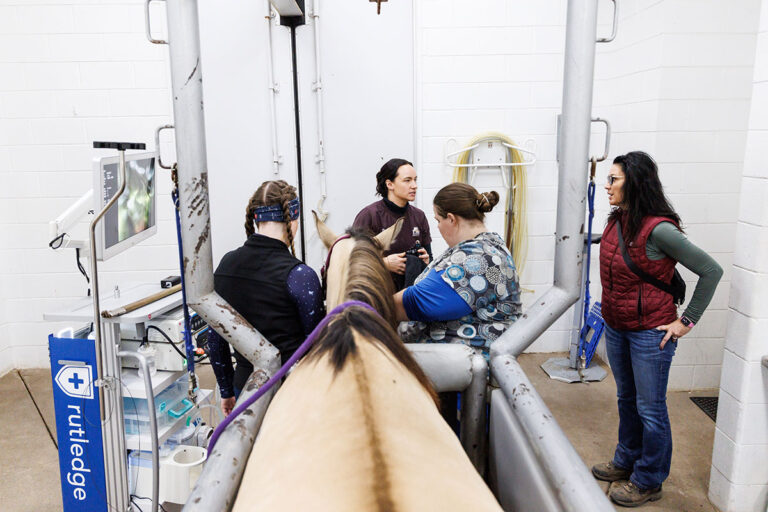
checking horse for ulcers
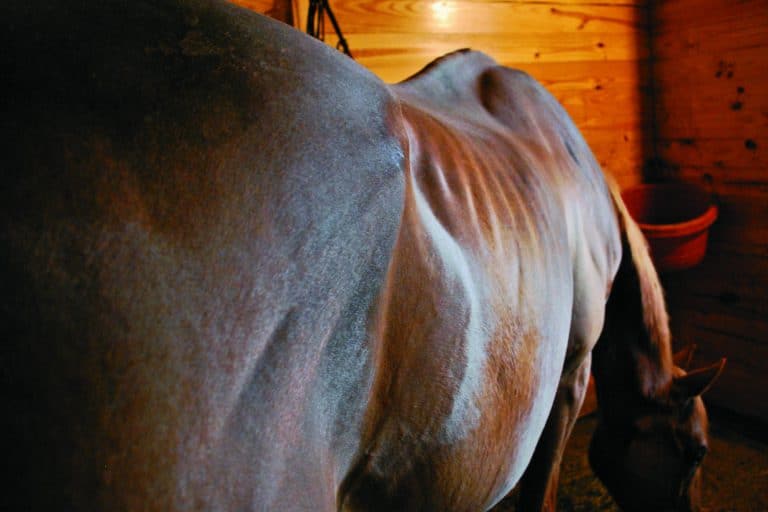
feeding healthy hard keepers
horse nose

Stay on top of the most recent Horse Health news with

FREE weekly newsletters from TheHorse.com

Sponsored Content

Weekly Poll

sponsored by:

What is your biggest challenge when caring for horses in hot weather?
49 votes · 49 answers

Readers’ Most Popular

The Horse
Privacy Overview

This website uses cookies so that we can provide you with the best user experience possible. Cookie information is stored in your browser and performs functions such as recognising you when you return to our website and helping our team to understand which sections of the website you find most interesting and useful.