Stephanie Ruff

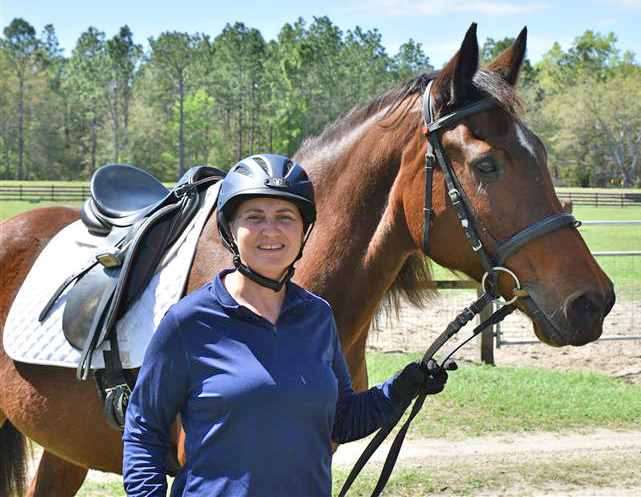
Stephanie Ruff has spent her entire career in various facets of the equine industry. She was a freelance writer for many years, was the owner/editor of Arabian Finish Line, managing editor of Arabian Horse Life and content manager of Practical Horseman and Dressage Today before moving to The Horse. She has ridden many different disciplines, but for the last 20 years has focused on dressage. Stephanie has both a B.S. and M.S. in Animal Science from the University of Kentucky and has always had a keen interest in equine health, science, and research. A native of Pennsylvania, Stephanie enjoys hanging out with her Arabian and Half-Arabian mares, two German Shorthair Pointers, traveling and embracing the Florida lifestyle where she currently lives.

Articles by: Stephanie Ruff

Antimicrobials in Colic Surgery

Colic surgery in horses is classified as a “clean contaminated” procedure because incisions into the intestine can allow bacteria to contaminate the sterile abdomen. Thus, prophylactic (preventive) antibiotic therapy is often administered prior
Read More

Exercise and Bone Development

Beneath the smooth surface of articular cartilage, subchondral bone gives structural support to joints. Normally, newborn foals have a lot of water in this layer, which is slowly replaced by calcium and collagen as the foal weights his joints.

Read More

Healing Hoof Cracks

Hoof cracks are a common occurrence in the feet of many domesticated horses, and they can range in severity from a minor blemish to a cause of serious lameness. Causative factors can vary widely, ranging from injury to imbalance of the foot.

Read More

Is His Heart In It?

Do you know why a Thoroughbred can deliver that great burst of speed to eat up a mile in 1 1/2 minutes, or how an endurance horse can maintain the strength and stamina to cover long distances at steady speeds? Of course you do: Conditioning.

Read More

What Do You See For 2003?

We’ve certainly had some tough moments in the past couple of years. And despite worry, the industry is strong, but changing. While some of the top-level owners of competition horses–those who own horses as business investments–might be jumping

Read More

West Nile Virus Still Spreading

As of Nov. 3, cases of equine illness caused this year by West Nile virus (WNV) confirmed at the USDA’s National Veterinary Services Laboratories had risen to 12,843; 12,105 cases more than the final case count for 2001. Vaccinating for WNV and

Read More

Diagnosing Problems Using Equine Hair

A horse’s hair can be used as a diagnostic tool in assessing nutritional status, environmental poisoning, and drug use and abuse, according to Mark Dunnett, BVSc, of the UK’s Royal Veterinary College. Dunnett presented this topic at the Kentucky

Read More

Unusual Fall Abortions in Kentucky

Pathologists at the Kentucky Livestock Disease Diagnostic Center (LDDC) in Lexington noticed that a few more fetal losses were being seen than was usual during August, September, and October. That prompted increased surveillance and reporting,

Read More

Moyer Receives Distinguished Alumnus Award

William Moyer, DVM, head of the Department of Large Animal Medicine & Surgery at Texas A&M University and a member of The Horse‘s Editorial Advisory Board, recently was awarded a Distinguished Alumnus award by Mesa State College i

Read More

Frozen Feed?

Have you heard of horses getting colic from frozen sweet feeds?

Read More

Equine Salmonellosis

Salmonella spp. can cause diarrhea, abscesses, septicemia, and other ailments in horses. The October 2002 issue of Equine Disease Quarterly, published by the University of Kentucky (UK) and sponsored by underwriters at Lloyd’s of

Read More

Intracranial Pressure

Two studies done at the University of California, Davis, have allowed researchers to measure the intracranial pressure (ICP, the pressure that the cerebrospinal fluid exerts on the brain) in the horse for the first time and determine how body

Read More

AQHA Considers Changes to Coat Color Requirements

Cremellos or perlinos, which are horses that exhibit lightly pigmented or pink skin over the body, white or cream-colored hair, and blue eyes, might soon be eligible for registration in the American Quarter Horse Association (AQHA). In early

Read More

Periodontal Disease in Horses

University veterinary hospitals and private practitioners have begun to treat and prevent periodontal disease in horses with a new piece of dental equipment called the Equine Dental System. The Universities of Georgia (UGa), Illinois, and

Read More

The Adaptive Equine Stomach

A study at the Island Whirl Equine Colic Research Laboratory at the University of Florida has determined that the horse’s stomach can adapt to meals of various sizes and compositions, giving researchers a better understanding of how the normal

Read More

Tis the Season for Giving

There are many charitable organizations and foundations that help horses or are involved in horse-related programs. These range from rescue groups (relocating neglected or abused animals or saving them from slaughter) to foundations that fund

Read More

More From The Horse

sweaty horse rolling
When is an Older Horse Ready for Senior Feed?
1--Pharnygeal-Wash_StranglesFeature_CourtesyEliseKahn
cutting horse

Stay on top of the most recent Horse Health news with

FREE weekly newsletters from TheHorse.com

Sponsored Content

Weekly Poll

sponsored by:

How do you plan to keep your horse safe during fireworks and Fourth of July festivities? Please select all that apply.
106 votes · 133 answers

Readers’ Most Popular

The Horse
Privacy Overview

This website uses cookies so that we can provide you with the best user experience possible. Cookie information is stored in your browser and performs functions such as recognising you when you return to our website and helping our team to understand which sections of the website you find most interesting and useful.