Do Fish Help Keep Horse Water Tanks Clean?
Do fish help keep horse water tanks clean? Maybe not, our nutritionist says, but they might have other benefits. Here’s why.


Do fish help keep horse water tanks clean? Maybe not, our nutritionist says, but they might have other benefits. Here’s why.

With routine blood work and a strategic supplementation protocol, you can help your horse avoid the negative consequences associated with vitamin E deficiency. Here’s how.
Some severe headshaking cases that are resistant to existing treatments and can significantly compromise a horse’s quality of life. But researchers have recently determined that a supplementation regimen could help.

Nicholas Carter, MS, has been named county and local government relations director in the University of Kentucky College of Agriculture, Food and Environment.
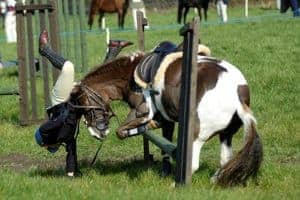
Studies have shown that equestrians are at more risk for traumatic brain injuries than participants in most other sports. Here’s what you need to know about concussion diagnostics and returning to riding.
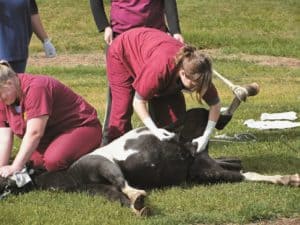
Evisceration—when the intestines protrude through the surgical site—can be fatal if not treated promptly. By knowing which breeds and castration methods are more prone to evisceration, vets can be better prepared for complications.

Laura Stephenson, PhD, has been named associate dean and director of the University of Kentucky Cooperative Extension Service in the College of Agriculture, Food and Environment.

Equestrians are athletes, and athletes suffer injuries. And one neurology professor says that, among sports-related traumatic brain injuries, the highest incidence among adults occurred in equestrians.

The BLM estimated the wild burro population in the area to be 240 animals, more than five times the target population of 28-46 animals.

Two different perspectives on horse rider and handler safety were presented by an accomplished group of panelists at the inaugural Horse Industry Safety Summit.
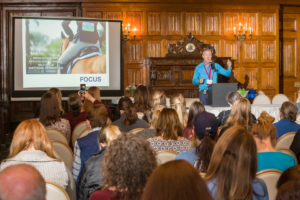
Working with horses is unpredictable, but one thing equestrians can control is themselves, says one riding coach. Here’s how treating ourselves as athletes can help us stay safer in the long run.

The EHV-1-positive horse died in quarantine due to an unrelated medical issue, not EHM (which develops when EHV affects the central nervous system), the Pennsylvania Department of Agriculture said.
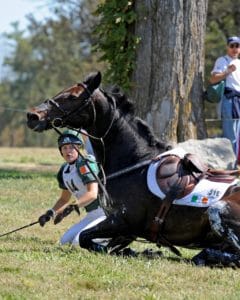
While it might seem like a tricky task, riders can teach their bodies how to react when they part ways with their horses to minimize injury risk.
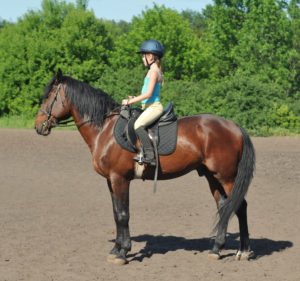
Online classes are now the norm in education, but can they assist in promoting safety to equine enthusiasts? One researcher says yes. Here’s why.

Laminitis is one of the most common diseases in horses, and it has many different causes. Find answers to listener questions on endocrine-related laminitis in horses with conditions such as PPID, equine metabolic syndrome, and insulin resistance. Sponsored by InsulinWise.

An acute laminitic episode is an emergency. Drs. Jane Manfredi and Teresa Burns discuss critical care of these cases.