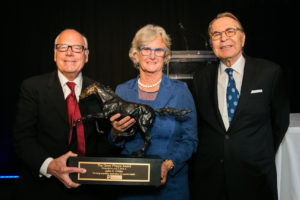
John Oxley Accepts 2019 Dinny Phipps Award
Thoroughbred owner John C. Oxley received the award, which honors an individual or individuals who have demonstrated dedication to equine health, on June 6.


Thoroughbred owner John C. Oxley received the award, which honors an individual or individuals who have demonstrated dedication to equine health, on June 6.

Are birds causing costly damage in your barn? Find money-saving solutions in The Horse’s Problem-Solver Series, paid downloads from the horse health source you trust.

One study presented at the 2019 Equine Science Society Symposium found the answer. Also learn about how vibration plates really affect horses, if GPS accurately measures horse speed, and more.
Research suggests that bisphosphonates can effectively help control clinical signs associated with navicular syndrome in horses, but there’s less research on off-label use. Here’s what to know.

Experts offer tips for mud management on farms and how to keep horses and their hooves healthy when faced with copious wet weather.

Read about research into increasing the time horses spend eating (a good thing) without feeding them too much (a bad thing), along with more take-homes from the 2019 Equine Science Society Symposium.
Has any research been done regarding what horses might like and dislike about their homes?
The BLM is seeking input on a preliminary environmental assessment analyzing a range of alternatives for managing wild horses and burros on public lands along the California-Nevada border.

The Canadian Food Inspection Agency confirmed that a horse from the Squamish-Lillooet Regional District, Subdivision B, was EIA-positive on May 29.
What flavors do they like? Find the answer and read other nutrition tidbits from the 2019 Equine Science Society Symposium.
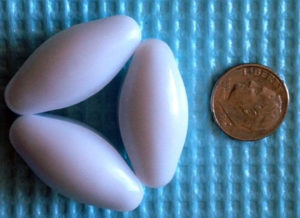
Researchers successfully tested a drug- and hormone-free approach for suppressing estrus in mares they say is safe, easy, and doesn’t affect future fertility.

The Idaho State Department of Agriculture said a horse transported back to Canyon County from Washington in May tested positive for EIA.

Surgeon Dr. Anthony Blikslager shares his perspective on preventing horse colic.
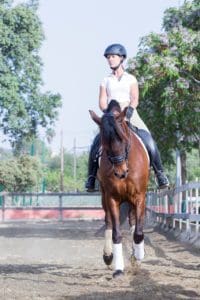
There’s no getting around it: Horses—especially those expected to perform at a high level—are risky purchases. But a thorough prepurchase exam can help give you confidence that you’re making the right investment for your scenario. Here’s what practitioners look for during prepurchase exams for upper-level sport horses.
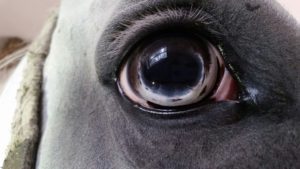
Horses of some breeds with limited gene pools are at risk of developing health issues due to inbreeding. But researchers found that this isn’t the case when it comes to eye problems in a 400-year-old Czech breed, researchers say.
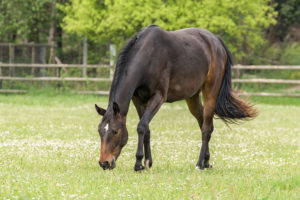
Horses with grassy turnouts graze all day, so they don’t need extra forage when they’re stalled at night, right? Not so fast, our nutritionist says. Here’s why.