Australian Bat Lyssavirus a Worry for Vets and Horse Owners
Confirmation of a horse with Australian bat lyssavirus could increase disease risk to vets and horse owners.


Confirmation of a horse with Australian bat lyssavirus could increase disease risk to vets and horse owners.

Recovery following completion of three-day events is different than it was when cross-country was long format, says Kent Allen, DVM, head treating vet at the Rolex Three-Day Event.

During the breeding and foaling season, lush fescue pastures could create problems for pregnant mares.
Lecture topics will include planning a mating, nutrition, foaling, farm and pasture management, and more.
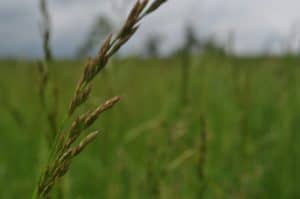
Researchers tested Doppler ultrasonography to detect vasoconstriction due to endophytic alkaloid consumption.
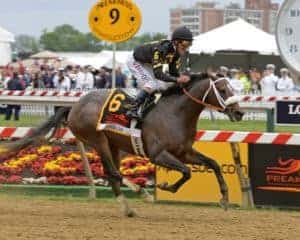
Calumet Farm’s Oxbow gunned to the front from the gate to win the $1 million Preakness Stakes May 18.

Identify and address the early stages of heat stress in horses before heat stroke develops.
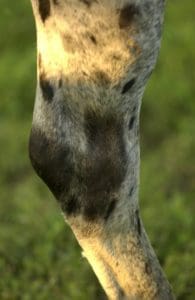
Study results indicate affected horses have a guarded prognosis to return to athletic soundness.

Dr. Scott Palmer explains why some racehorses wear tongue ties and why this equipment is important.

While horse racing has made strides toward drug reform and uniform medication rules, inconsistencies remain.
The sponsorship benefits the Grayson-Jockey Club Research Foundation and Jockey Club Safety Net Foundation.
Last October and as my now 17-year-old Thoroughbred had just received the okay to start trotting under tack after recovering from an injury, I wrote
This is the first case where Australian bat lyssavirus has been identified in a horse.
Equine Guelph will offer a 12-week equine genetics course in the fall of 2013.
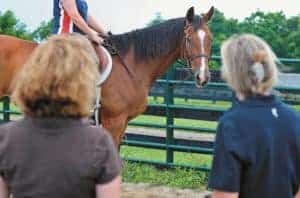
Horses topped out at 29% of their body weight in a study that evaluated gait changes when loaded.

Dr. Erica McKenzie of Oregon State University shares why red urine is a concern in horses that are tying up.