Pioneering methods in equine reproduction offer horse owners unprecedented control and flexibility

Want to show your mare and breed her, too? You can. Want to get foals from a stallion with low fertility? You can. Want to pass down your gelding’s DNA? You can.
You can also ship your mare’s eggs and get her fertilized embryos sent back to you. You can even store embryos for as long as you want and just pull them out of frozen storage whenever you’re ready to make a new foal.
This isn’t the future; this is the here and now of horse breeding. More than ever, owners have an amazing array of options that allow for both flexibility and breeding success. In this article we’ll take a closer look at what’s new in assisted equine reproduction and what that means for horses and humans.
Intracytoplasmic Sperm Injection (ICSI)
Intracytoplasmic sperm injection (ICSI) involves injecting a single sperm into an egg, or oocyte, to provoke fertilization, producing an embryo that can then be transplanted into a recipient mare.
Physicians also use ICSI in human reproduction, but technique is especially critical for equine reproduction because standard in-vitro fertilization (IVF) has always been a challenge in horses, says Stuart Meyers, DVM, PhD, professor emeritus of anatomy, physiology, and cell biology at the University of California, Davis, School of Veterinary Medicine.
With ICSI a single ejaculate can produce hundreds of foals, says Andres Gambini, DVM, PhD, senior lecturer in the School of Agriculture and Food Sustainability at The University of Queensland, in Gatton, Australia.
Even stallions with poor semen quality can reproduce via ICSI because a single sperm is sufficient, says Edward Squires, MS, PhD, Dipl. ACT, an independent consultant at Reproductive Management, in Fort Collins, Colorado.
Because practitioners need specialized equipment and “very high-tech labor” to perform ICSI, only about a dozen equine ICSI labs operate worldwide, says Meyers.
That number is on the rise, however, with commercial embryo production “increasing tremendously,” Gambini says. That’s because, over the past decade, more labs have acquired the equipment and skilled personnel to carry out ICSI, so it has become commercially available. The technique is now spreading to other equids as well, he adds. In 2022 his team produced the first ICSI donkey, and he hopes to move on to wild equids for conservation efforts as well.
Owners of sport horse mares might find ICSI particularly interesting, because these horses can produce elite foals and not miss a beat with their athletic careers, says Christine Aurich, DVM, PhD, head of the Graf Lehndorff Institute for Equine Science, which is in Neustadt, Germany.
Even so, ICSI relies on human selection of a single sperm, rather than letting nature choose from the billions present in a single ejaculate, Aurich says.
While scientists usually choose sperm with good motility, they’re not assessing other qualities such as genetics. “ICSI takes out a lot of important selection mechanisms, and this might—in the long term—be detrimental,” she says.
Aurich points out that although no health or welfare issues have been reported with ICSI foals, there haven’t been any controlled studies on their long-term effects. Researchers at the University of Ghent, in Belgium, are currently collecting data to fill that void.
Wary of the risks of health and welfare problems, certain breed organizations, such as the Swedish Sport Horse Registry, have forbidden ICSI. Others might follow suit, she says, or at least require clear mention of ICSI on registration papers.
“There’s a lot of concern,” says Aurich. “I would be more cautious.”
Ovum Pickup and Maturation
A decade ago technicians were waiting for mares to cycle and produce mature eggs, one or two at a time, or sometimes a few more with stimulatory drugs, Gambini says, for ICSI and other techniques. Today, with ultrasound guidance, veterinarians can simply pass a needle through the vagina to aspirate all the follicles on an ovary at a single time—whether they’re mature or not—meaning they can collect sometimes dozens of eggs all at once, any time of year.
They hope to aspirate 10 to 15 immature follicles, which can be held up to 24 hours in simple culture media, and then mature them over 28 to 30 hours in media, says Squires.
Meanwhile, more and more veterinarians are getting ovum-pickup (OPU) training and are shipping oocytes to labs sometimes thousands of miles away, making ICSI an accessible option to breeders living nowhere near such specialized facilities, says Meyers.
“OPU has added all kinds of flexibility to the breeding process,” Squires says.
Still, there haven’t been many studies investigating the welfare effects of OPU, says Aurich. Despite sedation during the procedure, mares can experience pain due to inflammation that could linger for days.
Artificial Insemination and Embryo Transfer
While ICSI and OPU have advanced assisted reproduction, artificial insemination (AI), in which technicians collect a stallion’s semen and deposit it directly into a mare’s uterus, remains the current gold standard. Some owners—especially those of sport horse mares—choose to complement AI with embryo transfer, in which embryos are flushed out of the uterus after a few days and implanted in the uterus of a recipient mare.
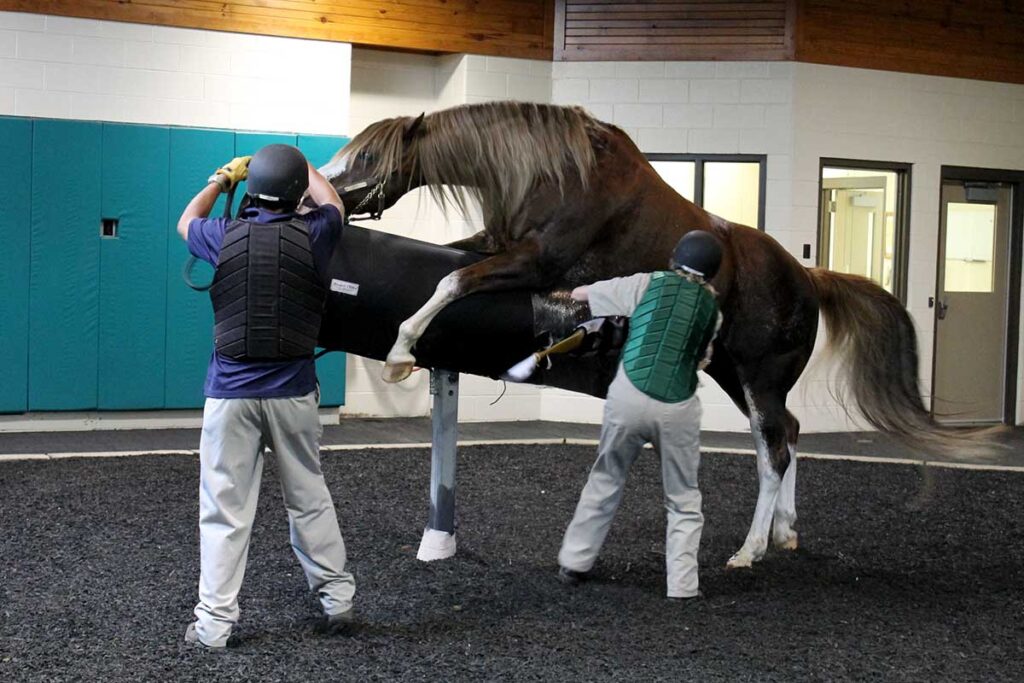
In recent studies, researchers have been investigating the potential importance of seminal plasma—which technicians often remove when processing semen for cooled-storage or cryopreservation, Aurich says. Results from new studies suggest seminal plasma “prepares the mare’s genital tract for conception and pregnancy—something well-known from humans.”
Australian scientists have also found that hotter outdoor temperatures increase chances that recipient mares will lose the embryo. A Swiss team, meanwhile, discovered that recipient mares older than 12 have a lower pregnancy rate, and that treating recipients with antispasmodics, antimicrobials, and anti-inflammatories during embryo transfer increased pregnancy rates.
“There are certainly a few things we could still improve with AI, but when it’s done properly, it’s working very well in horses,” Aurich says.
In-Vitro Fertilization
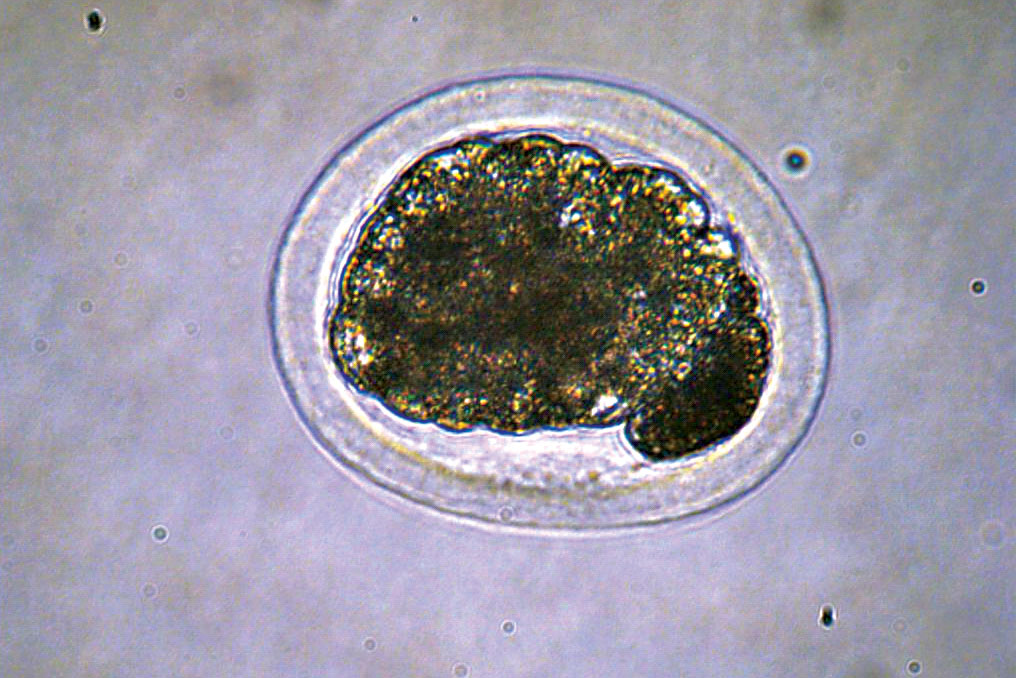
Perhaps the biggest news in assisted equine reproduction is that scientists have finally “cracked the code” to make standard IVF possible, our sources say.
Katrin Hinrichs, DVM, PhD, Dipl. ACT, and her colleagues at the University of Pennsylvania’s New Bolton Center, in Kennett Square, realized that sperm from stallions, compared to other species, need just a little longer to mature before fertilizing an egg. So, they developed a culture system that keeps stallion sperm alive for 25 hours in a dish—allowing them to reach the maturity level needed for successful fertilization.
With a 90% fertilization rate, the discovery offers a far simpler and less expensive method of producing embryos than ICSI does—while still allowing the natural sperm selection process by exposing each egg to thousands of sperm, Aurich says.
Because labs can carry out traditional IVF more easily than they can ICSI, Meyers says the technique will likely start taking off in the horse industry.
Cloning
Cloning technology continues to expand on a commercial level, Gambini says. It’s most popular in the Americas—and especially in Argentina, where three cloning companies produce about 200 foals a year.

Cloning allows owners to get essentially exact replicas of their current horses because they want the same qualities or plan to breed the clone of a sterilized horse. Even so, research findings suggest that the “empty” egg used to create the embryo, the uterine environment, and life experience shape the animal as well—what scientists call “epigenetics,” he explains.
Researchers conducting recent equine cloning studies have focused on improving the selection and maturation process of recipient eggs. Scientists also discovered the possibility of changing clones’ sex when they realized that a foal cloned from a male horse had a missing Y chromosome.
However, some breed associations refuse to register clones, which hampers the technique’s uptake in the industry, Squires says.
Blastocyst Time-Lapse Monitoring
Time-lapse videos of microscopic images of growing embryos have recently given critical insight into how and when the first cells split—or cleave—during the early blastocyst stage.
“There’s a video screen on the incubator, so you can always go look at how the embryos are developing without opening the incubator,” says Meyers, whose team developed the technique.
That’s important, they found, because early cleavage time relates to pregnancy success. Comparing time lapses of blastocysts that did or did not later become foals, Meyers and his colleagues found the most successful embryos had first cleaved within 28 to 30 hours after ICSI. Those cleaving before or after that range were less successful.
Time lapse is critical to actually watch the embryo grow, Meyers says.
Conservation and Shipping
Storing and transporting sperm, eggs, and embryos provides great flexibility for breeders as they select long-distance breeding partners, wait for optimal ovarian cycling stages, choose ideal foaling times, and plan for future foals, our sources say.
Thus, conservation and shipping have been hot research topics. Australian scientists recently discovered, for example, that stallion sperm—unlike those of other species—can stay active as long as their mitochondria maintain their metabolism. Five years ago, the research team developed a special extender that supports the mitochondria’s metabolism. The result was semen that remains alive and fertile at room temperature for up to two weeks—allowing for long-distance shipping without the fertility loss associated with freezing and thawing, Aurich says.
Eggs survive relatively well for 24 hours when stored in passive coolers that bring them slowly from body temperature to room temperature, Meyers says. But better yet are new battery-operated, temperature-
controlled boxes—especially when ambient temperatures get extreme.
As for embryos, an “ultra-rapid freezing” process called vitrification keeps embryos healthy during storage in liquid nitrogen, Squires says. After thawing, he notes, the embryos are practically as viable as they’d been prior to vitrification.
The key, he says, is vitrifying them before they reach 300 microns in width—easy to do for lab-grown ICSI and IVF embryos.
Gambini and his team are currently applying ICSI and vitrification to conservation programs for rare donkey species. “You can have that embryo frozen pretty much forever,” he says.
Unfortunately, however, vitrification is less feasible for preserving embryos made in utero because they can’t be measured as closely and are usually bigger than 300 microns by the time they can be flushed, Squires says.
Genomics, Genetics, and Sexing
Worldwide, genome research is on the rise, paralleling an increase in equine gene studies. Multiple research groups are presenting early phases of their work at scientific meetings such as the biennial Havemeyer Equine Genome Workshop.
While an initial practical aspect—which is already in use—involves genetic testing for monogenetic diseases such as severe combined immunodeficiency in Arabians, fragile foal syndrome in Warmbloods and Thoroughbreds, and hereditary equine regional dermal asthenia in Quarter Horses, scientists are also looking into how genes affect fertility. For example, researchers have recently discovered that contrary to previous belief, sperm produce messenger RNA, which could offer biomarkers for fertility, Aurich says.
Gene editing—manipulating genes in order to get the exact ones breeders want—and gene therapy—correcting mutations to prevent their related diseases—is now possible in research settings, Squires says. However, we could be several years away from having these options in a commercial setting, especially gene editing, which raises ethical concerns. “Not everybody agrees with how much technology we should be using,” he says. “And maybe it’s a slippery slope; I don’t know.”
Scientists also now have the capacity to sex embryos and sperm, Squires adds. “It’s being done,” he says. “And it’s probably going to be done more and more.”
Regardless, people should be wary of existing commercial products offering genetic advantages or sexing, such as semen extenders that claim to let breeders select for male or female, says Aurich. “There’s no scientific evidence that this will work, but people are buying it,” she says.
Horse Welfare
More and more, scientists realize that assisted reproduction offers horses better welfare than live cover does, our sources say.
In-hand breeding often forces mares to receive stallions they would not have accepted if given the choice, Aurich says. Horses can be aggressive toward each other and even cause serious injury—both on pasture and out in the wild. Artificial breeding might be somewhat invasive, but it’s generally better physically and mentally for mares.
And if they’re undergoing OPU, they can give so many eggs at a time that they might only have one procedure a year, Gambini says. Stallions, meanwhile, can produce so many foals with a single ejaculate that they can spend less time in the breeding shed covering mares—a process that is not only exhausting but also potentially stressful and even dangerous with unwilling mares.
Nonetheless, breeders still must ensure stallions have opportunities to express natural behaviors, such as having social contact with other horses and being near a friendly mare in heat when having semen collected, Aurich adds.
“I am convinced that assisted reproductive technologies contribute to animal welfare in horse breeding, if driven by expertise and reason,” she says.
Nonetheless, horses must never be exploited, Aurich adds. “Not every retired sport horse mare must become pregnant,” she says. “They may prefer a lovely retirement on pasture instead.”
Take-Home Message
In recent years scientists have made significant headway improving assisted reproduction techniques in horses, especially regarding ICSI, OPU, IVF, and semen, egg, and embryo storage. These advances lead to better success rates, more breeding options and flexibility for owners, and reduced costs, while also offering the possibility of improved welfare for the horses involved.
Editor’s Note: This article was originally published in the Research Roundup 2024 issue of The Horse: Your Guide to Equine Health Care.