How a 21-year-old Hanoverian gelding stayed competitive at the Florida winter circuit
Many horse owners, riders, and trainers expect their horses’ athletic potential to diminish as they enter their later years; however, some horses remain healthy and happy in their work well past what many would consider their peak years. As horses age, they might experience more joint pain associated with osteoarthritis, digestive problems or a decline in gut health, or decreased performance. Fortunately, with advancements in equine medicine, veterinarians can work with horses’ trainers and care teams to help ensure long-term soundness.
The Crucial Equine Vet-Client-Patient Relationship
Successfully maintaining a horse in the top levels of competition throughout his later years requires a close relationship between the rider or trainer and veterinarian. “The rider is the person who spends the time on the horse’s back and feels differences in a gait transition or that a canter lead feels (different) one way versus the other,” says Kate Britton, DVM, of Atlantic Equine Services in Dover, New Hampshire, and Wellington, Florida.
These small details are crucial to the overall picture, especially when combined with information from the horse’s competition performance and a clinical exam. Meanwhile, don’t forget to keep the owner in the loop. “Keeping an open relationship with the owner is paramount to the health and success of the horse as they are the ones standing behind the horse with all parties involved on both good and bad days,” she adds.
Maintaining Mindful at the Top Levels of Sport
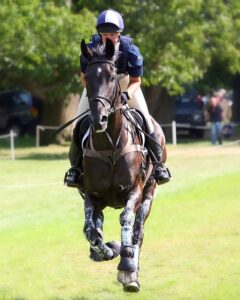
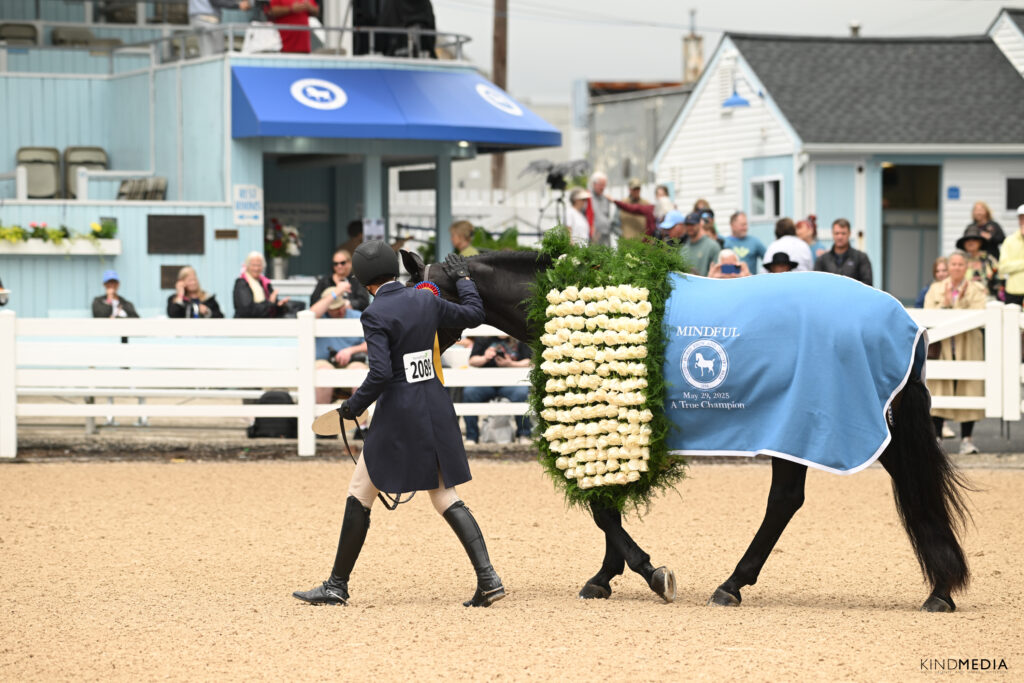
Jennifer Hannan, rider and trainer, of Ocean Echo Farm in Wakefield, Rhode Island, and Wellington, has been training Mindful, a 21-year-old Hanoverian gelding owned by Selma Garber and Kensel LLC, since 2017. (Mindful started his US Equestrian-recognized showing career in 2013 with a different owner and riders.)
In their years together they have shown at the top venues around the country, such as Palm Beach International (now Wellington International), which Hannan says was the scene for their first international derby win as a pair. “He has since gone on to win seven international derbies at (Palm Beach/Wellington International). He has earned championships at every major horse show on the East Coast.”
Over the years Hannan and her veterinarian, Britton, have worked closely with one another to maintain Mindful’s physical and mental well-being at the highest levels of the sport.
Managing Mindful’s Joint Health
Britton regularly evaluates Mindful—typically monthly, she says, but twice monthly for performance evaluations during periods of intense competition. “Regarding maintenance care, we try to stay ahead of any issues, so (I see him) around four times per year for this.”
To manage any potential joint pain that could affect his performance, Britton treats him with intra-articular (IA) autologous protein solution and 2.5% polyacrylamide hydrogel (not at the same time) based on the results of her regular physical exams and soundness evaluations. “We try to stay ahead of any issues that may arise with his continued career, and we wanted to use the most beneficial treatments for his joints,” she says.
Equine Complementary Therapies and Nutrition
In addition to regular soundness examinations, Mindful also receives consistent veterinary chiropractic adjustments, acupuncture, and massage, which Britton says complement his medical treatments and play an important role in his longevity.
“He goes on a Theraplate daily and turns out as much as possible,” adds Hannan.
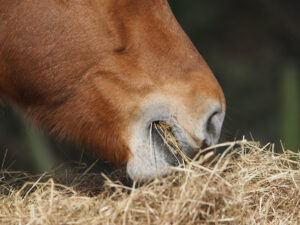
“His diet plays a role in his health as far as keeping him fit,” she continues. “We feed an all-natural diet, which is low in sugar, and I really feel like that has helped him in his career with me.” This consists of a forage-based diet (including alfalfa pellets and beet pulp) with non-GMO supplements to fill any nutritional gaps.
Utilizing Equine Fitness for Long-Term Soundness
Hannan works to keep Mindful physically fit year-round to help him maintain a healthy muscular condition and always stay comfortable in his work. “His overall fitness is our main goal,” she says. “We try to keep him fit and happy.”
Mindful stays in a consistent program with a balance of jumping and discipline-specific training days, along with relaxed trail riding and hacking days. “I think it’s important to keep him fit on many different types of surfaces,” says Hannan. “He works in the fields with hills as well as in the ring and even some harder surfaces.” However, Mindful only jumps once a week.
“That may include cavalletti exercises or just a few jumps, so he keeps his fitness,” Hannan adds, noting she rarely schools Mindful over show-height fences, but she might do so once before a show.
She adds that Mindful’s owner allows her to create a detailed training and competition plan for him, without ever pushing him past his physical or mental limits and while keeping his competition schedule light. “We have really been able to tailor his show schedule, physical fitness, and overall soundness (to his individual needs),” says Hannan. “I truly believe all of this has made a huge impact on his unbelievable career.”
Take-Home Message
Caring for horses that continue competing into their senior years demands a close relationship between the riders or trainers and veterinarians as well as careful daily monitoring of any minor changes in the horses’ behavior.
“Always listen to your horse and trust your feeling of them and what they are telling you,” says Britton. “Jenny has an exceptional ability to know minor changes in how her horses are feeling, which I feel helps keep them ahead of major issues.”
Trainers and veterinarians must maintain open communication regarding a horse’s health and performance to keep him sound and happy long-term.
Editor’s note: This article was originally published in the 2025 Senior Horse issue of The Horse: Your Guide to Equine Health Care.