Veterinarians rely on diagnostic imaging to confirm osteoarthritis in horses and assess the extent of joint damage. They commonly use radiographs to evaluate bony changes and might use ultrasound to examine soft tissues around the joint. Advanced imaging, such as MRI or CT, can provide more detailed views in complex cases. Tena Ursini, DVM, PhD, Dipl. ACVSMR, CERP, assistant professor at the University of Tennessee, in Knoxville, explains the importance of diagnostic imaging to confirm a osteoarthritis diagnosis in this Ask TheHorse Live excerpt.

This podcast is an excerpt of our Ask TheHorse Live Q&A, “Understanding Hind-Limb Lamenesses in Horses.” Listen to the full recording here.

About the Expert:

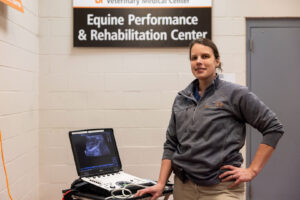
Picture of Tena Ursini, DVM, PhD, Dipl. ACVSMR, CERP

Tena Ursini, DVM, PhD, Dipl. ACVSMR, CERP

Tena Ursini, DVM, PhD, Dipl. ACVSMR, CERP, is an assistant professor in Equine Sports Medicine and Rehabilitation at the University of Tennessee, in Knoxville. Her main clinical and research interests are biomechanics and validating rehabilitation treatments, especially related to the back and topline.