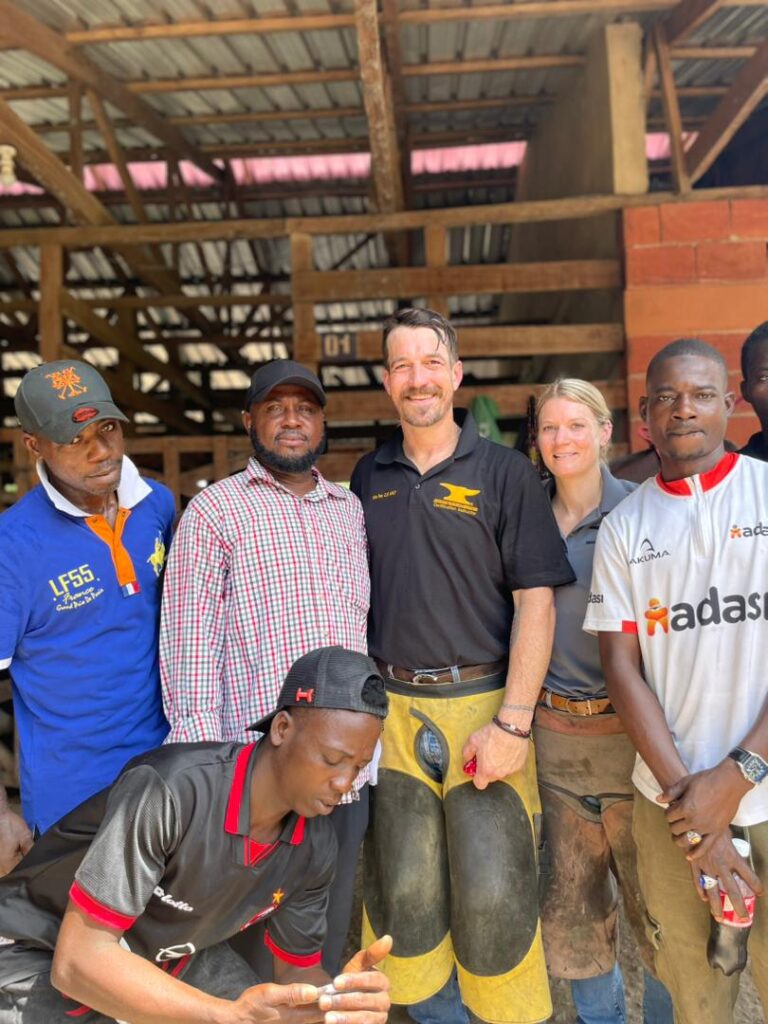
In April 2026, the American Farrier’s Association International Outreach Committee sent two delegates to Nigeria to teach a horseshoeing clinic. Nigeria’s horse population is estimated to be between 200,000 and 240,000 animals, yet there are only a handful of qualified farriers to support them. Shoes and supplies are often imported from other countries as there is no manufacturing in the country itself. During the off-season, horses either go barefoot or are shod using roadside metal. Our colleagues in Nigeria requested an educational clinic to help train farriers to improve the lives of the animals under their care. We sent 2 top level farriers, Mike Poe and Jamie Secoura, to Lagos to provide a clinic to the existing and aspiring horseshoers.
Mike Poe, CJF, AWCF, is a highly respected clinician and educator within the American Farrier’s Association. Jamie Secoura, CJF, TE, is the resident farrier at Virginia-Maryland College of Veterinary Medicine. Both of these farriers hold some of the highest credentials offered in America.
Part of the challenge with our work internationally is the lack of tools and supplies. Anvils and forges are hard to put on a plane. Sometimes the initial trip to a country is merely an assessment of the local needs and resources. Once we have a better idea of what is needed, we can tailor subsequent clinics. One thing that is always consistent is the motivation of the participants. Mike Poe observed: “These guys were thirsty, they wanted all of the knowledge we could give them and everything we could show them.”
While true blacksmithing may seem like an outdated concept in a world of machine-made tools, it is actually an essential skill in countries lacking access to modern conveniences. Being able to hand-make a shoe is often taken for granted in America, but it makes all the difference for a horse living in a world where raw materials may be sourced from car parts and rebar. The American Farrier’s Association has a membership base highly skilled in not only horseshoeing, but knife and tool making. Our international work is a way to extend that knowledge and skillset to our colleagues abroad. We continue to develop this program and try to assess the needs of the countries we work in. Looking into the future of this project, we aim to help our Nigerian colleagues acquire and build the tools they need to succeed.
For more information on this project and information on how to make a tax-deductible donation, please visit https://americanfarriersfoundation.org/areas-of-support/international-outreach/.