Thrush affects the frog and surrounding grooves of a horse’s hoof, often causing foul-smelling black discharge. Not every thrush product works the same way, and more treatment isn’t necessarily better for affected horses’ hooves. Choosing an appropriate product means looking closely at the label and checking which active ingredients it contains.
Amy Santonastaso, VMD, MS, Dipl. ABVP (Equine), clinical assistant professor at the Virginia-Maryland College of Veterinary Medicine, in Blacksburg, Virginia, says horse owners should primarily look for antiseptic and/or astringent agents.
“Antiseptics are effective on a wide variety of organisms, such as bacteria, fungi, and viruses,” she says. Astringents, meanwhile, can help dry the tissue surface and reduce the amount of moisture bacteria need to thrive.
The hoof has a biomechanical process that prevents mud and debris from packing into the bottom of the foot. When this self-cleaning mechanism and frog function become compromised, microorganisms can proliferate in the grooves, or sulci, in the center of and alongside the frog, resulting in an infection. Moisture, hoof balance, trimming, and the horse’s environment can all play a role. Clinical signs of thrush include a foul odor, black discharge and soft, deteriorating tissue around the frog, particularly within the central and collateral sulci, which can become sensitive or painful in more advanced cases.
Look for Antiseptic Ingredients
Santonastaso says the antiseptic ingredients iodine, chlorhexidine, and copper sulfate can be effective against thrush. These substances damage or disrupt microorganisms’ cell walls, proteins, or membranes, interfering with their ability to survive.
Steven Kraus, CJF, head of farrier services at Cornell University, in Ithaca, New York, recommends looking for ingredients with antibacterial or antifungal properties. Some contain proprietary active ingredients, so the label might not always make the chemistry immediately obvious, he said.
Choose tincture of iodine over povidone-iodine for treating intact frog tissue because povidone-iodine must be diluted to become active and is a weaker antiseptic, says Santonastaso.
Copper sulfate can kill multiple organisms and has hoof care applications beyond treating active thrush. Farriers can also use copper sulfate granules preventively under hoof pads when incorporated into appropriate packing materials, such as synthetic impression materials, says Kraus.
However, both experts agree copper sulfate should not be applied to raw or bleeding tissue, and Santonastaso adds that iodine and copper sulfate can inflame sensitive tissues.
Avoid Aggressive Treatments for Thrush
A product that aggressively kills microorganisms might also harm the horse’s frog.
“Avoid caustic agents such as phenols, formalin, and formaldehyde because they can damage healthy tissue, potentially causing wounds, ulcers, or chemical burns,” says Santonastaso.
The goal when treating thrush is to reduce the organisms contributing to the disease while preserving healthy frog tissue, says Kraus, who also cautions against using bleach.
Consider How to Apply the Product
You also need to be sure the thrush treatment reaches the areas where microorganisms hide.
Santonastaso prefers products that can flow into the small cracks and crevices of the frog and sulci and coat the affected tissues. Thick lotions or creams can sit on the surface and trap moisture, dirt, and bacteria underneath, creating the anaerobic conditions in which thrush-causing organisms thrive.
Some hoof treatments stay in place without a pad or other covering to hold them there, says Kraus.
Clean the Area Before Treating
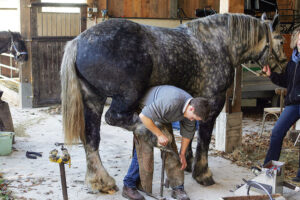
Before applying a topical treatment, work with your farrier to ensure the frog is appropriately trimmed, says Kraus. Loose tags and detached or undermined tissue can trap dirt and bacteria and prevent the treatment from reaching affected areas.
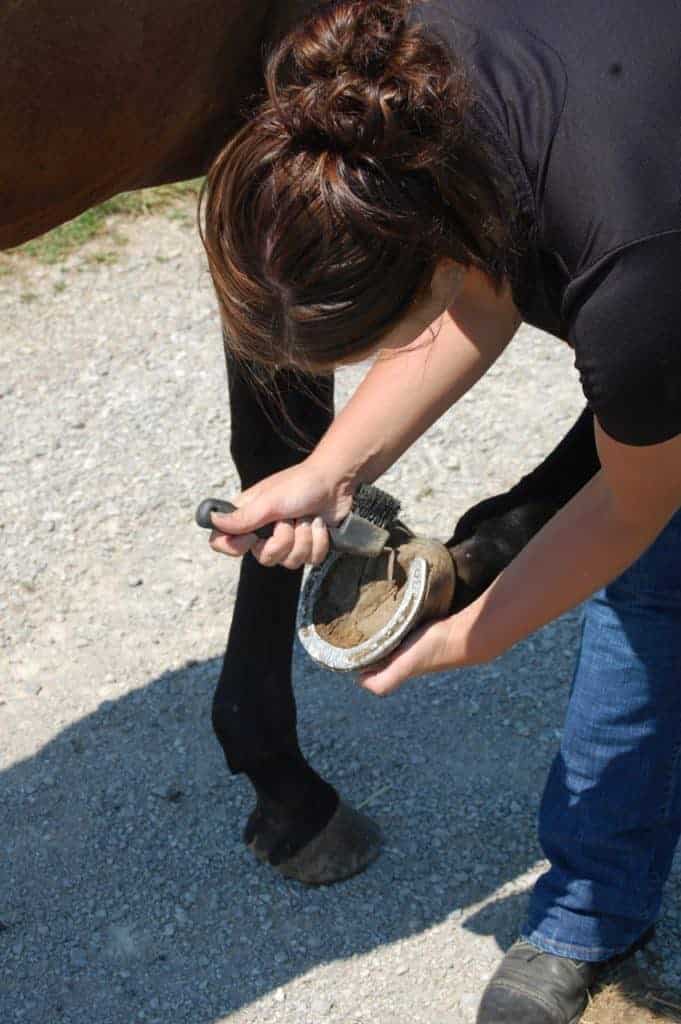
Then thoroughly clean the foot with a hoof pick and wire brush, removing mud, manure, and other debris from the sole, frog, and sulci. Once the foot is clean, dry it thoroughly before applying the product.
Maintain a clean, dry stall or turnout area to address conditions that contributed to the problem.
Treatment Frequency for Thrush
Treatment frequency should change as the frog heals, says Santonastaso. Early in an infection, daily cleaning and treatment of the unhealthy tissues might be appropriate. Once the infection resolves and healthy tissue begins growing back, excessive treatment can dry the new tissue too much and interfere with normal frog function, she adds.
At that point, treating two or three times a week might be sufficient, and some horses might need it only once a week. Continue regular hoof cleaning regardless.
Recurring Thrush in Horses
If thrush keeps returning despite appropriate hoof care and treatment, work with your veterinarian or farrier to identify the underlying cause before switching products. Poor biomechanical hoof function, inadequate trimming or shoeing, and conformation issues can predispose horses to thrush, says Kraus. Uneven foot landing can damage frog tissue, giving microorganisms an opportunity to invade.
“Thrush is multifactorial,” says Santonastaso, who recommends involving the farrier to address frog trimming and hoof function while also correcting environmental factors such as excessive moisture or urine exposure.
Call your veterinarian if your horse becomes painful, the discharge becomes more persistent, the frog undergoes a dramatic change in appearance, or affected tissue becomes ulcerated or bleeds. Persistent or unusually severe cases can indicate another problem, including canker (a chronic, progressive hoof condition) or a systemic condition that affects healing, says Santonastaso.
Take-Home Message
The right thrush treatment can help control infection, but the ingredient list isn’t the only thing that matters. Look for appropriate antiseptic or astringent ingredients, avoid caustic products, and work with your farrier and veterinarian to address the hoof and environmental factors contributing to thrush.