Article

Subcategories:
None

Leg Injury Rehabilitation

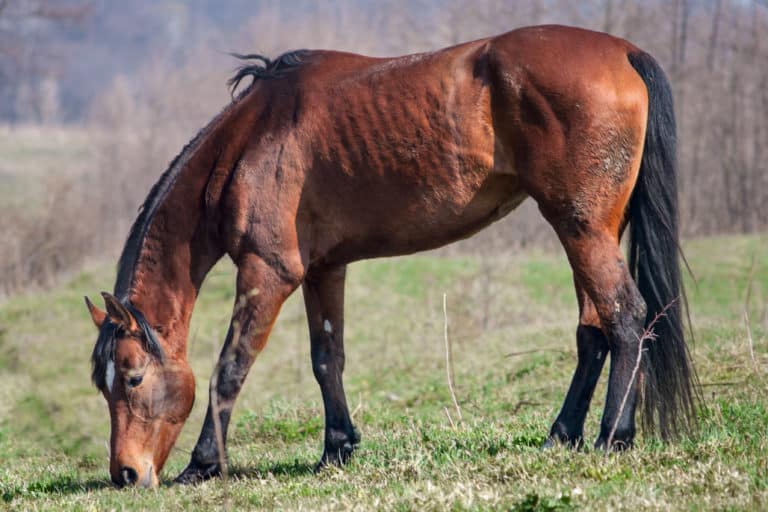
When your veterinarian informs you that your 6-year-old gelding has sustained a suspensory ligament injury in his left foreleg, your heart sinks. Not only are you concerned about the amount of pain and suffering your horse will endure in the
Read More

VS Outbreak Hits the Southwest

Texas on May 20 joined New Mexico and Arizona as states with confirmed cases of vesicular stomatitis (VS) this spring. Two Travis County horses were hauled home May 10 from a trail ride in Arizona, where they apparently were exposed to the VS virus

Read More

Dung Beetles

Dung beetles are amazing insects that spend their lives mucking out your pastures. The adults use liquid contents for nourishment, and they lay eggs in small manure balls (brood balls) they bury in the ground. In the process, they serve as

Read More

Foot and Mouth Disease Confirmed in China

Confirmed in China


On May 26, China’s Ministry of Agriculture confirmed outbreaks of foot and mouth disease (FMD) in Beijing, Xinjiang, and Hebei.


While horses cannot be infected by FMD, they can carry the virus on their

Read More

Trailer Shopping 101

Fulfilling your equestrian goals without a horse trailer is difficult. Your facility might be the best one going, but to really stretch your wings, it’s good to get out in the rest of the world. Even if you’re happy staying put, medical emergencies

Read More

Whisper Syndrome Update: Titer Results Inconclusive

A treating vet in Virginia still isn’t sure what made three of his clients’ horses sick this spring while generating widespread concern on an Internet message board as “Whisper Syndrome” (for background information, see

Read More

Photosensitization in the Horse


Photosensitization is a serious skin condition characterized by “sunburned,” crusty skin that dies and sloughs away. It is usually caused by a reaction to something the horse has eaten, but the skin problem does not appear until the

Read More

Gastric Ulcer Research in Racehorses

Two articles on the use of omeprazole paste (Merial’s GastroGard) in racehorses were published in the May 15 edition of the Journal of the American Veterinary Medical Association (JAVMA). The first study looked at using omeprazole paste to

Read More

Stone Bruises

Though a seemingly innocuous injury, a stone bruise can result in a horse’s demise if left untreated.

Read More

Treatment of Equine Heart Arrhythmia

Human defibrillators are being used successfully to treat horses with irregular heartbeats (fibrillation). Kim McGurrin, DVM, a graduate student at the University of Guelph’s College of Veterinary Medicine, developed a procedure as part of her

Read More

Treadmills for Diagnosing Lameness

Through the years, the treadmill has been a valuable asset in diagnosing various respiratory problems and complications in athletic horses, especially those involving the larynx and upper airways. Now another dimension has been added–the evaluation

Read More

Ad-Painted Horse Causes Welfare Warning

Not many people think of using their horses as painted billboards, and the Scottish Society for the Prevention of Cruelty to Animals says you shouldn’t. At least, they say, not with regular paint, as it could harm the horse. According to a story on

Read More

Strangles: What to Know

The first reported case of strangles in a horse was in the year 1251, and it has continued to worry horse owners since that time. Your veterinarian has a wealth of knowledge about strangles infections in horses. This article will expose you to the

Read More

Wild Horse Amendment Passes House

Wild horses and burros that are eligible for slaughter had a victory on May 19 when the appropriations bill for the Department of the Interior 2006 budget (H.R. 2361) passed the House of Representatives.

Among hundreds of lines of text

Read More

A Promising Future

When equine industry leaders gathered in Washington, D.C., on April 19 for the first Unwanted Horse Summit, it marked the start of an unprecedented effort by the horse community to address the care and fate of this country’s ?unwanted? horses. The

Read More

Roping Horse Lameness

A study from Texas A&M University (TAMU) on roping horses determined, “Horses used for heading were most commonly affected by lameness in the right forelimb. Horses used for heeling had more bilateral hind limb lameness than horses used

Read More

More From The Horse

Screenshot 2026-11-09 160213
gray horse
helping old horses gain weight
pregnant chestnut mare standing in field

Stay on top of the most recent Horse Health news with

FREE weekly newsletters from TheHorse.com

Weekly Poll

sponsored by:

Create a free account with TheHorse.com!

The Horse
Privacy Overview

This website uses cookies so that we can provide you with the best user experience possible. Cookie information is stored in your browser and performs functions such as recognising you when you return to our website and helping our team to understand which sections of the website you find most interesting and useful.