Kentucky Race-Day Drug Rules Will Change Sept. 4
Furosemide will be the only medication permitted on race day in Kentucky effective Sept. 4.

Furosemide will be the only medication permitted on race day in Kentucky effective Sept. 4.
Infected horses present with ataxia, which is a lack of voluntary coordination of muscle movements.

Numerous factors go into selecting the appropriate surgical procedure to treat equine roaring.
Five cases have been confirmed in Kentucky and six have been confirmed in California.
The enhanced protocol will show animals presented for exhibition at the event are sound, administrators say.
The AQHA announced Aug. 12 its endorsement of The Jockey Club’s proposed Reformed Racing Medication Rules.
The horses, both from northern Wisconsin, were confirmed positive via blood tests on Aug. 21.
The Arabian colt from Scott County received a vaccination in March, but did not receive a follow-up booster.
The colt was diagnosed with a peripheral nerve injury that caused atrophy in his left infraspinatus muscle.
Always ensure horses are consuming their baseline sodium, potassium, and chloride requirements each day.
The University of Kentucky (UK) Department of Veterinary Science will host the Lawsonia intracellularis and equine proliferative enteropathy (EPE) symposium on Nov. 15 at the UK Veterinary Diagnostic Laboratory.
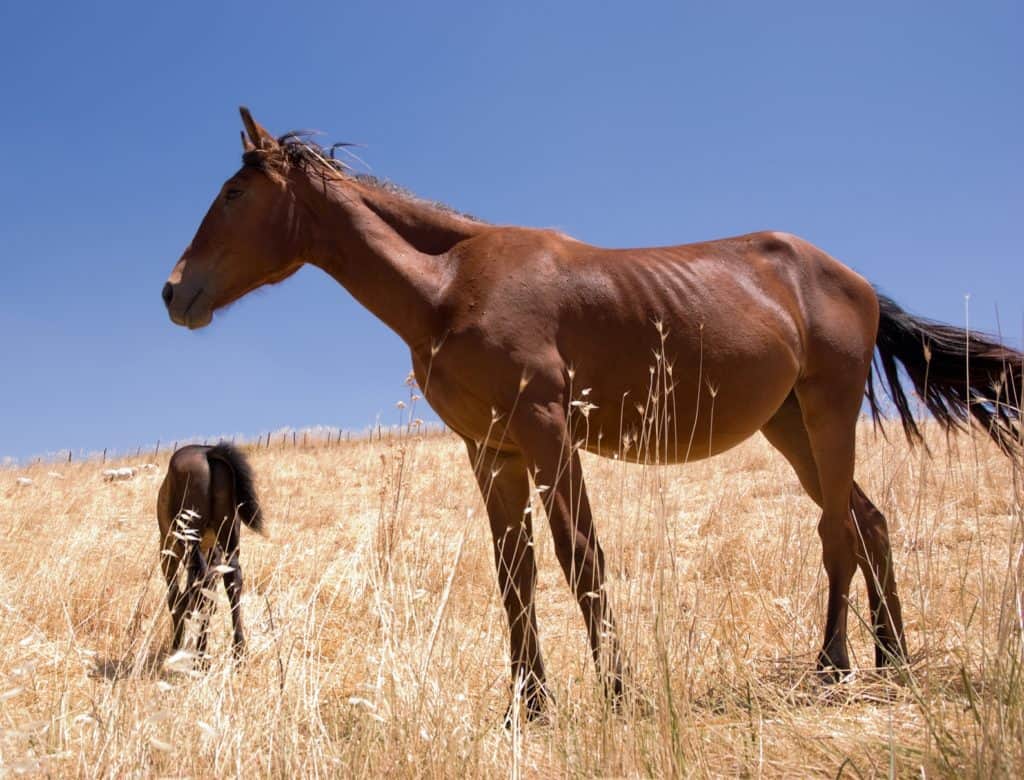
UC Davis researchers found that high-quality alfalfa hay is most effective for rehabilitating a starved horse.
Join TheHorse.com on Thursday, Aug. 30, at 8 p.m. EDT for a FREE Ask the Vet Live audio and chat event.

Patients with ocular disease had a higher incidence of colic than some other hospitalized equids.
EEE and WNV have stricken hundreds of horses in Wisconsin since 2001.
The HSUS has launched a national tip line to help crack down on the illegal practice known as “soring.”