Equine Embryo Transfer Table Topic (AAEP 2010)
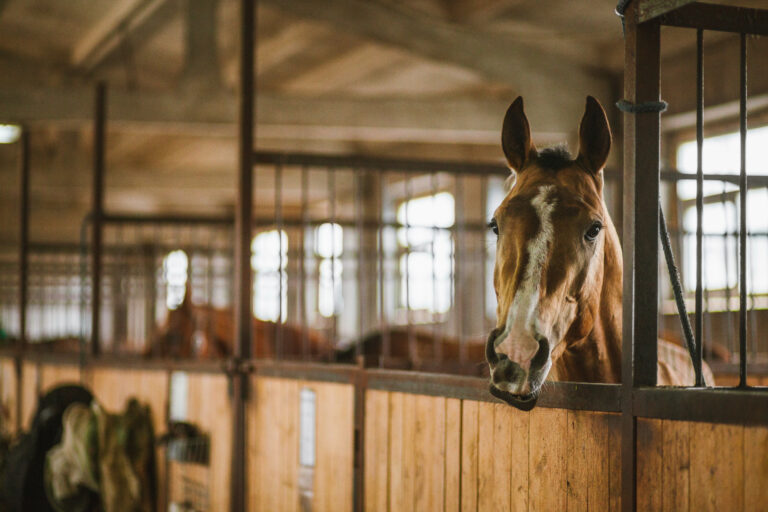
One of the popular Table Topics sessions held at the 2010 American Association of Equine Practitioners Annual Meeting, held Dec. 4-8 in Baltimore, Md., revolved around equine embryo transfer.

One of the popular Table Topics sessions held at the 2010 American Association of Equine Practitioners Annual Meeting, held Dec. 4-8 in Baltimore, Md., revolved around equine embryo transfer.
Marla Bickel, President and CEO of Blood-Horse Publications, has announced that Eric Mitchell has been appointed Executive Vice President of the company. In this capacity, Mitchell will be part of the executive team that will continue to guide the Thoroughbred industry’s leading multimedia company into the future. He will retain his primary role of Editorial Director/Editor-in-Chief of The
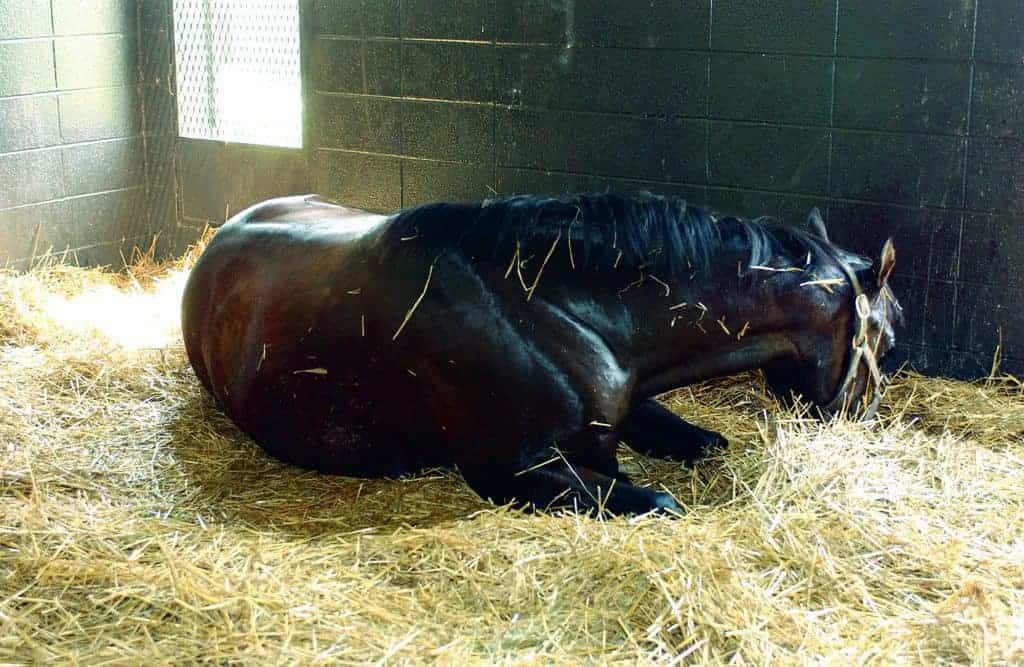
Recurrent colic is typically defined as three or more episodes of transient or prolonged colic occurring over a period of months or upwards of a year.
Scott E. Palmer, VMD, and Foster Northrop, DVM, were selected as the recipients of the American Association of Equine Practitioners’ (AAEP) 2010 President’s Award for their leadership in developing guidelines to promote racehorse safety.
About 2% and 6% of all racetrack fatalities in Thoroughbreds and Quarter Horses, respectively, are the result of scapular fractures, according to Stuart A. Vallance, BVSc (Hons), who, with Susan Stover, DVM, PhD, Dipl. ACVS, and a research team at the JD Wheat Veterinary Orthopedic Research Laboratory at the University of California, Davis, has investigated the risk factors for this fracture so
Ross Peddicord, a lifelong horseman, is taking the reins as the new executive director of the Maryland Horse Industry Board. The board promotes equestrian industry and the use of horses for recreation through activities such as raising awareness and visibility, educational and research projects to benefit the equine industry, and developmental efforts to stimulate the growth of the local horse
Radiographs of a horse’s limb joints are an important part of the pre-purchase examination for any performance prospect; the goal is to find any problems that might cause lameness down the road. However, it appears that in cutting horses at least, certain lesions seen on radiographs of the stifle joint just don’t hurt a horse’s performance as much as many have thought. Myra Barrett, DVM, MS, Dipl.
The Louisiana State University (LSU) School of Veterinary Medicine’s Veterinary Teaching Hospital recently acquired a high-tech patient monitoring system to assure that anesthetized patients wake up healthy from surgery or an MRI procedure.
Seven horses were castrated at the Tacoma Equine Hospital’s low-cost castration clinic held on Dec. 31, 2010. With funding from the Unwanted Horse Coalition’s Operation Gelding, the clinic provided financially strapped owners an opportunity to change their horses’ lives for the better.
Lights, Camera, Action! The American Saddlebred Museum at the Kentucky Horse Park, located in Lexington, Ky., is readying its 2011 exhibit which will feature both Saddlebreds and Saddlebred owners that have played important roles in the movies, on television and throughout history.
Neuroaxonal dystrophy, or NAD, is a neurologic disease that can affect horses as well as humans, sheep, cats, and dogs. The condition is not yet fully understood, although researchers believe there might be a genetic component.
The University of Wisconsin (UW) School of Veterinary Medicine Continuing Education program will be hosting its 22nd annual seminar on Feb. 19. This year’s topic is “First Aid for Horses–When to Call the Vet and What to do Before Help Arrives.” The morning session will be held in the Ebling Symposium Auditorium, located within the Microbial Science building, 1550 Linden Dr., Madison, Wisc. The

R. equi is a dangerous pathogen that causes pneumonia in foals that are generally between the ages of 3 weeks and 5 months. In cases that caretakers and veterinarians catch early on, the foal can make a full recovery with proper treatment. However in more serious cases, the mortality rate is quite high.
As Blame and Zenyatta fans hold their collective breath in anticipation of the highly debated Horse of the Year announcement at the Jan. 17 Eclipse Awards ceremony, the mare’s owner Jerry Moss and the colt’s trainer Al Stall gave their final thoughts on the matter during a National Thoroughbred Racing Association teleconference Jan. 13.
A wild animal was not responsible for killing a Wisconsin horse, according to necropsy results on the horse, which were released last week.
A Colorado man was sentenced on Jan. 12 to serve more than 10 years in prison in connection with a barn fire that killed 12 horses and several other animals on May 9, 2010. The horses, a goat, and several chickens and roosters were residing in a corral on private property in Commerce City, Colo., when the fire broke out. A subsequent investigation revealed that the blaze had been