Article

Subcategories:
None

When HERDA Strikes

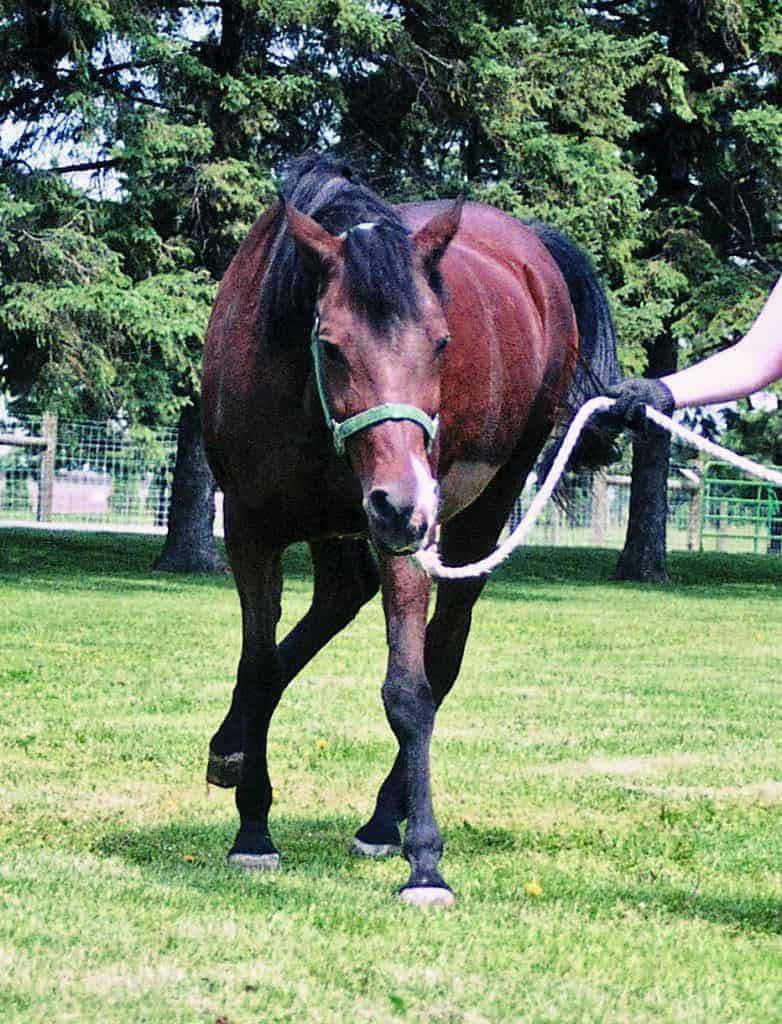
A diagnosis of hereditary equine regional dermal asthenia (HERDA), or hyperelastosis cutis (HC), is frequently a grim one for horse owners. The hereditary skin disease that affects some stock horse breeds can result in isolation and skin lesions for the afflicted horse, and mounting veterinary expenses and heartache for the owner. But one horse-and-owner pair is proving that it’s possible to live

Read More

Breeders’ Cup: Churchill Downs’ Track Should be Fair

After the slow times turned in on Sunday’s opening day card, and the forecast of freezing low temperatures for Friday and Saturday, the typical warning flares went up. How fair will the track be for the Breeders’ Cup and what can be done to prevent the track from becoming cuppy, a condition no trainer wants to see, especially those coming from harder surfaces and synthetic

Read More

American Association of Equine Practitioners (AAEP) 2010 Convention Preview

When the 56th Annual Convention of the American Association of Equine Practitioners drops anchor in Baltimore, Md., Dec. 4-8, a sea of learning opportunities awaits the equine veterinarians, veterinary students, and technicians expected to attend. Featured in-depth lectures will cover reproduction, diagnostic imaging, and equine welfare, among countless other topics. Write-ups of the convention’s

Read More

Lethargic Horse, Trouble Urinating, What Is It?

My 13-year-old Quarter Horse gelding is lethargic and has trouble urinating. He stretches a lot and lies down; he’s just not his jovial self. He has been eating, but he doesn’t show enthusiasm about his food. What could be affecting my horse?

Read More

Vasculitis Concerns

My vet said my filly had vasculitis and started her on steroids and other drugs, in conjunction with hosing and wrapping her swollen legs. If we get through this episode, can this disease recur for the rest of her life, or is it now cured?

Read More

High-Protein Diet Okay for HYPP Horse?

My 13-year-old Quarter Horse is HYPP +/-. He’s worked moderately twice a week and is on turnout with access to grass and hay. I’ve switched his feed, but it contains 14% protein. I’ve heard high levels of protein make sa horse “hot.” Is this true?

Read More

Naughty, Nipping Pony

My pony is biting me. He got my arm twice and my bum once, and he’s even bitten my cousin. Now I am afraid of him. We’ve thought about using a muzzle, but others have said to just whack him hard on the nose. What do you think?

Read More

EVA Outbreak in Argentina

An outbreak of abortion associated with equine arteritis virus (EAV) infection occurred on a Thoroughbred breeding farm in San Antonio de Areco, Buenos Aires Province, in March 2010. On March 31, EAV was detected by reverse-transcription polymerase chain reaction (RT-PCR) and virus isolation from an aborted equine fetus and placenta, which was the third abortion to have occurred on the premi

Read More

Managing Insulin Resistance Through Diet and Exercise

Insulin-resistant horses are prone to laminitis, but owners and veterinarians can often successfully manage them through strict diet and exercise regimens so that they don’t develop laminitis. Ray J. Geor, BVSc, PhD, Dipl. ACVIM, professor and Chair of the Department of Large Animal Clinical Sciences at Michigan State University, outlined some of those regimens at the Sept. 17-1

Read More

New Method for Anesthesia Delivery at the University of Georgia

Equine and other large animal patients that undergo anesthesia for surgery at the University of Georgia (UGA) College of Veterinary Medicine will benefit from new, state-of-the-art anesthesia equipment, as the Veterinary Teaching Hospital has begun using a unique machine for delivery of anesthesia to their large animal patients. UGA hospital recently became the first veterinary fa

Read More

Understanding Nutritional Risks in Laminitic Horses

We might be feeding our horses too well, at least as far as predisposing them to laminitis. Ray J. Geor, BVSc, PhD, Dipl. ACVIM, professor and chair of the Department of Large Animal Clinical Sciences at Michigan State University, spoke about controlling nutritional risks in pre- and post-laminitic horses at the Sept. 17-18 Laminitis West Conference in Monterey, Calif.

Read More

Breeders’ Cup: Zenyatta Steals the Headlines

Mighty Mare vs. Goldi the Great. Although they won’t be competing against each other, filly phenoms Zenyatta and Goldikova will be battling for world domination on Nov. 6 at Churchill Downs. The burning question on everyone’s mind is whether one or both, or neither of racing’s divas will be taking their final bows in the winner’s circle and conclude their amazing c

Read More

State Veterinarian Encourages Checking State Entry Requirements

The office of the state veterinarian of Kentucky would like to remind all horsemen and veterinarians to check entry requirements (both interstate and onto a particular track) prior to preparing horses to depart, said Rusty Ford, equine programs manager for the state veterinarian. This is an effort to continue the battle against piroplasmosis

Read More

Targeted Diets Can Aid Horses with Liver Disease

The power of targeted equine nutrition programs is unquestionable. Take, for instance, the feeding management practices that almost entirely relieve horses of the crippling signs associated with tying-up. By reducing starch intake and filling the caloric void with fat and fiber, many racehorses that are genetically predisposed to the disease have become successful athletes. This demonstrates

Read More

AAEP Develops Veterinary Guidelines for the Care of the Racehorse

The American Association of Equine Practitioners (AAEP) today released guidelines for veterinarians who treat racehorses. The document, “Clinical Guidelines for Veterinarians Practicing in a Pari-Mutuel Environment,” promotes medical practices the AAEP believes place the appropriate emphasis on the health, safety, and welfare of the racehorse. The central focus of the gu

Read More

Steve Kraus to Join Cornell as Head Farrier

Steve Kraus will join the Cornell University College of Veterinary Medicine as head farrier, effective Nov. 1. He will continue the great work of Michael Wildenstein, who has been with Cornell since 1991, and has accepted an early retirement incentive offered by New York State. Kraus specializes in trouble shooting under-performing horses around the Finger Lakes Region of Central

Read More

More From The Horse

horse topline
Vet In Discussion With Horse Owner
Beautiful horses, animals, pasture, stables, horseback riding
Silhouette of a beautiful Arabian horse against sun shining through heavy fog, in sepia tone

Stay on top of the most recent Horse Health news with

FREE weekly newsletters from TheHorse.com

Weekly Poll

sponsored by:

During a summer heat wave, when are you most likely to ride or work your horse?
42 votes · 42 answers

Create a free account with TheHorse.com!

The Horse
Privacy Overview

This website uses cookies so that we can provide you with the best user experience possible. Cookie information is stored in your browser and performs functions such as recognising you when you return to our website and helping our team to understand which sections of the website you find most interesting and useful.