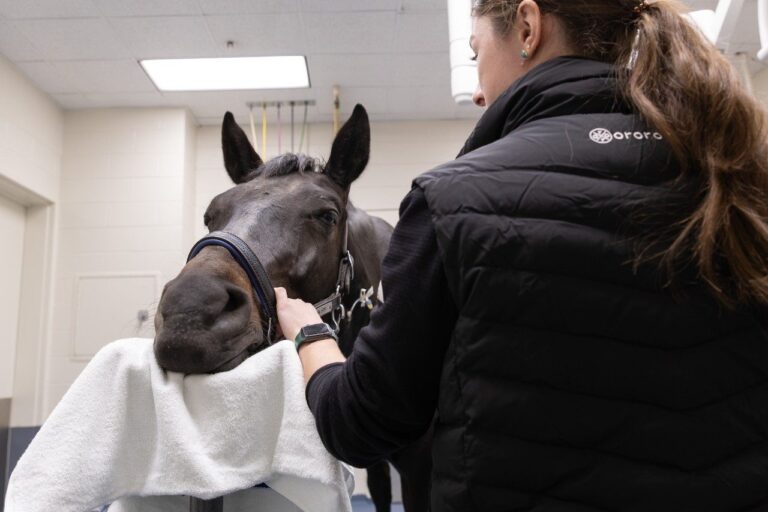
UK Researchers Study MicroRNAs Throughout Gestation in Mares
MicroRNA, a small nonprotein coding gene, holds potential as a novel way to diagnose various diseases in the horse.

MicroRNA, a small nonprotein coding gene, holds potential as a novel way to diagnose various diseases in the horse.

The University of Kentucky Animal Genetic Testing and Research Laboratory has been renamed Genetic Testing at Gluck.

While environmental factors, such as nutrition and training, shape sustainability, genetics influence it, as well.

This marks the first time such a connection has been made in any mammalian species.

Recent study results reveal why the dun pattern does not appear in many domestic horses.
Researchers recently diagnosed the first homozygous case of Warmblood fragile foal syndrome (WFFS), a genetic disorder.
This finding is the first molecular characterization of resistance to three classes of antibiotics in R. equi.

Researchers observed a negative bias of block-colored and spotted horses, which could impact subjective evaluations.
Lecture topics will include mare, stallion, and foal care; navicular syndrome; the digestive tract; and more.
Rutgers and University of Minnesota researchers are studying genetic factors underlying musculoskeletal diseases.

Researchers say the ‘Gait Keeper’ gene appears to be responsible for trotters’ success in harness racing.

The Hippolia Foundation unites equine research groups for better progress, improved funding opportunities, and more.

A particular variant within the HMGA2 gene appears to be related to height determination, scientists determined.

Infertile mare? Deceased stallion? No problem! Equine reproduction is now high-tech enough to overcome these hurdles.

Genetic testing reveals differences in an individual’s DNA that result in traits from coat color to muscle function.

Find out what the equine genome can tell us about our horses and preventing genetic disease.