Caring for Critically Ill Newborn Foals
Learn about healthy foals, problems that are common in newborns, how veterinarians treat these issues, and more.

Learn about healthy foals, problems that are common in newborns, how veterinarians treat these issues, and more.
What impact can a mare going through her “foal heat” have on her foal? Dr. Wendy Vaala responds. This podcast is from the Equine Life Stages: Foals Q&A audio event.

Birth to 6 months is a time of rapid change for foals. Nutrition, disease prevention, and much more are all vital to foal health. Learn how to help your young one thrive and get your questions answered during our hour-long special event!
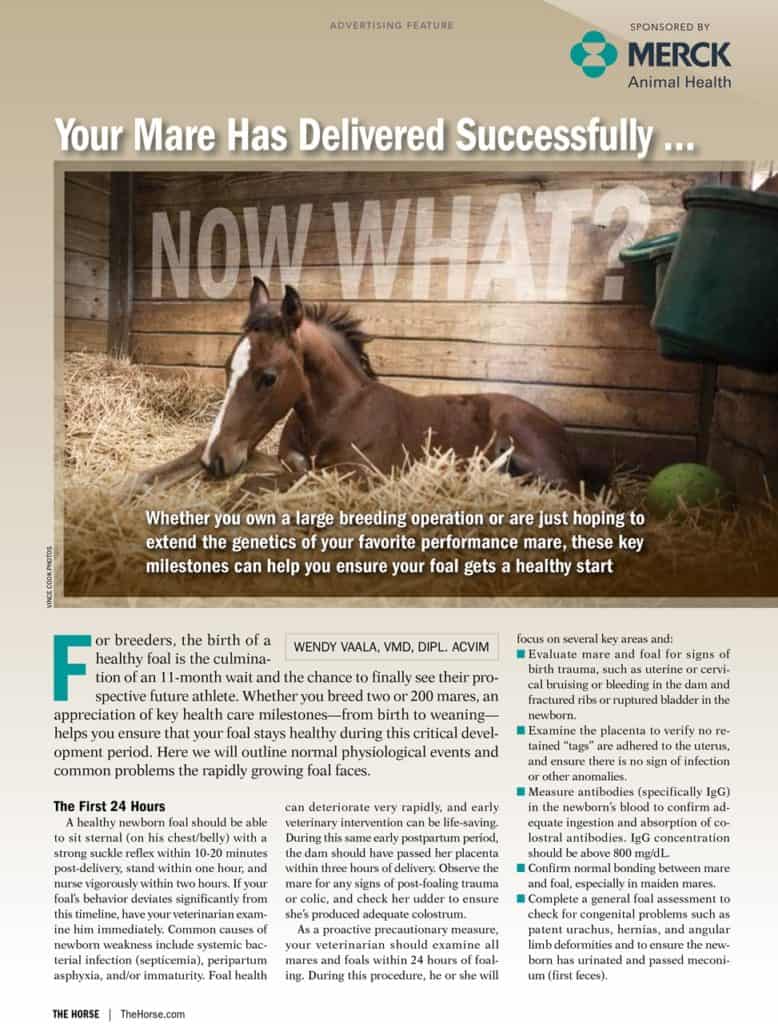
A foal’s first six months of life are full of change. Learn about normal foal development, health risks, and quiz your knowledge in this special report.

Your mare is in labor and your foal is on his way. But what if something goes wrong? Offer your baby a great start by listening to this live audio event covering foaling, dystocia (difficult birth), passive transfer of immunity, and neonate health.

Coronavirus–common in foals–could be associated with enteric disease outbreaks in adult horses.
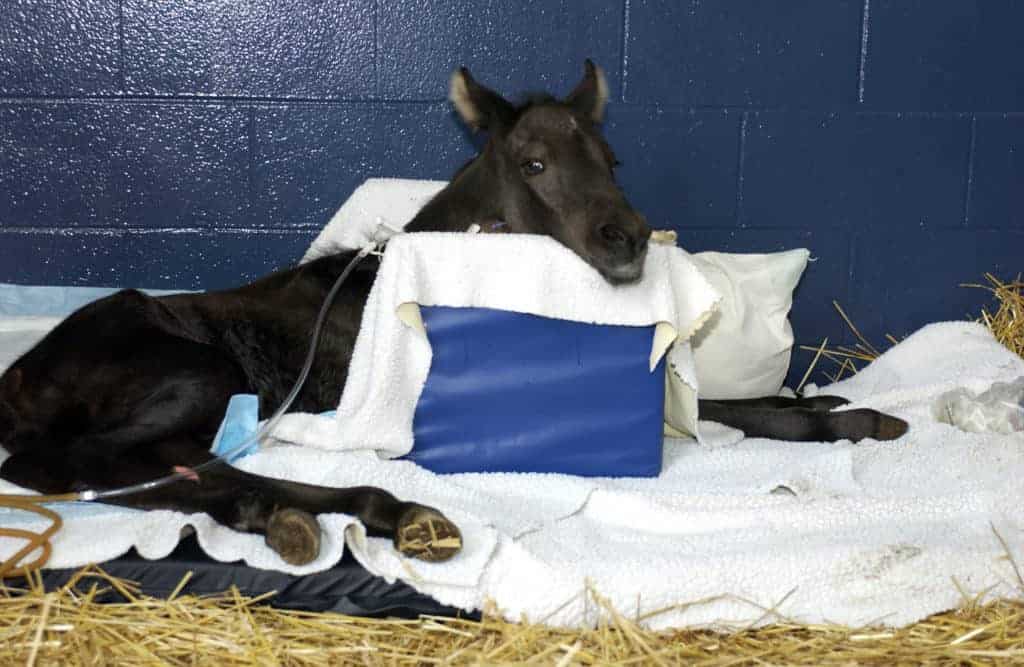
Meconium impaction, ulcers, diarrhea, and other GI problems can arise in foals.


R. equi is a dangerous pathogen that causes pneumonia in foals that are generally between the ages of 3 weeks and 5 months. In cases that caretakers and veterinarians catch early on, the foal can make a full recovery with proper treatment. However in more serious cases, the mortality rate is quite high.
Salmonellosis affects humans, horses, most mammals, and birds. It can cause debilitating–and even deadly–diarrhea. Salmonella bacteria can affect both foals and adults, and they spread easily by horse-to-horse contact and by fomites
“While many outbreaks of respiratory disease in foals are infectious in nature, this is not always the case,” she began. “Environmental factors can have a profound effect.”
Researchers looked at healthy and sick foals and also checked mares at foaling and two days after foaling to see if the mares were shedding the rotavirus into the environment where the foals could pick it up.
Any way you look at it, building a barn is a major undertaking. Doing it right the first time, to avoid headaches later, is the smart approach. In addition to the usual considerations of location, aesthetics, cost, and
“But we’ve never had rotavirus in our foals.” Read on and consider yourself lucky if your foals have never had rotavirus and you have breezed through the past foaling seasons sans diarrhea.
Foals born to mares which do not receive proper nourishment during gestation could be born weak.