Gluck Center Develops New PCR Assay for EHV-1
Kathryn Smith developed and validated a new real-time polymerase chain reaction assay for equine herpesvirus.

Kathryn Smith developed and validated a new real-time polymerase chain reaction assay for equine herpesvirus.

A recent study suggests anti-inflammatory drugs could reduce the rate of EHV-1 infection in horses.
One case of EHV-1 was confirmed at a Douglas County farm in May. The affected horse was euthanized.
A horse residing on the Lake County farm was euthanized and subsequently tested EHV-1 positive in May.
A Lake County, Ind., boarding facility was quarantined after an equine resident tested positive for EHV-1.
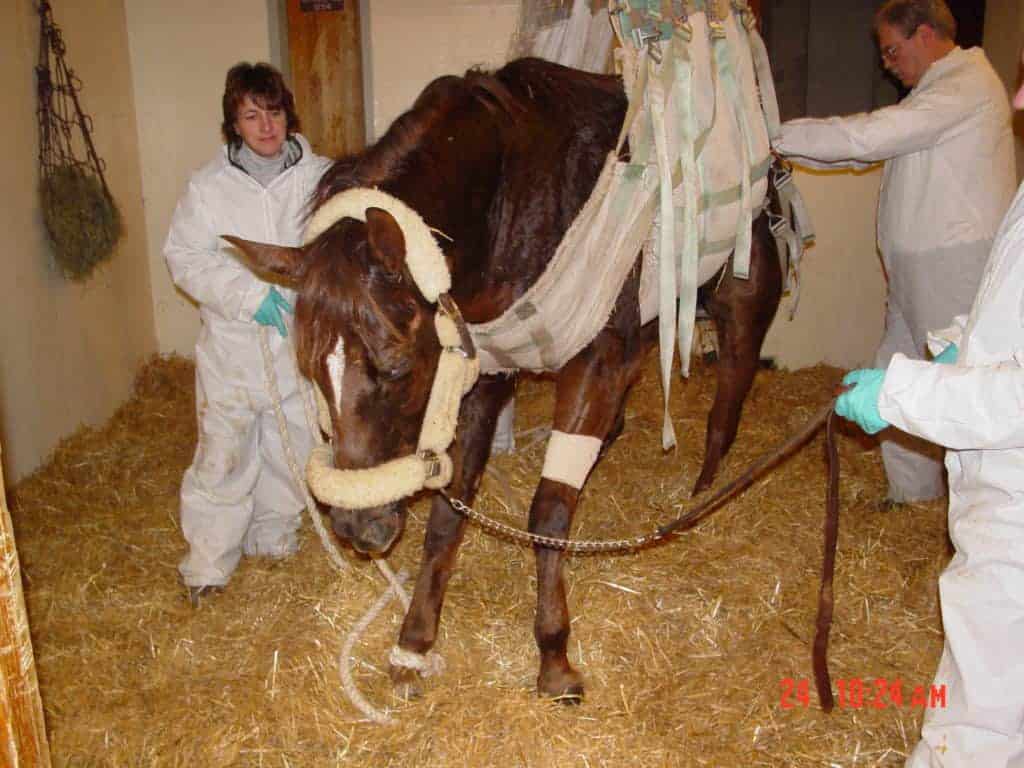
The horse was euthanized after showing severe neurologic signs associated with the disease.
The horses might have been exposed to EHV-1 during the Bucksnort Trail Ride, held April 23-30.
The facility in Monterey County, Calif., has been under quarantine since mid-March.

The mare displayed mild neurologic signs, and is considered a secondary exposure from the HITS Thermal show.
More than 2,000 horses were exposed to EHV-1 during the 2011 outbreak, which originated in Ogden, Utah.
The four EHV-1 positive horses are from two separate facilities, both of which are under voluntary quarantine.
The most recently confirmed horse displayed mild neurologic signs before testing positive for the disease.
The CDFA recommends owners of potentially exposed horses continue monitoring animals for signs of disease.
Published reports indicate that both horses recently attended the HITS Desert Horse Show in Thermal, Calif.
The guidelines focus on controlling the transmission of EAV, CEM, and EHV-1.
State animal health officials quaratined three premises in early to mid-January after confirming EHV-1.