Vaccinating Broodmares
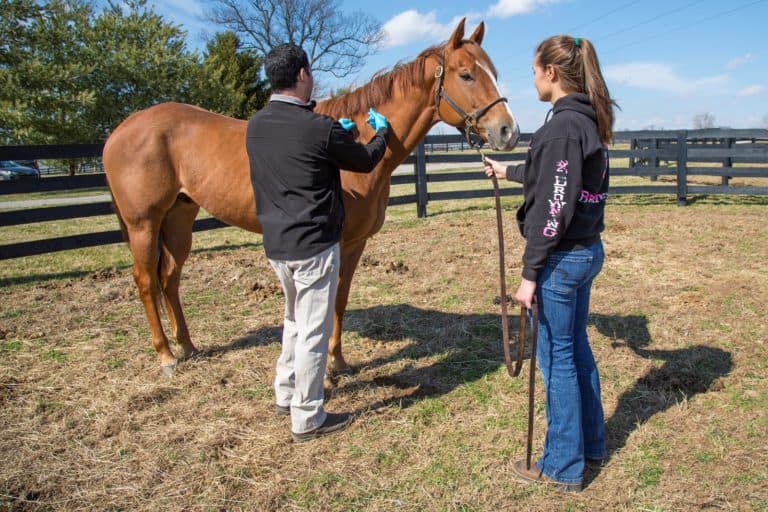
Broodmares require additional vaccinations to help ensure their foals are protected from disease. Learn about proper broodmare vaccinations with Dr. Dale Brown of the Rood & Riddle Equine Hospital.

Broodmares require additional vaccinations to help ensure their foals are protected from disease. Learn about proper broodmare vaccinations with Dr. Dale Brown of the Rood & Riddle Equine Hospital.
Expected birth date is an age-old question for horse breeders tending to four-legged mothers-to-be. Most mares are bred naturally in a scheduled breeding with the stallion or through artificial insemination. Dave Freeman, PhD, Oklahoma State
Since the first live foal produced by embryo transfer was born in 1974, the procedure has become one of the most popular assisted reproduction options for breeders with mares who are valuable or for mares that are to remain in competition. According
When it comes to a mare’s uterus, ultrasound examination and cytology (examination of cells under a microscope) can give a veterinarian a pretty good picture of what’s going on inside that could be confounding conception. However, comparing these
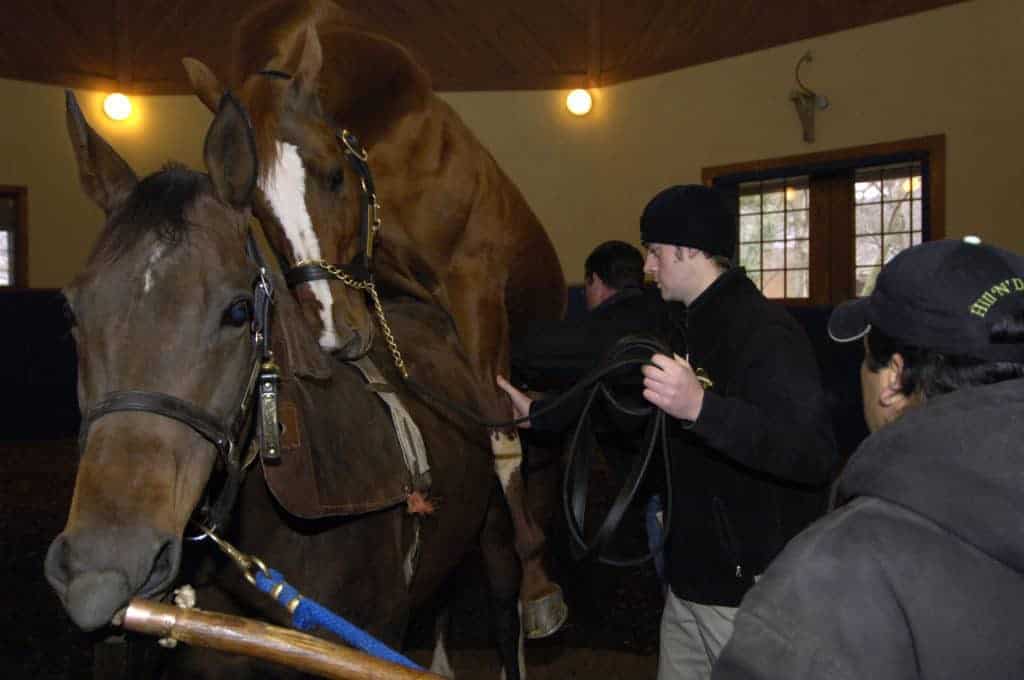
Live cover breeding of horses remains a popular choice. Whatever your reason for choosing this method, these 10 tips will be useful as you plan a mating. Attention to safety and behavior go a long way in making the experience positive and successful.
Our pregnant mare thinks another mare’s colt is hers. Is it common for pregnant mares to adopt others’ foals?
The High Risk Pregnancy in the Mare session at the 2009 AAEP Conference was very well attended.
Mare nutritional status is a critical component in foal health from conception through weaning.
Non-steroidal anti-inflammatory drugs could assist vets managing persistent mating-induced endometritis (PMIE), a chronic inflammation of the lining of the uterine wall after breeding or artificial insemination, a leading cause of reduced ferti
Broodmare farm operators in the southeastern United States are interested in managing tall fescue toxicity because of the pregnancy complications it can cause.
Anytime veterinarians talk about breeding the problem mare, it always develops into a lively, animated discussion. The Table Topic on Breeding the Problem Mare was no different at the 2009 American Association of Equine Practitioners (AAEP) Con
Treatment with equine follicle-stimulating hormone (eFSH) does not increase healthy mares’ conception rates, researchers recently reported.
The hormone eFSH is used to stimulate donor mares’ ovaries to increase the number of
Combining their surgical expertise with state-of-the-art laparoscopic equipment, veterinary specialists at Virginia Tech’s Marion duPont Scott Equine Medical Center have been able to remove certain mares’ ovaries in a surgical procedure
What was the hottest news in equine veterinary medicine in 2009? During the popular Kester News Hour session at the annual American Association of Equine Practitioners (AAEP) Convention, three top veterinarians (who focus on equine reproduction, inte
The Western College of Veterinary Medicine’s Equine Health Research Fund (EHRF) has allocated a total of $69,000 to five new equine health research projects–all of which cover topics of vital importance for researchers and for horse owners.
Lactation is a very important function in a mare. So important, in fact, that two lives depend on it. A mare’s body will sacrifice her foal’s health to save her own life … both during gestation and after foaling. In other words, you must feed her