Virginia Reports First Case of Equine WNV for 2015
The unvaccinated 5-year-old Choctaw mare from Orange County was discharged from a clinic after her condition improved.

The unvaccinated 5-year-old Choctaw mare from Orange County was discharged from a clinic after her condition improved.
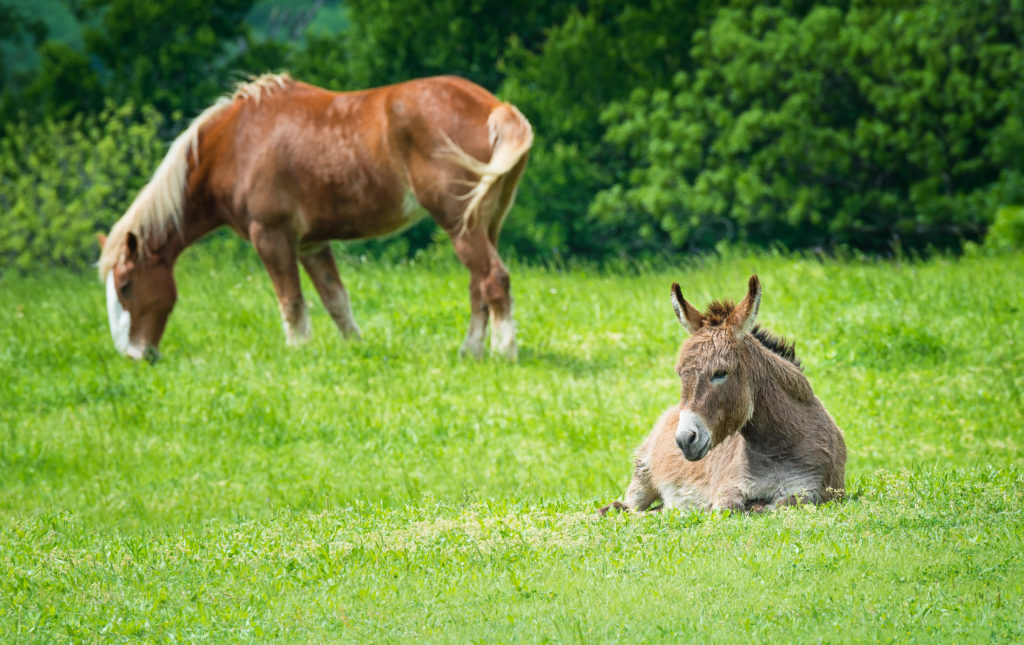
Researchers found no evidence that donkeys pose more of a disease threat than horses at mixed-equine events.

This is Greater Sudbury’s first equine West Nile virus case in more than a decade. The first was reported in 2004.

Seven horses have tested positive for WNV and seven others were confirmed positive for EEE.
Five new cases have been confirmed. Three horses are recovering, one died, and one was euthanized.

From vaccinating against disease to storing feed properly, learn how to protect your horses from pests.
As of July 30, three and five Texas horses have tested positive for WNV and EEE, respectively, so far this year.

Horse owners should take steps to protect their animals, including vaccinating and implementing insect control measures.
Officials say a horse in Boulder County has been diagnosed with West Nile Virus (WNV).

A south Texas horse tested positive for WNV while the EEE cases were found in the eastern part of the state.

The unvaccinated 5-year-old Quarter Horse gelding from Kennewick is recovering.
There’s still time to take steps to protect your horse from these two potentially deadly mosquito-borne diseases.
Reported diseases include equine herpesvirus, strangles, equine viral arteritis, contagious equine metritis, and more

This neurologic condition can prove deadly for some horses, but others recover with treatment. Here’s what to remember.
An unvaccinated horse from Barnwell County died after contracting the mosquito-borne disease.
An 8-year-old Quarter Horse from Cumberland County died despite veterinary treatment.