10 Skin Tumor Resources on TheHorse.com
While some lumps and bumps are typically of little consequence, others can pose serious problems. Learn more.

While some lumps and bumps are typically of little consequence, others can pose serious problems. Learn more.
The British survey results also suggest that lamenesses are more likely to originate in the limb than in the foot.
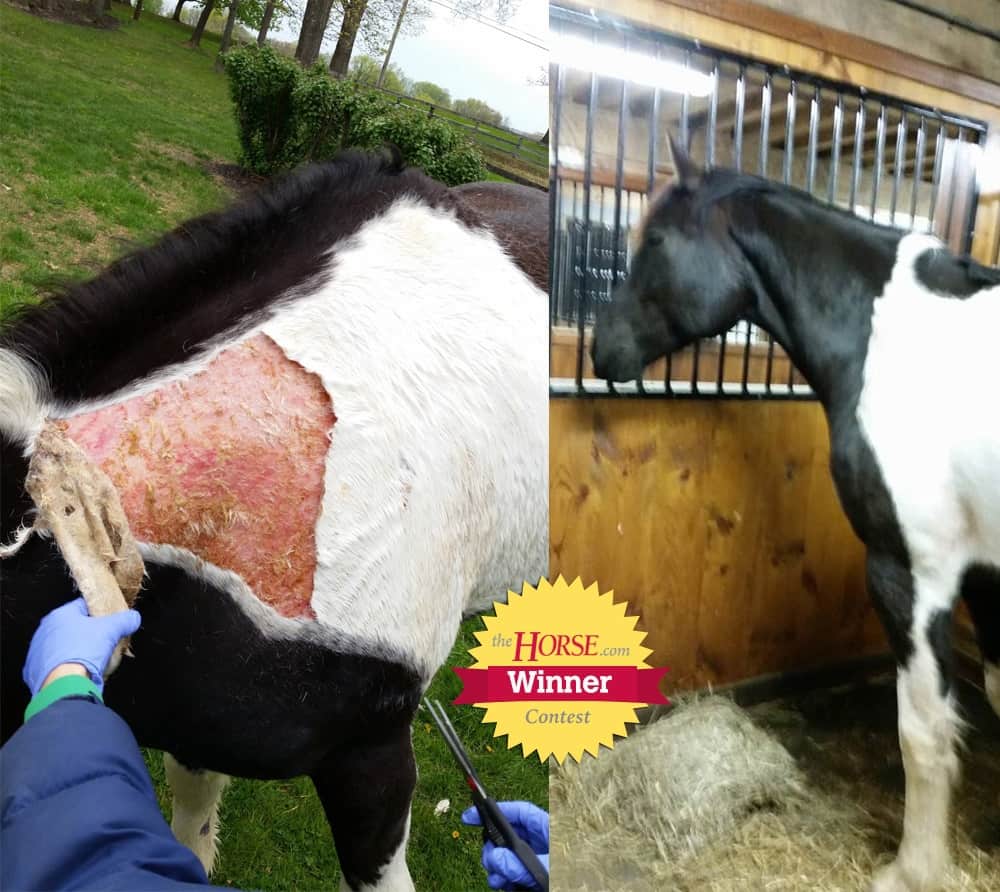
TheHorse.com Facebook fans selected Romeo as the overall winner of the “Help! My Horse is Sun-Sensitive” contest.

Researchers concluded that alfalfa hay can induce primary photosensitization, but what it results from remains unclear.

Is your horse sun-sensitive? Submit his story and photo for a chance to win a prize pack!

Researchers studied a group of related Exmoor ponies to find the chromosomes that could carry IBH-related genes.

What’s causing the hives, hair loss, and scabs on your horse’s body?
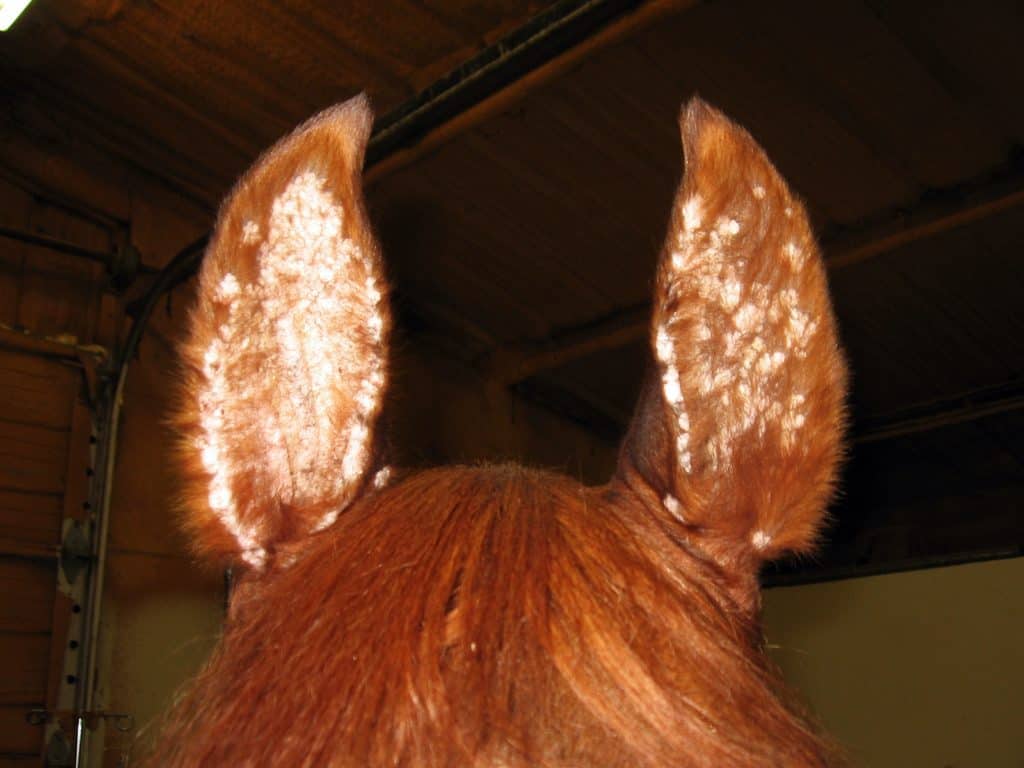
Researchers found that applying 5% imiquimod cream resulted in clinical resolution in 93% of the treated ears.

A veterinary dermatologist offers tips on how to properly diagnose, treat, and prevent pastern dermatitis, or scratches.

Learn about this frustrating contagious equine skin disease and how to prevent its spread.
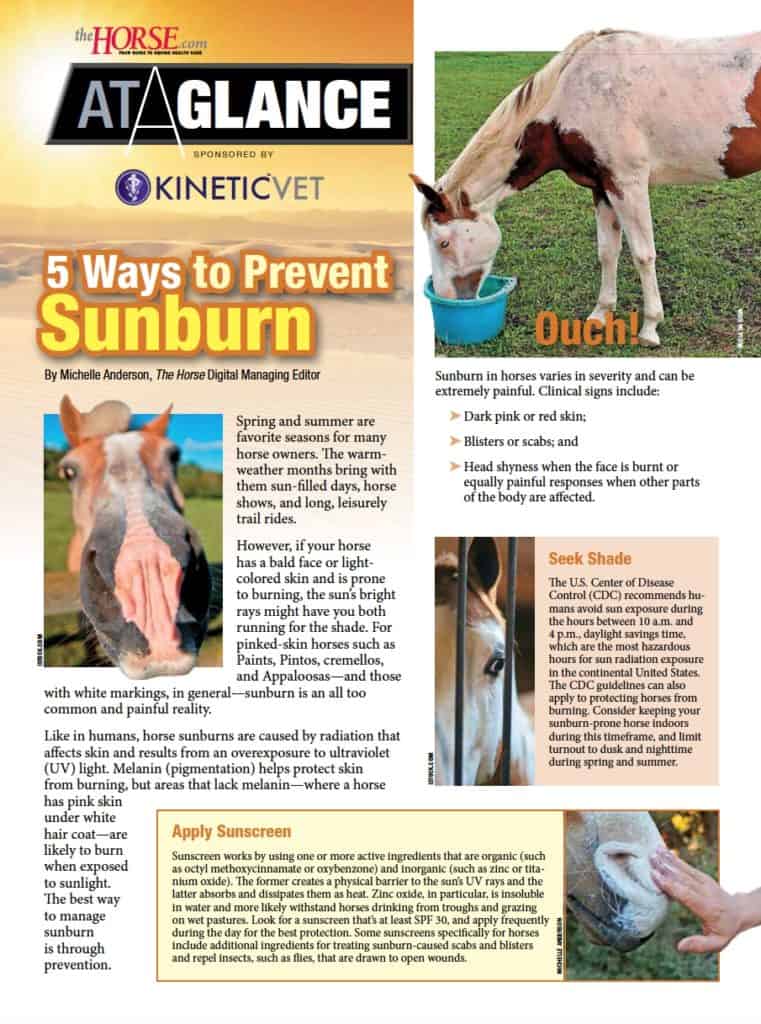
Use this cheat sheet to protect your horse from the sun’s harmful UV rays.

Sun damage is serious in horses. In this infographic, find how to protect you pink-skinned horses from the sun.

Equine skin issues can be difficult to diagnose and frustrating to treat. Experts share practical solutions for dealing with sunburn, rain rot, skin allergies (sweet itch), and more.

Learn about a variety of skin issues and prepare to battle tricky-to-treat conditions with these free resources.

Can melanomas spread to a horse’s central nervous system? If so, are there any treatments available?

The procedure involves removing a sarcoid from the horse and implanting pieces of it back into the horse’s neck.