University of Tennessee to Host Equine Podiatry Conference
The preconference workshop and conference for vets and farriers will take place May 20 and 21, respectively.

The preconference workshop and conference for vets and farriers will take place May 20 and 21, respectively.
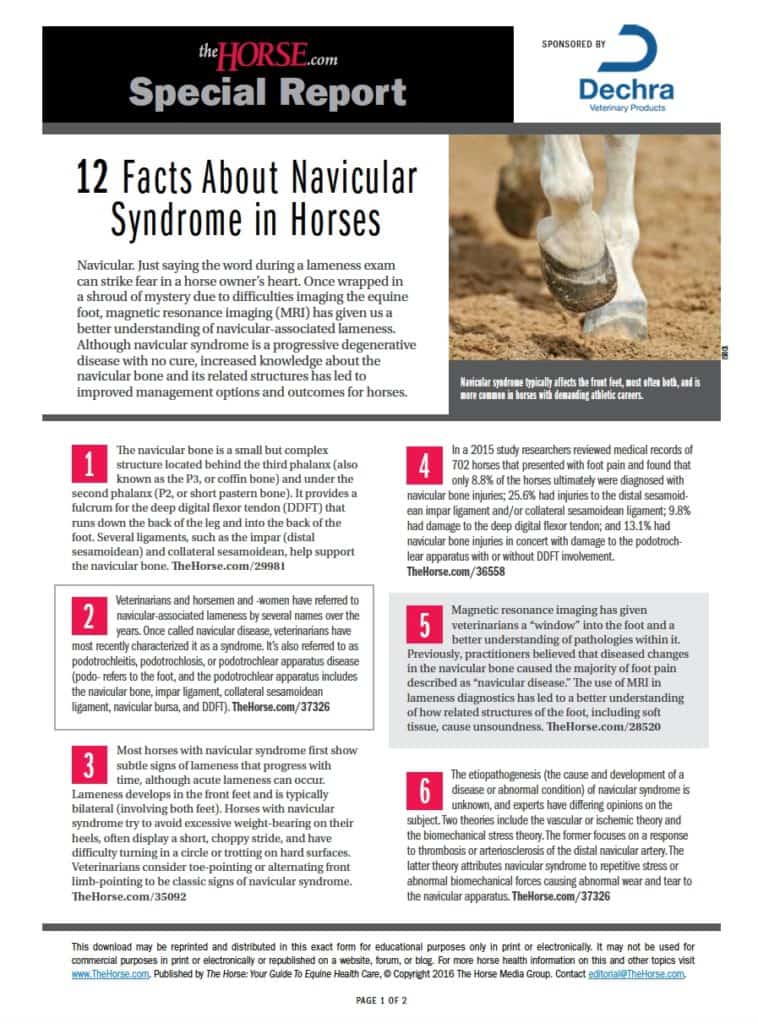
Learn about diagnosing, treating, and the possible causes of navicular syndrome in our Vet On Demand companion!

The University of Tennessee’s Dr. Jim Schumacher overviews navicular syndrome’s risk factors, treatments, and more.
Lecture topics will include mare, stallion, and foal care; navicular syndrome; the digestive tract; and more.

The horse’s lower limb is subject to a multitude of injuries that can baffle even the most veteran veterinarians.

Are there times I shouldn’t work my young horse recently diagnosed with navicular syndrome?

Addressing the anatomy, conformation, and biomechanical principles of the equine foot.

What can happen if a horse overdoses on Previcox? A veterinarian shares his insight.

Researchers observed a 16% improvement in horses’ lameness when using the drug compared to corrective shoeing alone.
A veterinarian and farrier addresses the benefits and concerns of wedge pads in shoeing horses with navicular syndrome.

Some forelimb lamenesses can result in the horse appearing unsound in a hind limb.

“Navicular” has ended the careers of many great horses, and the word alone can strike fear into any horse owner. Learn more about the condition and get your questions answered during our live event.
Researchers determined that tiludronate is safe to use in horses as directed.

Horses with concurrent deep digital flexor tendon lesions were four times more likely to become lame again post-surgery.
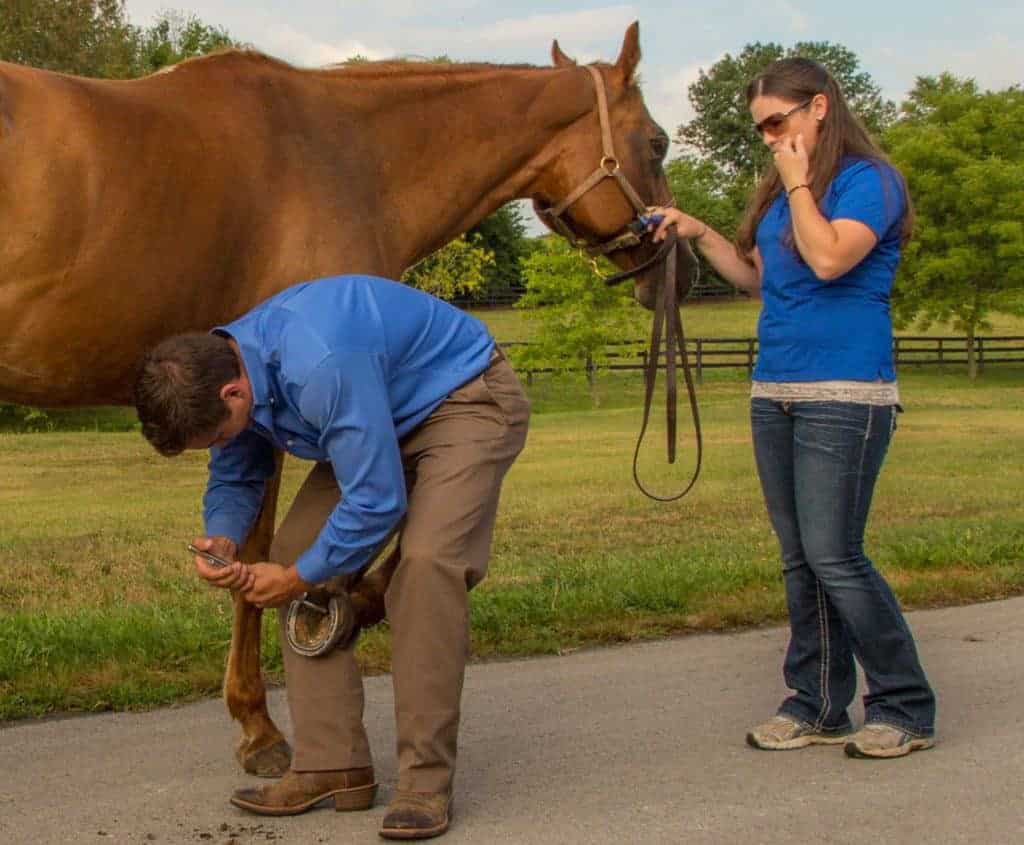
Learn how equine practitioners can assess and pinpoint the source of foot pain using a methodical series of tests.
Is long-term use of Previcox for treating pain related to navicular syndrome in horses okay?