Hair Loss in Horses
Hair loss in horses can be a frustrating management concern simply because the reasons for its occurrence are so many and so varied. Here are some common causes.

Hair loss in horses can be a frustrating management concern simply because the reasons for its occurrence are so many and so varied. Here are some common causes.

Why are there so many equine infectious anemia cases in the news, and how can you protect your horse from this deadly disease?
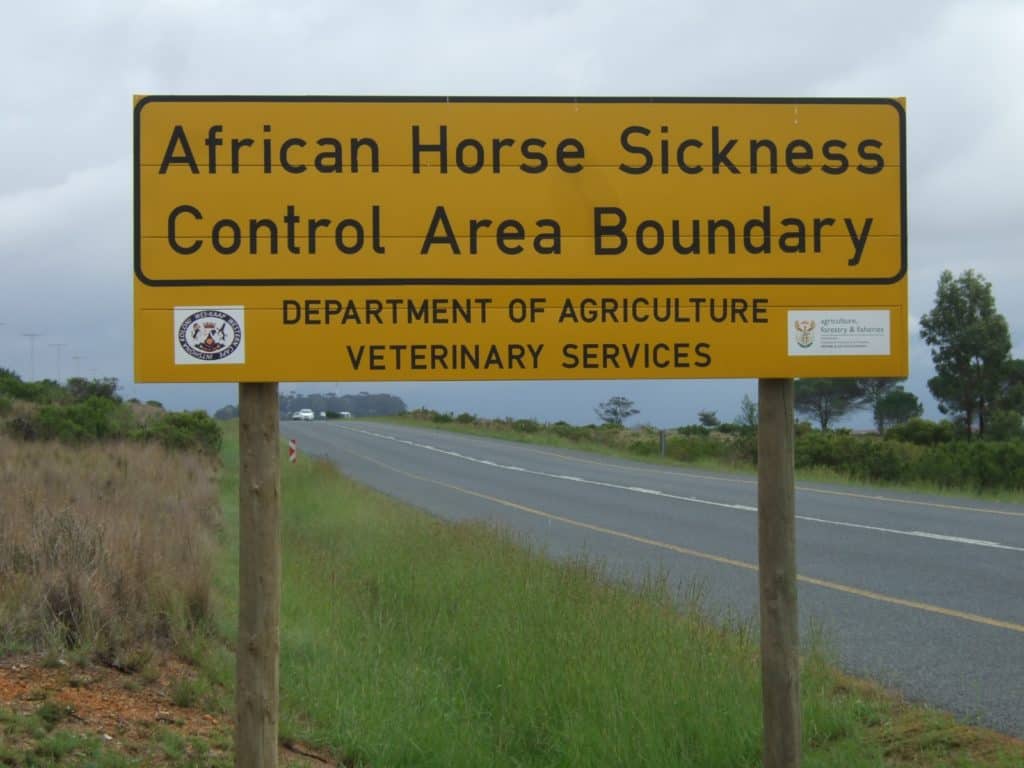
Researchers showed that the VP7 blocking ELISA test is highly reliable and works in exactly the same way every time its used, an important factor African horse sickness control and monitoring.

EHV-1 can spread between horses before they show any signs of infection, creating a potential perfect storm for a significant disease outbreak. An infectious disease expert shares steps you can take to stop disease spread.

Learn about colic, EPM, core vaccinations, biosecurity, donkeys, and more in our special features.

A barn was released from an EHV-1 quarantine, but is the risk for disease transmission gone? A veterinarian weighs in.
Strangles is highly contagious and can spread rapidly through horse populations and barns, so quick containment is essential. One veterinarian offers his tips on how to stop strangles from spreading.
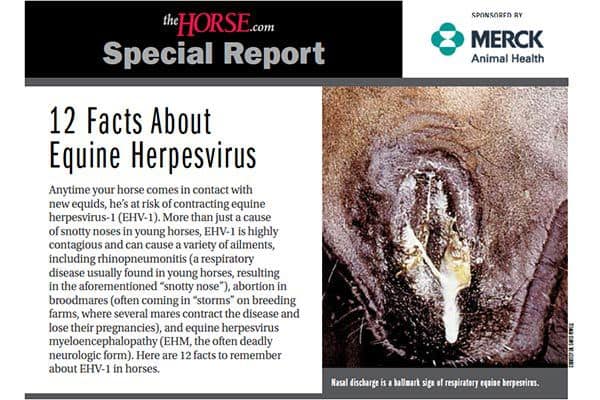
EHV-1 is more than just a cause of snotty noses in young horses. Learn more about this highly infectious disease and how to protect your horse in this special report.

Steve Reed, DVM, Dipl. ACVIM, of Rood & Riddle Veterinary Hospital, in Lexington, Kentucky, offers his insight about equine herpesvirus-1, including diagnosis, treatment, and prevention.
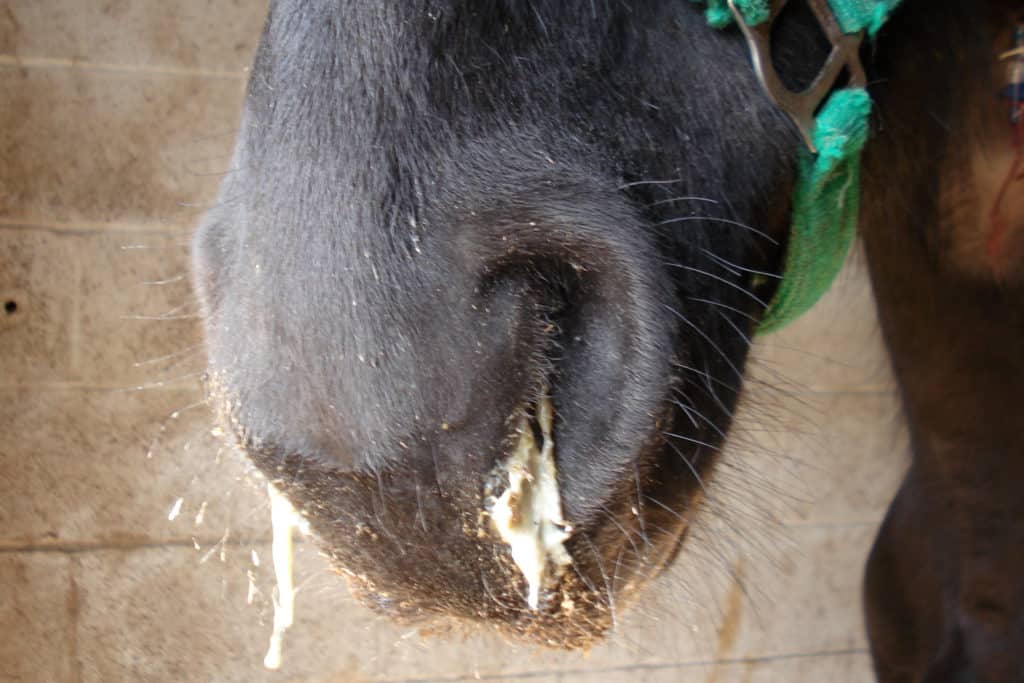
Dr. Joe Lyman of Neogen describes the disease known as strangles and how it’s spread.

Dr. Roberta Dwyer of the University of Kentucky offers her top piece of advice to protect horses from disease at horse shows and events.

What can boarders do when the barn is lax about biosecurity? Dr. Joe Lyman of Neogen shares advice.

Dr. Joe Lyman of Neogen explains what you should do if you suspect your horse as acquired an infectious disease.

How can you keep your horse healthy when going to horse shows, trail rides, or events? And what about bringing new horses into a boarding stable? Learn about practical biosecurity measures to protect your horses.

Horse owners are faced with the continuous daunting challenge of how to protect their charges from infectious disease. But things are about to get a little easier: We’ve combed our archives and compiled five biosecurity resources on TheHorse.com.

With equine herpesvirus infections seemingly on the rise, here’s how to protect your horses this season.