S. vulgaris, Selective Deworming Association Studied
Recent study results showed that the presence of Strongylus vulgaris, the most pathogenic equine parasite, was significantly associated with the time elapsed since the most recent deworming.

Recent study results showed that the presence of Strongylus vulgaris, the most pathogenic equine parasite, was significantly associated with the time elapsed since the most recent deworming.
Fall armyworms should not affect horses’ health or be confused with the Eastern tent caterpillar.

The recently identified leishmaniasis case in a Morgan mare is America’s first published indigenous case.
While fall armyworm is a pest of cattle and horse pastures, it should not affect horses.

A look at what it really costs to own a horse besides the initial purchase price.

Here’s how some of these parasites can infect your horse, what damage they do, and how to best control them.
The animal received veterinary treatment, but was later euthanized due to severe anaphylactic shock.
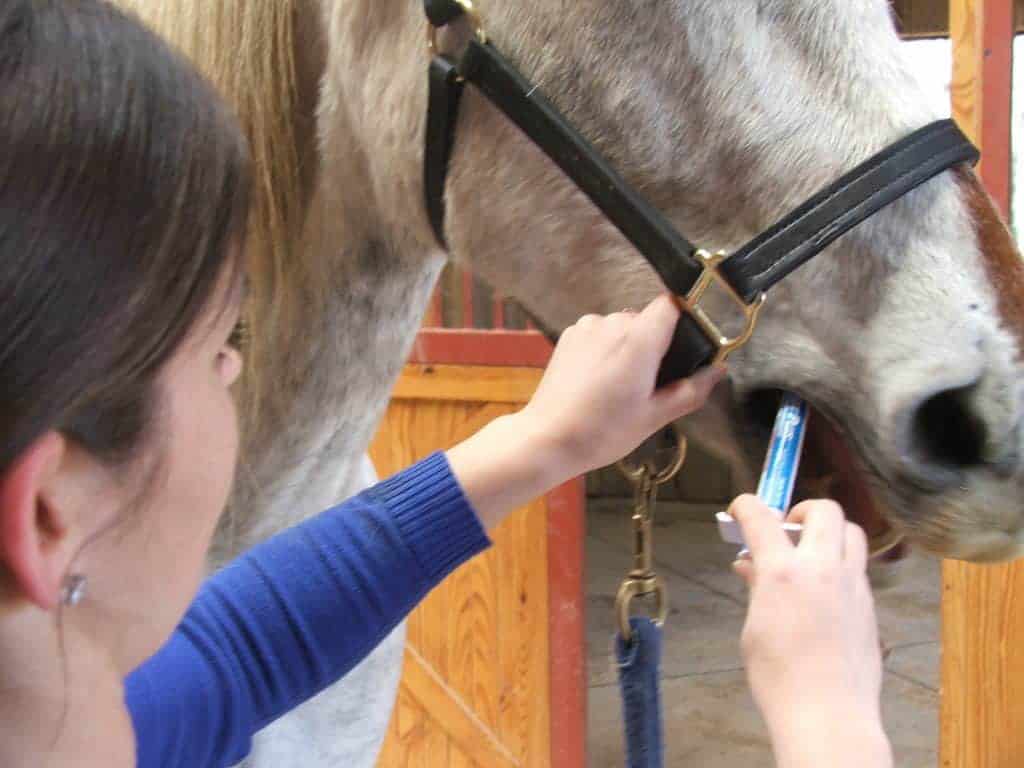
Consider using fecal egg counts and fecal egg count reduction tests in a sustainable parasite control program.
Equine parasite-control case studies and practical parasite control recommendations are discussed.

Dr. Martin Nielsen of UK’s Gluck Equine Research Center presents recent equine parasite-control case studies.
Use topical fly repellent, fly sheets, and other tactics to protect horses from flies and related diseases.
Researchers will use samples from horses with fevers of unknown origin to look for tick-borne infections.
Ticks typically begin to appear in late spring and early summer, but were reported weeks earlier this year.

S. neurona causes the neurologic disease EPM. A fully sequenced genome will provide a resource for virulence factor and S. neurona antigen characterization, which could lead to new immunizations or therapeutics against the parasite.
The field day will take place June 5, 2012, from 4-8 p.m. CDT at Darling 888 Ranch, located in Princeton, Ky.

Understanding ailments older foals can develop and treatment options increases the patient’s survival chances.