Laminitis Prevention and Intervention in Hospitalized Horses
Hospitalized horses are at an increased risk for developing laminitis as a complication of injury or illness.

Hospitalized horses are at an increased risk for developing laminitis as a complication of injury or illness.

New diagnostic technologies and treatment modalities have revolutionized how vets address equine back pain.
In the right hands, these physical therapy methods can help rehabilitate injured horses.
One of the challenges with equine pain management is often simply detecting a horse in pain and to what extent
A. U. Miner had surgery Nov. 7 to repair bilateral sesamiod fractures sustained in the Breeders’ Cup Marathon.

Using computational modeling, researchers can examine “what if” scenarios related to equine injuries.
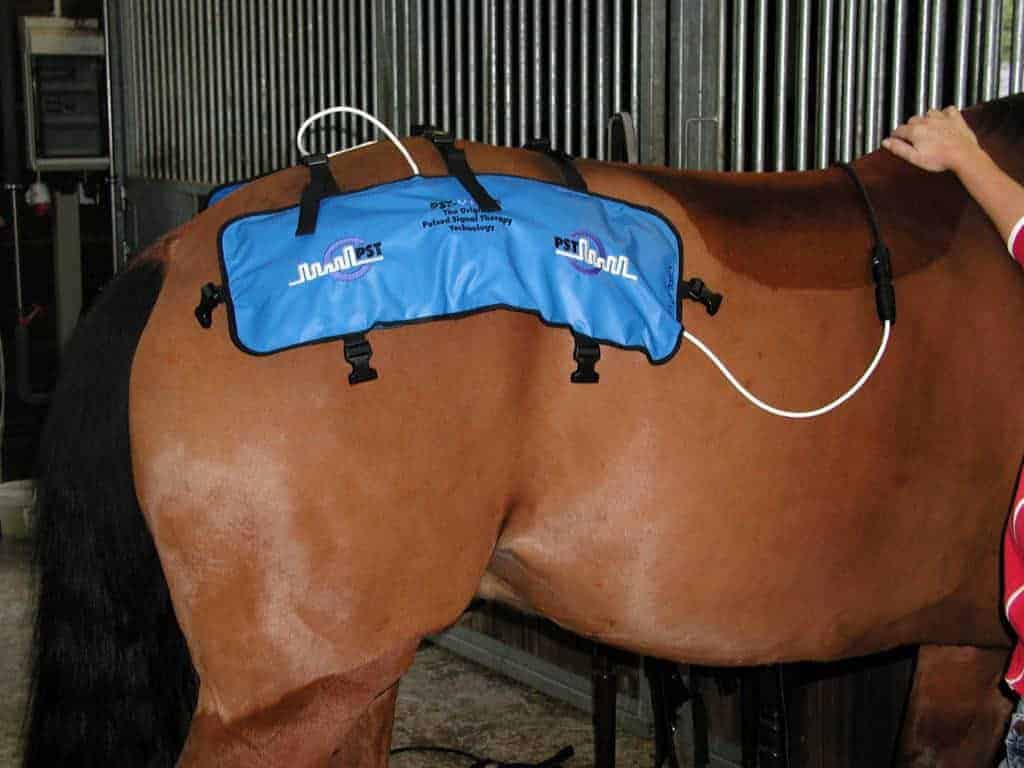
Sheila Schils, PhD, discusses electrotherapy’s place in physical therapy and the different devices available.

Researchers discuss the first case in which surgery to permanently prevent a renosplenic entrapment failed.
Awesome Again is recuperating from colic surgery performed Sept. 13 at Rood & Riddle Equine Hospital.

The Derby winner was cleared for exercise after undergoing surgery for a hairline fracture in his left hock.
When a horse needs surgery, what’s his prognosis for a full recovery? What problems can occur during recovery?
What factors do veterinarians look for when deciding whether to refer a horse to a hospital for colic surgery?
Kentucky Derby Presented by Yum! Brands winner Animal Kingdom had successful surgery to repair a hairline slab

The latest therapies for injured tendons and ligaments focus on rebuilding tissue to its original strength.
Archarcharch and Battle of Hastings, two of the horses injured during the Kentucky Derby day races at Churchill Downs, are both doing well after surgery at Rood & Riddle Equine Hospital in Lexington, Ky. Both surgeries took place May 8.
Horses with diaphragmatic tears (also called rents) are given a relatively poor prognosis to make a full recovery, but the condition is not a death sentence, according to the results of a recent retrospective study. Alfredo E. Romero, DVM, of