Coronary Band Injuries in Horses
Horses are likely to sustain coronary band and hoof wall injuries at one time or another. These injuries can carry long-term performance and soundness consequences.

Horses are likely to sustain coronary band and hoof wall injuries at one time or another. These injuries can carry long-term performance and soundness consequences.
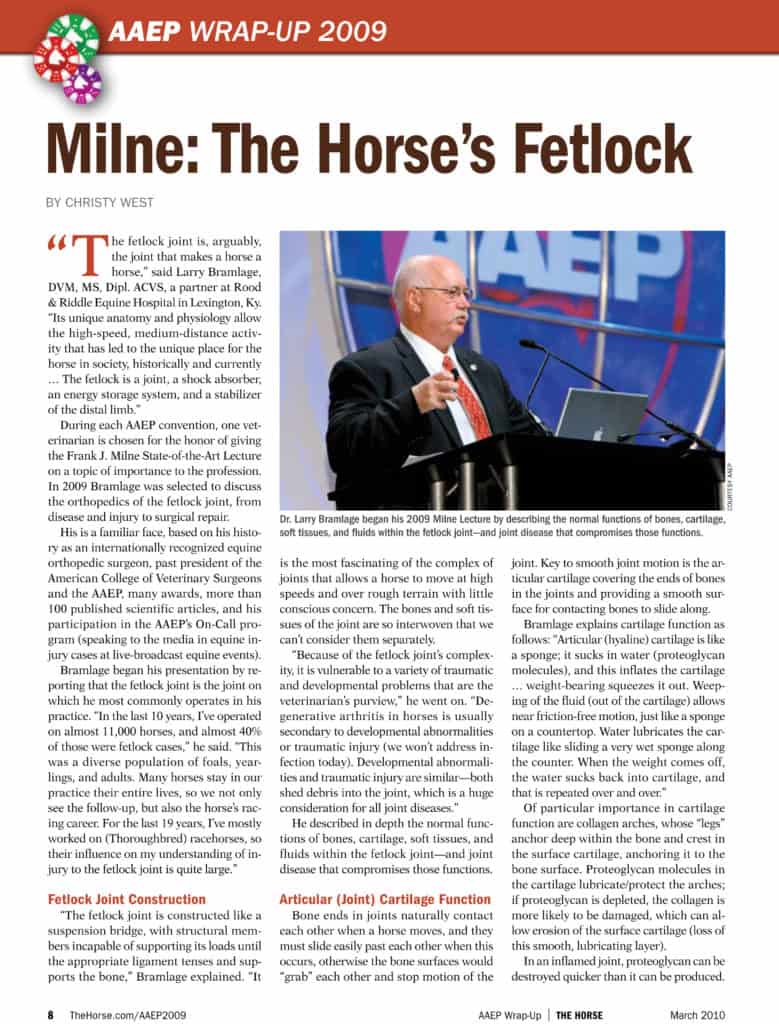
During each convention of the American Association of Equine Practitioners, one veterinarian is chosen for the honor of giving the Frank J. Milne State-of-the-Art Lecture on a topic of importance to the profession. In 2009 Larry Bramlage, DVM, MS, Dipl. ACVS, was selected to discuss the orthopedics of the horse’s fetlock joint, from disease and injury to surgical repair.
Learn about the normal functions of bones, cartilage, soft tissues, and fluids within the fetlock joint.
Learn how to keep splints (bony lower leg swellings) from becoming permanent blemishes or problems that interfere with a horse’s athletic career.
Results of a clinical study showed that distal limb wounds treated with a dressing containing esterified hyaluronic acid (hyaluronan) showed no improvement in healing as compared to untreated wounds.
To evaluate the effect of an
Hunt discussed several limb and hoof deformities in foals and recommendations for correcting or managing them during the “Putting Science into Farriery” session at the 2008 Convention of the American Association of Equine Practitioners. One of his bi
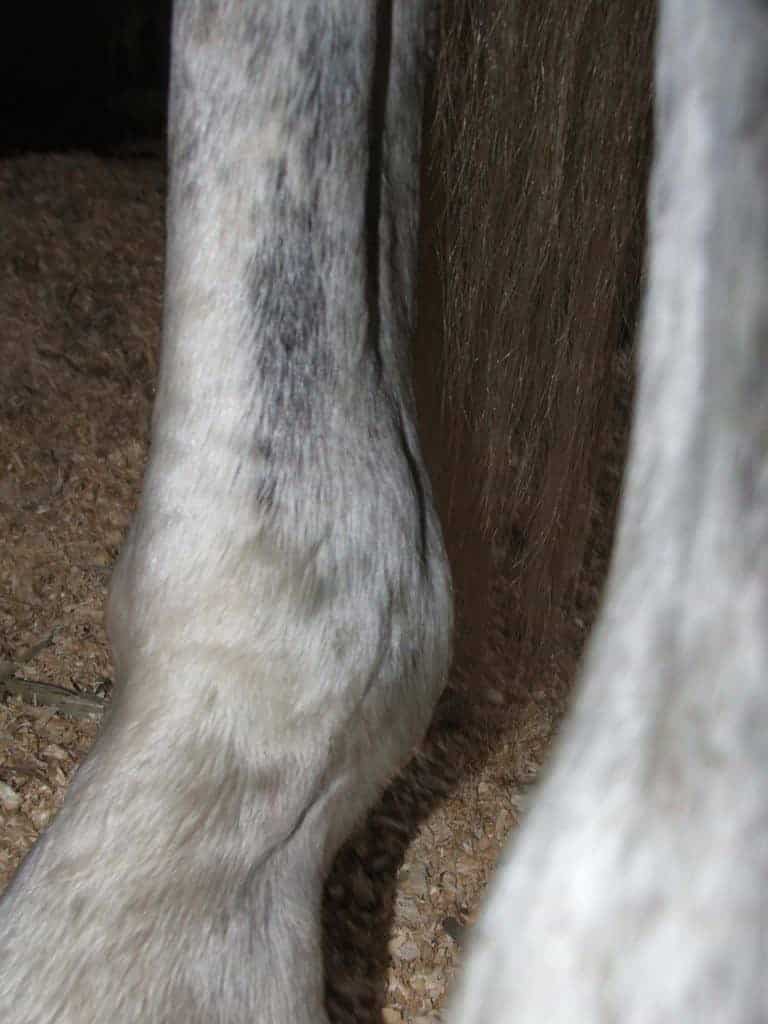
Windpuffs are soft, fluid-filled swellings toward the back of the fetlock joint, resulting from inflamed deep digital flexor tendon sheaths. Most commonly, these puffy enlargements are symptomless blemishes–old and cold, the result of years of hard work.
The term “corrective shoeing” is often overused and misunderstood. It sometimes implies that the farrier can correct conformational faults of feet and legs. In reality, often very little can be done to change the way a horse is built. Trying to fix
Researchers from the United Kingdom recently embarked on an 18-month exercise study to determine why the equine superficial digital flexor tendon (SDFT) is more prone to injury than the various other tendons located in the distal (lower) part of

Learn how your horse’s anatomy works with our complete anatomy and physiology guide, including basic terminology, skin, forelimbs, hindlimbs, feet/hooves, head and neck, tendons/ligaments, muscles, digestive, cardiovascular and reproductive systems.
My 4-year-old Quarter Horse gelding does not like to bend his knees and hocks. He feels like he’s walking on stilts.
Stocking up is separate from—and should not be confused with—other veterinary conditions that result in edema (fluid swelling) of the lower limbs.
Want to know how your horse’s body works? Find out in The Horse’s 12-part Anatomy and Physiology series.

Good hoof hygiene and recognizing early signs of the disease are essential to controlling the problem.

My sister’s gelding has sesamoid problems on both forelimbs. Can the sesamoid bones be removed?
An owner looks for help for a filly that wears down her feet unevenly with turned-out toes.