Researchers Developing Equine Welfare Assessment Protocol
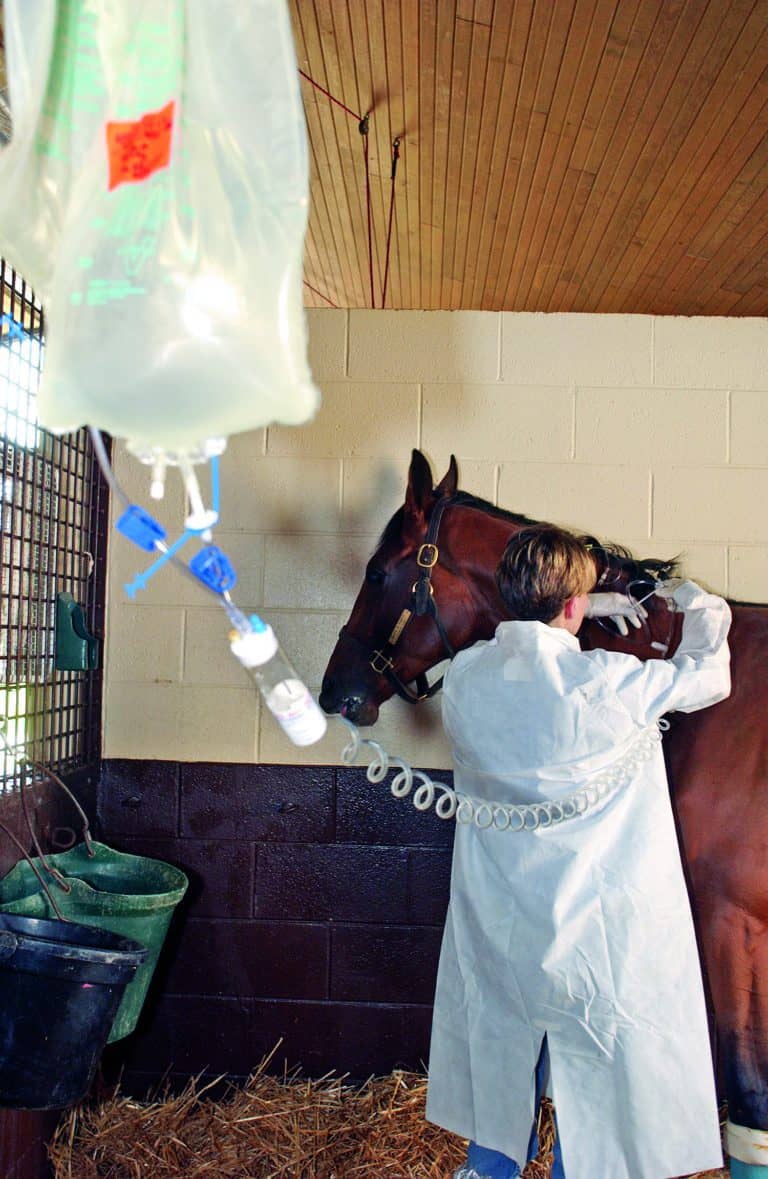
Swedish researchers are developing a research-based assessment for early detection of equine welfare issues.

Swedish researchers are developing a research-based assessment for early detection of equine welfare issues.
How does the presence of humans affect the mare just prior to giving birth?

Our experts answer your questions about ulcers, GI tract problems, and general “tummy troubles” in horses.
The lecture will illustrate advances in drug surveillance capabilities and discuss existing challenges.

The AQHA’s Full Circle program, available at not charge for current AQHA members, can help owners track horses from their past.
Thoroughbred aftercare organizations can now apply for Thoroughbred Aftercare Alliance (TAA) accreditation.

Research shows that various angles of the outer and inner hoof are linked to different kinds of lameness.

A well-thought-out approach to triage after a barn fire can save horses’ lives.
Regulators met via conference call March 4 to discuss new model medication rules set to be adopted by RCI.
My two horses’ urine output is very different in smell and color. What could be causing this?

One veterinarian reviews different non-steroidal joint medications commonly used in equine joint therapy.

Special Edition: We address current EHV-1 cases in North America and offer information to protect your horses.

As in 2012, Salix use is prohibited in Breeders’ Cup races for 2-year-olds but allowed in all other races.
It’s the first in more than a decade, but a recent positive nikethamide test has racing regulators’ attention.

A recent study showed that some newer NSAIDs could have fewer adverse GI effects on horses than older drugs.
The upcoming short courses will cover topics including stallion handling and equine behavior.