Veterinary Care for the Sport Horse
The goal for sport horses, from prepurchase exams through their careers, is to extend the time to retirement.

The goal for sport horses, from prepurchase exams through their careers, is to extend the time to retirement.

The two-day program included presentations about podiatry, diagnostics, and treatments for laminitis.

Researchers observed noticeable lameness in horses consuming high levels of endophyte-infected seeds and hay.

One researcher evaluated pharmacologic methods of osteoarthritis management and recent pain control advances.

Neurologic signs, weakness, gait changes, and forelimb lameness can all point to an equine neck condition.
Osteoarthritis (OA) is a degenerative and career-compromising disease in horses.
Researchers have identified and are studying a gene mutation linked to altered gait in horses.

Nearly 50% of high-performance barrel racers evaluated showed radiographic changes in their fetlock joints.

Some disorders produce gait abnormalities and lamenesses that aid in a quick and accurate diagnosis.

Some veterinarians are adding a new tool to their lameness diagnosis arsenal

The first step in managing an equine foot problem successfully is to attain an accurate diagnosis.

One researcher says that it is very rare to see a spontaneous quarter crack not associated with sheared heels.
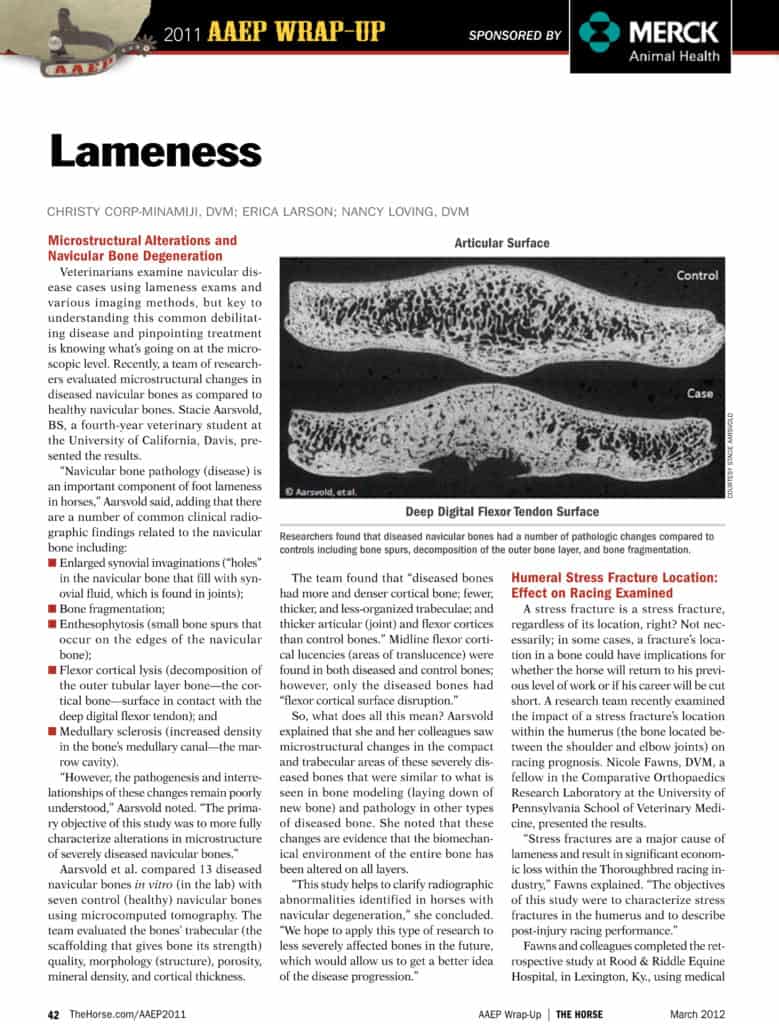
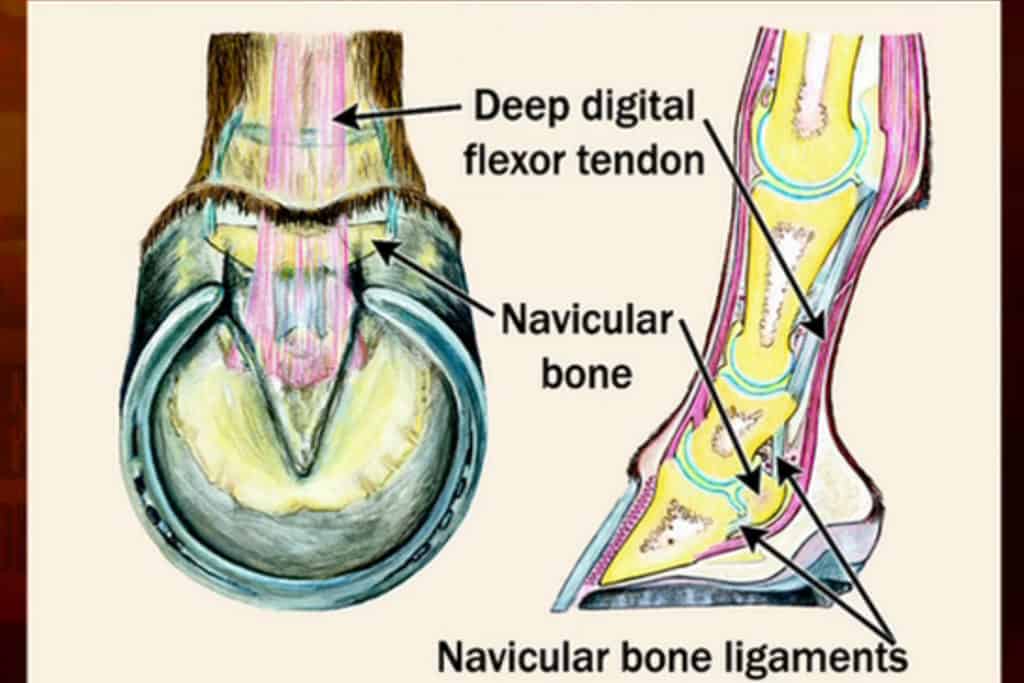
Developments in equine lameness research, discussed during the 2011 AAEP Convention in San Antonio, Texas. Topics included tendon/ligament injuries, microstructural alterations, navicular bone degeneration, bone marrow-derived stem cells, and more.
Dr. Tim Lynch discusses equine lameness topics, including racetrack testing, navicular degeneration, sesamoid fractures, and more, at the 2011 AAEP Convention in San Antonio, Texas.
Mixed study results indicate more research is needed to determine dosing frequency and therapeutic window.
Treatment goals should be to aid in performance without eliminating the joint’s natural response to injury.