Lameness

Prevention, diagnosis, and treatment of leg lameness

Nonsurgical Joint Therapies

New imaging technologies, such as MRI, CT, digital ultrasound, and nuclear scintigraphy, have helped us understand anatomy better and improved our ability to visualize joint injury. As a result, we’re now able to utilize nonsurgical joint therapies.

Read More

Condition Horses to Prevent Lameness

Many horses are trained athletes that are bred and conditioned for a specific sport such as racing, jumping, western performance or dressage. While these sports are relatively safe, just like a human athlete, there is always a possibility of injury and in most cases with horses the injury tends to be lameness.

Read More
Do Radiographic Abnormalities Impact Equine Performance?

Bone Chips in Joints

Bone chips in a horse’s movable joints can compromise the animal’s ability to perform, and, in some cases, they can even end the animal’s career. However, not all bone chips are created equal.

Read More

Horses’ Sleep ‘Stay Apparatus’ Can Cause Limb to Lock

Having evolved to flee in an instant, horses are equipped with a “stay apparatus” that allows them to remain upright for long periods of time. But this mechanism isn’t foolproof and sometimes it causes more harm than good.

Read More

Lameness Research

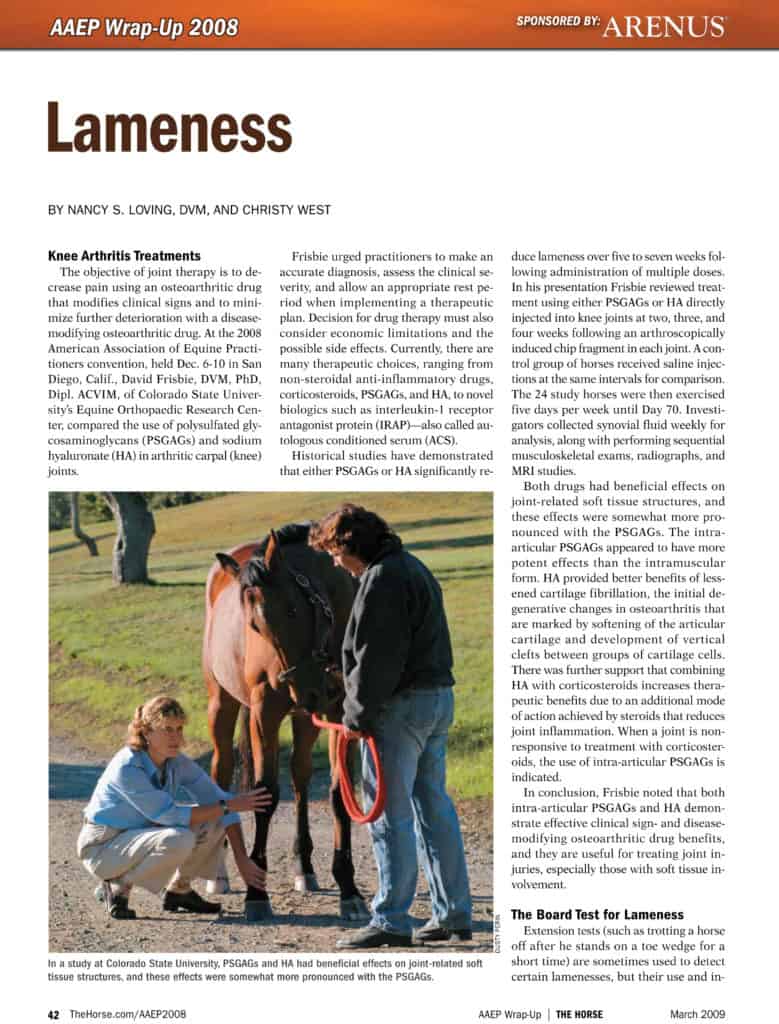
Lameness was an important topic at the 2008 American Association of Equine Practitioners Convention. Topics included arthritis treatments, extension tests, racetrack surfaces, navicular bursa injections, bone fragility syndrome, oral joint health supplements, nutraceuticals, sport horses, gaited horses and more.

Read More

Science and Farriery

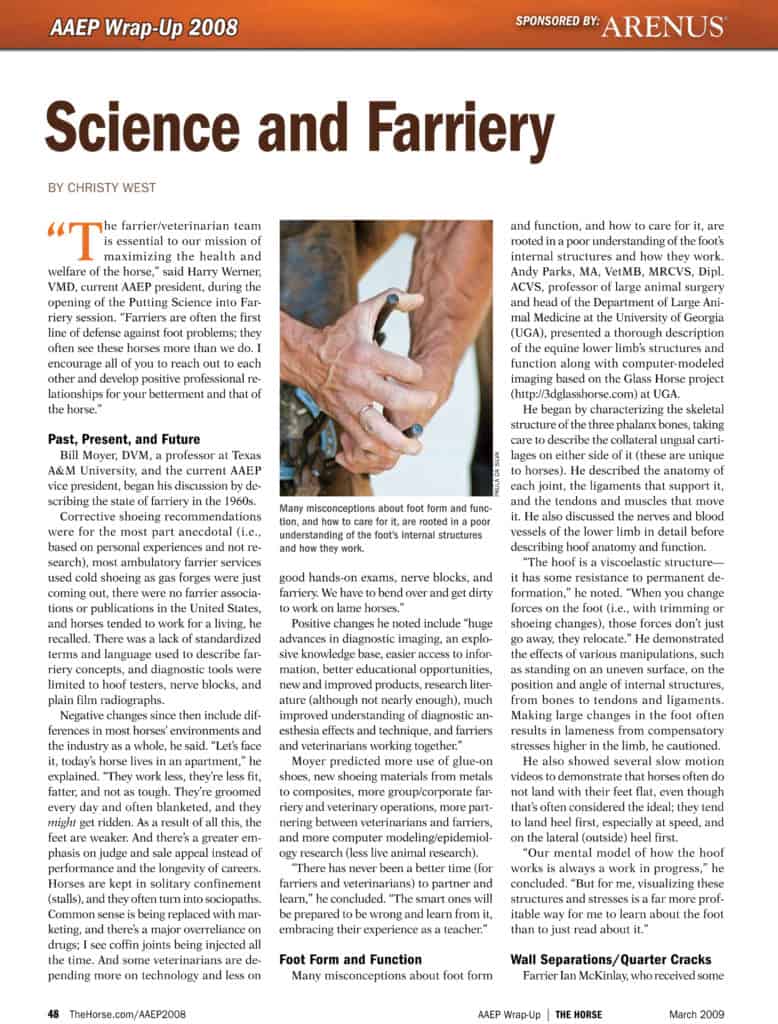
Equine authorities began the Putting Science into Farriery session at the 2008 AAEP Convention with a discussion of the farrier/veterinarian relationship. Also addressed were the history of farriery for horses as well as topics such as foot form and function, wall separations and quarter cracks in the hoof, trimming and shoeing, hoof repair composites and adhesives, and breakover techniques.

Read More

Lame or Ataxic? Kinetic Gait Analysis Can Tell


Being able to tell the difference between a mild lameness and subtle spinal ataxia is an important, yet challenging, endeavor in equine practice. Ohio State researchers recently reported that kinetic gait analysis–the computer

Read More
Mules Rule Over Horses

Managing Mules

More people today are turning to mules to take advantage of the temperament and work ethic of these horse/donkey crosses.

Read More

Cases that Mimic Navicular Disease

“With MRI we’ve found horses with coffin bone fractures that weren’t visible on X rays, but were treated like navicular horses because they blocked to the heel,” says Sarah Sampson, DVM, of Washington State University. “If these are managed like

Read More

More From The Horse

Nose brown horse closeup on a green background
horse nose snout nostril detail close animal equine pont
training issue or lameness; Think With Your Head About Your Riding Helmet
Farrier-Foal-AE

Stay on top of the most recent Horse Health news with

FREE weekly newsletters from TheHorse.com

Weekly Poll

sponsored by:

Create a free account with TheHorse.com!

The Horse
Privacy Overview

This website uses cookies so that we can provide you with the best user experience possible. Cookie information is stored in your browser and performs functions such as recognising you when you return to our website and helping our team to understand which sections of the website you find most interesting and useful.