Bee Pollen Product Increases Appetite, Study Shows
Researchers at Michigan State University (MSU) have reported in a pilot study that a bee pollen-based product shows promise in improving athletic horses’ feed intake.

Researchers at Michigan State University (MSU) have reported in a pilot study that a bee pollen-based product shows promise in improving athletic horses’ feed intake.
Researchers with the Institute of Grassland and Environmental Research in Aberystwyth, Wales, suggested some possible preventative measures for pasture-associated laminitis in the July issue of the Journal of Nutrition.
Veterinarians could use a non-invasive procedure to detect fluid shifts in dehydrated horses and respond with treatment more readily than with usual methods such as blood work.
Researchers have completed the new National Research Council (NRC) report that describes nutritional requirements of the horse. The report is expected to be released this fall to update the previous publication, which was distributed in 1989.
Is there a particular type of grass hay that is better than others for maintenance diet for a laminitic horse?
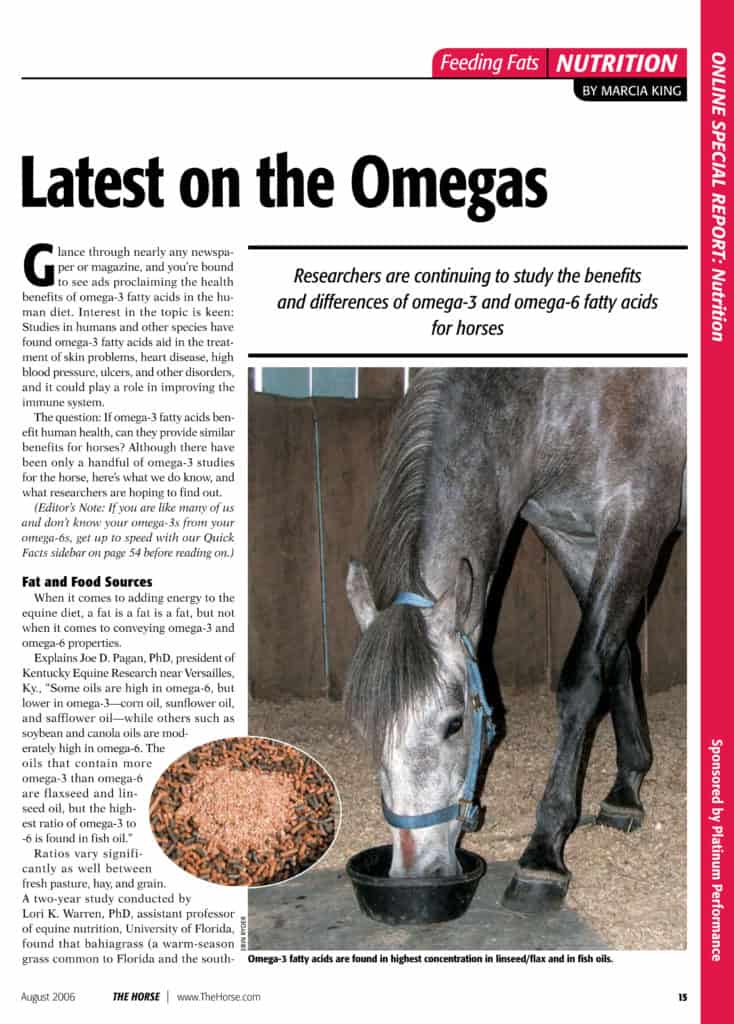
The question: If omega-3 fatty acids benefit human health, can they provide similar benefits for horses? Although there have been only a handful of omega-3 studies for the horse, here’s what we do know, and what researchers are hoping to find out.
Drought and excessive heat could strain the nation’s agricultural industry. From Florida to California farmers and ranchers have already felt the effects in decreased hay production and waning grazing pastures.
“A big concern right now i

While not every horse requires supplements, they can be beneficial in specific circumstances.
Dehydration can be a significant problem for the performance horse as well as for horses suffering from other disease processes.
The best, most convenient feed rooms are organized, accessible, and easy to keep clean. That’s important enough if you only have one or two horses, but once the numbers start increasing, these elements become imperative. Here are nine
There are many things to consider when supplying water for horses. If you depend on a stream, pond, or ditch (rather than a controlled system such as buckets, tanks, or automatic waterers), there could be concerns regarding water quality (for your
I have bred and raised 142 Morgan foals since 1976. During that time, we’ve had eight foals born with a very similar set
Many exercise-induced problems could be avoided by applying common sense limits to performance stresses. If you plan to compete at eventing and endurance riding, make sure both you and your horse are appropriately prepared.
Tall fescue (Festuca arundinacea) is a nutritious cool-season perennial grass that grows on more than 35 million acres in the United States. Introduced from Europe more than 100 years ago, it didn’t become popular until the mid-1940s afte
Progressive Nutrition has launched a new web site featuring the Equine Nutritionist Blog. Blogging is one of the newest tools in high-tech web marketing, now available to the horse community.
The Equine Nutritionist Blog offers consumers
Selenium in a horse’s diet is a balancing act–the horse has to have a small amount, and too much is fatal.