RCI: Same Mission, New Approach on Medication
The RCI intends to take the lead role in gathering the information needed to set racehorse medication policies.

The RCI intends to take the lead role in gathering the information needed to set racehorse medication policies.

From selecting a horse to rehabbing and feeding him, learn how to transition an ex-racer to life as a riding mount.

A new approach could not only target blood- and gene-doping, but also help identify horses at risk of injury.
The colt’s bloodwork showed the presence of altrenogest, a product typically used to regulate mares’ estrous cycles.
The policy says racehorses must not be given anabolic steroids. Positive tests will result in a 12-month training ban.
Officials are looking into a report that a yearling sold at a recent auction has tested positive for anabolic steroids.
Testing is still required for Quarter Horses at sanctioned tracks and all horses at unsanctioned racetracks.
Three trainers received suspensions and fines in conjunction with positive stanozolol tests.
Officials will hear from groups involved in an effort to have all racing jurisdictions adopt uniform drug policies.
The Australian Racing Board has set a threshold of 200 micrograms for cobalt.

The Blood-Horse‘s editor-in-chief shares his thoughts on PETA’s allegations of racehorse mistreatment.
Officials also said they’d completed their investigation into horse mistreatment allegations surrounding Steve Asmussen.
Discussion topics will include expanded lab capabilities, emerging integrity threats, combating doping, and more.
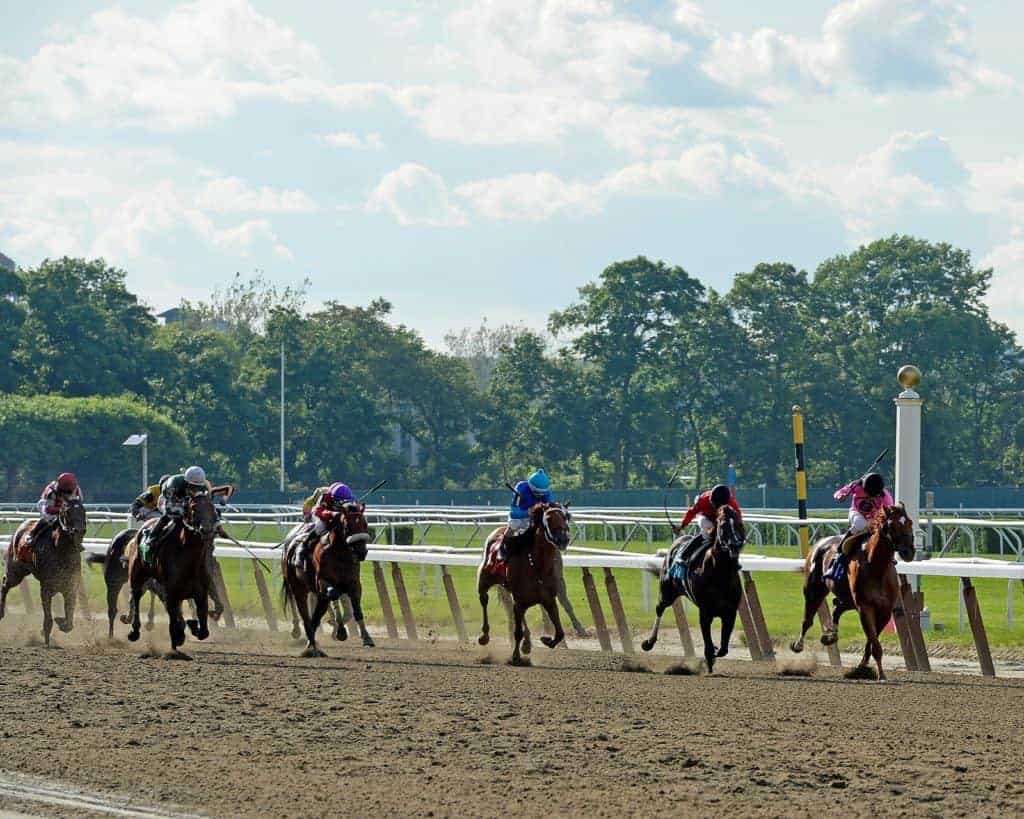
Reducing the prevalence of catastrophic equine injuries and sudden deaths could help improve jockey safety.
The KHRC said it found PETA’s failure to cooperate odd, as the latter group brought the horse mistreatment allegations.
The additional protocols come in the wake of a recent rash of catastrophic breakdowns at Aqueduct Racetrack.