Hoof Radiographs: More Than Meets the Eye
Something on the X rays looks a bit off—is it significant or of no consequence? It depends on what you find.

Something on the X rays looks a bit off—is it significant or of no consequence? It depends on what you find.

Patience and perseverance are key for bringing off-track Thoroughbreds back from injuries sustained post-racing.

What’s the long-term prognosis for a horse diagnosed with a fractured pelvis?

Scientists are exploring how 3-D-printed scaffolds can help turn equine induced pluripotent stem cells into bone, which, they say, paves the way toward laboratory production of bone constructs that could ultimately aid fracture repair in horses.
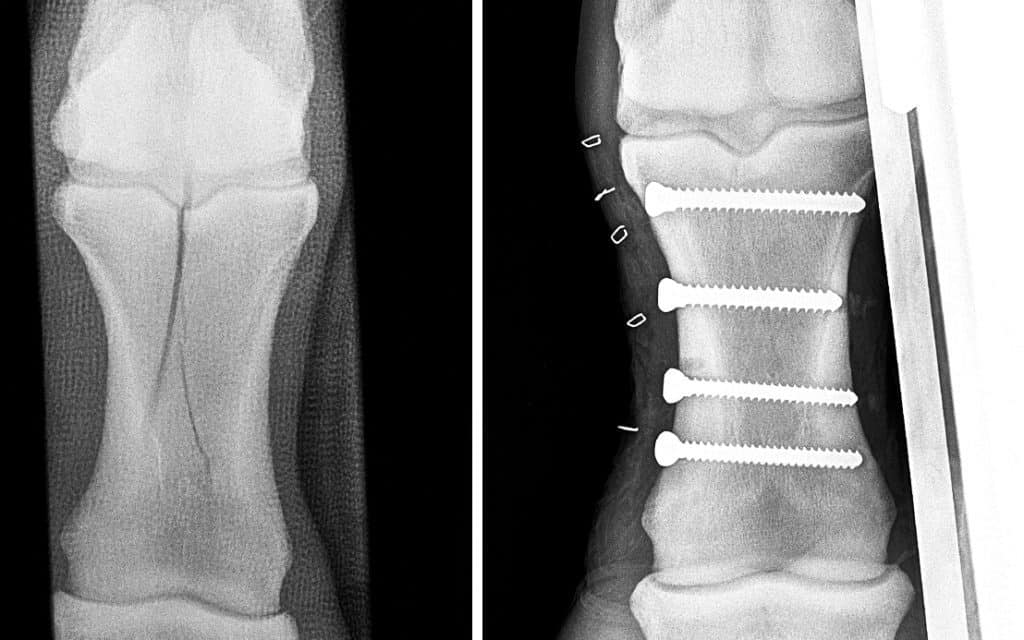
A new EVJ collection available for free online highlights researchers’ breakthroughs in diagnostic imaging and equine fracture management.

Researchers are examining inflammatory and anti-inflammatory markers’ efficacy as early indicators for potential catastrophic injuries in racehorses.

Trainers should be aware that joint injections can have many benefits, but veterinarians need to be careful about selecting cases to receive this treatment, one researcher said.

Collaborative efforts among horse health researchers, the racing industry, and governments could lead to effective measures that will improve safety for both horses and jockeys, one equitation scientist says.

The ultimate goal of any post-mortem exam program is to mitigate racehorse injury risk and, in turn, that of the exercise riders and jockeys involved.

Equine Injury Database statistics revealed a modest increase in 2017 (1.61 per 1,000 starts) compared to 2016 (1.54 per 1,000 starts).

The more data vets have on the injuries Western horses experience, the more they can do to try to rehabilitate or prevent them, one practitioner says.

Find out how an owner’s careful management after an injury occurred likely prevented a fatal outcome for a Quarter Horse gelding.

Researchers are examining the rate of injury and illness in North American 2-year-old Thoroughbreds in training.

Researchers hope that, one day, they’ll be able to identify at-risk horses and intervene before a catastrophic breakdown occurs.

A look at racing ethics could help researchers and industry members acknowledge rightful concerns from a well-meaning public, help resolve misconceptions, and contribute to better equine welfare.

Fatal injuries in North American flat racing horses has decreased by 23%, but there’s still work to be done.