World Equestrian Games Horse Care
What makes the Alltech FEI World Equestrian Games “bigger and better” from a horse care/management standpoint?

What makes the Alltech FEI World Equestrian Games “bigger and better” from a horse care/management standpoint?
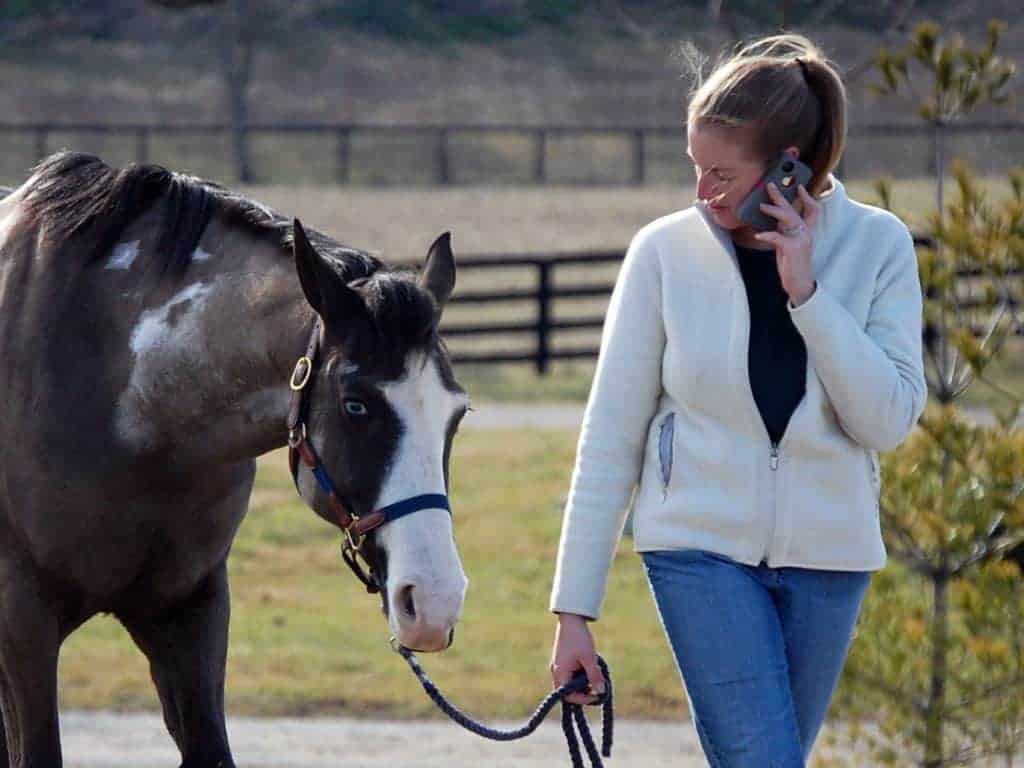
It’s important an owner knows how to help his or her injured horse until the veterinarian arrives.

It has been suggested that 60% of equine lameness problems are related to osteoarthritis, which stresses the importance of advancements of both medical & surgical treatment options.

In veterinary medicine, particularly equine practice, the recognition, classification, management, and overall importance of pain and pain management have only recently been described.

A joint is defined as an anatomic union or junction between two or more bones. There are three basic types of joints in the horse: Synovial, fibrous, and cartilaginous.

Equine joint injections can help veterinarians diagnose lameness or medicate a horse’s painful joint.

Equine arthritis refers to an inflammation of the joint. There are different kinds of arthritis, such as septic arthritis and rheumatoid arthritis. However, the most important arthritis affecting horses is osteoarthritis.

Equine lameness, defined as a deviation from a normal gait, is an indicator of a structural or functional disorder of the musculoskeletal system (the limbs or spinal column) that is noted while the horse is either moving or stationary.
Morphine is a useful part of pain management protocols for horses that have undergone arthroscopic surgery.
Horses are athletes, too, and according to research, they need that stretching as much as humans do.
A biceps brachii tenotomy involves the complete removal of the section of the horse’s biceps tendon.
An important rule change affecting the use of non-steroidal anti-inflammatory drugs (NSAIDs) in competition horses was approved at this year’s U.S. Equestrian Federation (USEF) Annual Meeting, held January 13-17, 2010.
Motivated
There is no “one-size-fits-all” non-steroidal anti-inflammatory drug (NSAID) therapy for horses; therapy should be tailored to the animal and situation, said Cornell University’s Thomas J. Divers, DVM, Dipl. ACVIM, ACVECC, at the
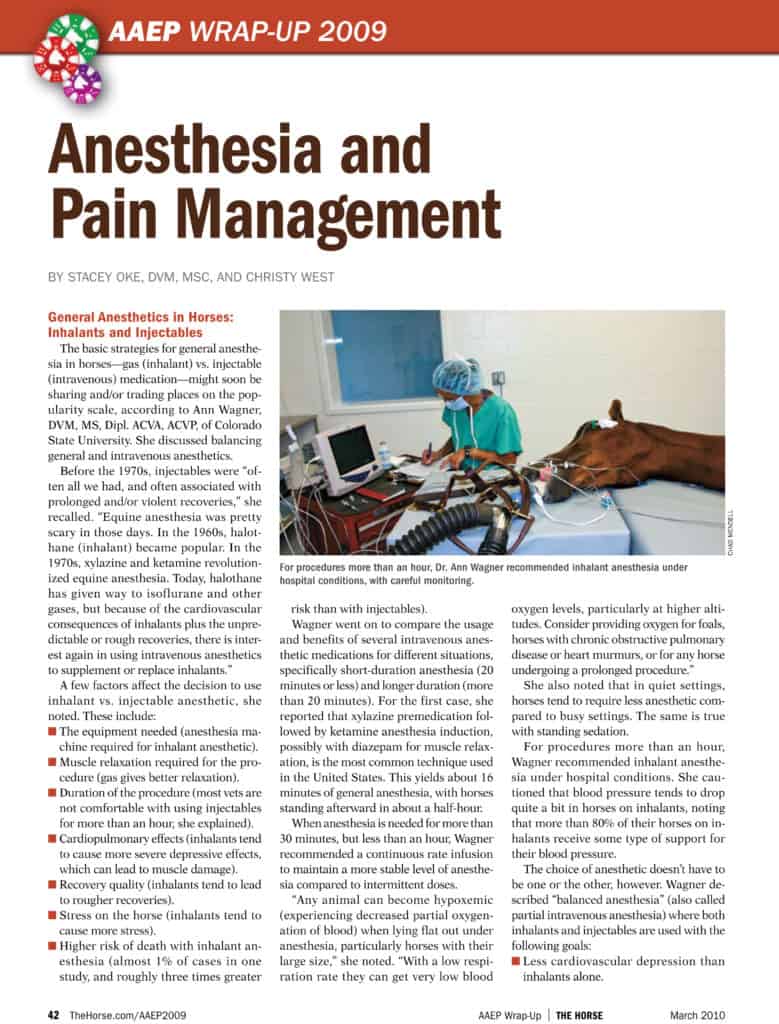
Options for general anesthesia in horses, analgesics (painkillers), and standing sedation were covered in depth at the 2009 convention of the American Association of Equine Practitioners.
Learn about the normal functions of bones, cartilage, soft tissues, and fluids within the fetlock joint.
Strategies to identify specific problems in a horse with indistinct or unusual gait deficits, particularly if