Exercise-Induced Inflammation and Injury in Racehorses
One researcher relayed that it could be possible to identify horses at risk for injury before accidents occur.

One researcher relayed that it could be possible to identify horses at risk for injury before accidents occur.

Adams hopes to better understand why EMS occurs and to find a safe and effective way to treat the disease.

Hyperbaric oxygen therapy might benefit horses with certain injuries or illnesses; more research is needed.
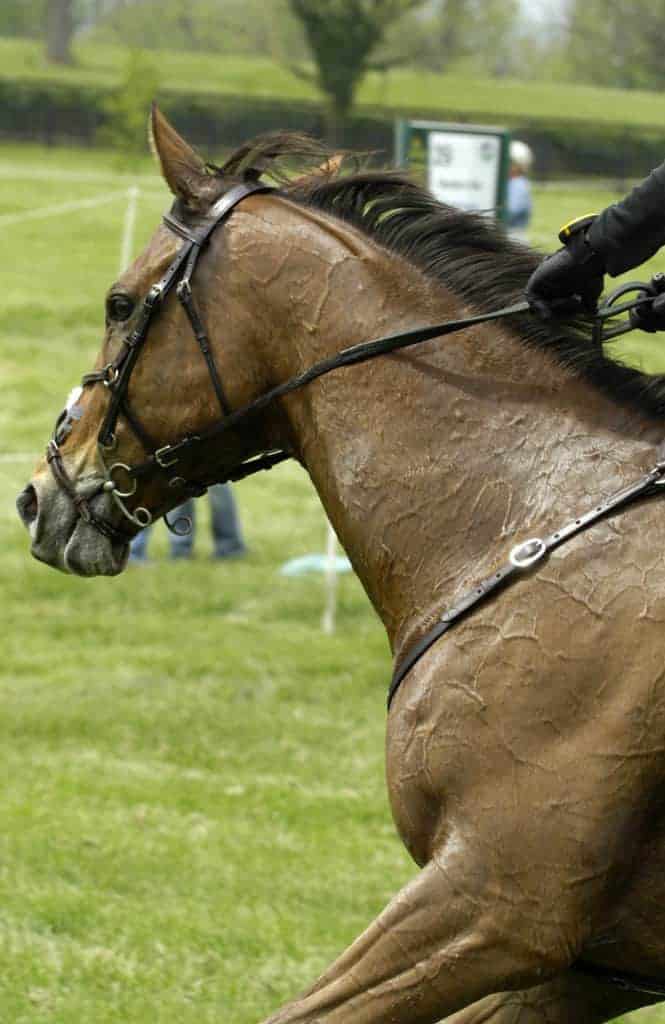
Researchers recently assessed the feasibility of functional electrical stimulation in roarers.

A horse in respiratory distress or displaying other signs of airway ailments warrants a call to a veterinarian
Priority emphasis will be given to applications that have the most impact on horse health and welfare.

Researchers recently examined whether diagnostic anesthesia could skew the results of equine foot MRIs.
Research topics include foal pneumonia, laminitis, vitamin D’s role in immunity, and stem cell therapy.
A recent study showed anti-Mullerian hormone levels is a useful test for detecting granulosa cell tumors.
One researcher said equine IAD is associated with an increase in surfactant protein D blood levels.
Researchers found that MRI more accurately identified compression in CSM horses compared to radiographs.
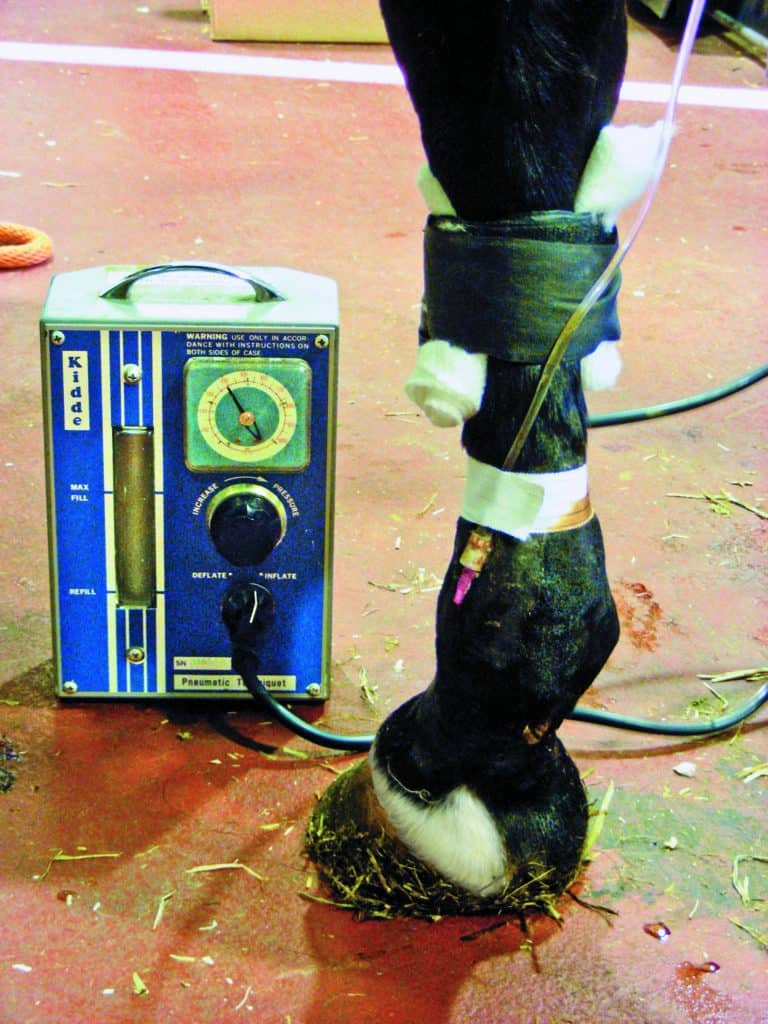
Regional limb perfusion can be performed safely, effectively, and comfortably without general anesthesia.
The team measured anti-Mullerian hormone in the blood to successfully diagnose chryptorchidism.

One researcher noted that some defects not visible on radiographs (X rays) were easily identified via MRI.
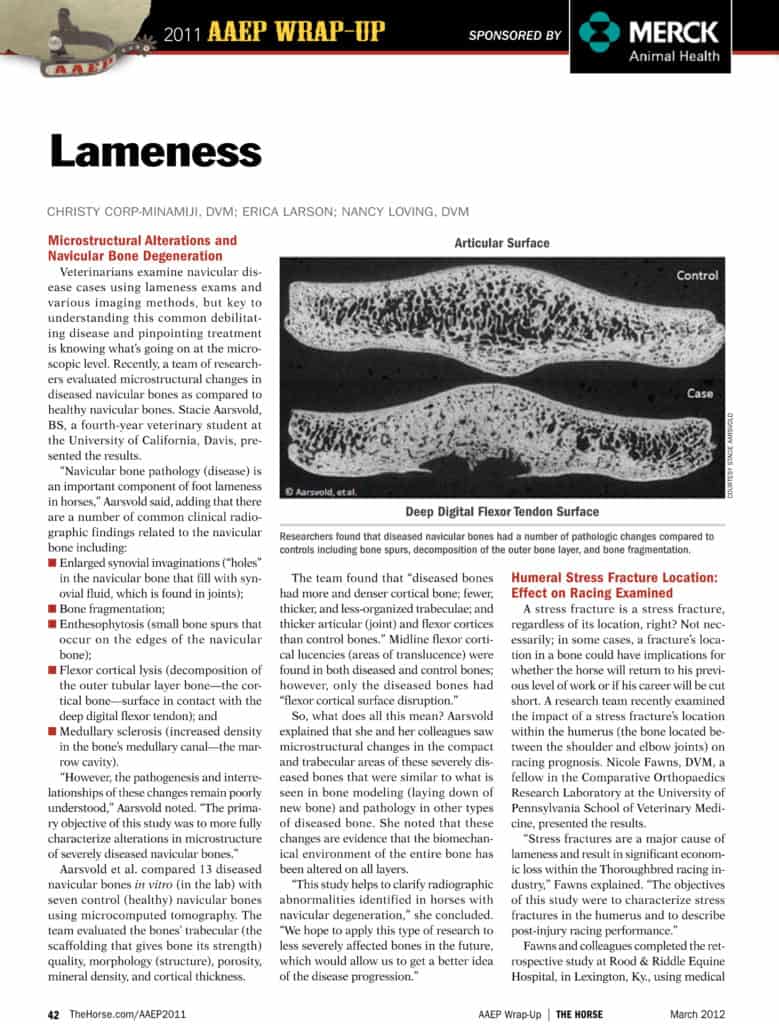
Developments in equine lameness research, discussed during the 2011 AAEP Convention in San Antonio, Texas. Topics included tendon/ligament injuries, microstructural alterations, navicular bone degeneration, bone marrow-derived stem cells, and more.

Veterinarians have fine-tuned numerous methods for evaluating the upper respiratory tract for abnormalities.