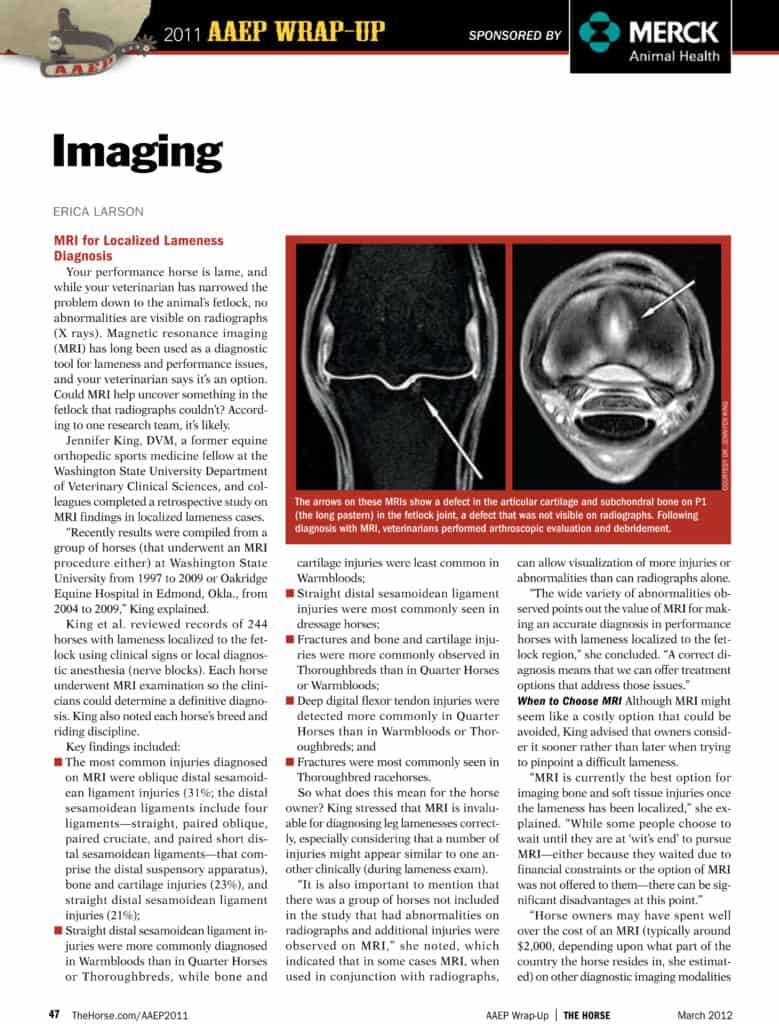
Imaging (AAEP Convention 2011)
Topics include using the MRI for diagnosing localized lameness and to detect wobbler syndrome and erve blocks’ effects on foot MRIs during the Imaging section of the 2011 AAEP Convention in San Antonio, Texas.

Topics include using the MRI for diagnosing localized lameness and to detect wobbler syndrome and erve blocks’ effects on foot MRIs during the Imaging section of the 2011 AAEP Convention in San Antonio, Texas.

Study horses treated with full-limb casts had a fivefold greater risk of developing laminitis.

Researchers hope to more fully characterize alterations at the microscopic level in diseased navicular bones.

One researcher concluded that when dosing PBZ in the horse, “More is not better. Less is less effective.”

The Lembert single layer pattern is faster, stronger, and less likely to impede the intestinal flow.
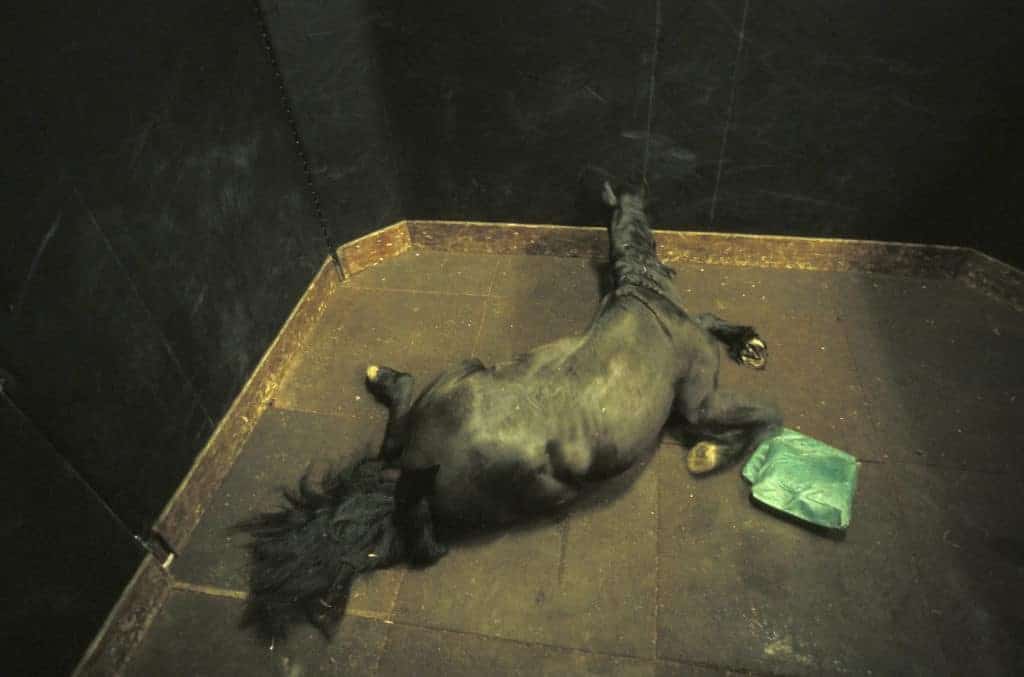
Compared to what’s known about seizures in other species, there’s surprisingly little data on equine seizures.

Successful treatment depends largely on the types of cases the veterinarian selects, said one researcher.
The panel’s report identified future research priorities for the study of equine colic.

Researchers recently finished sequencing the genome of an 18-year-old Quarter Horse mare called Sugar.
Researchers reported success with inducing ovulation in winter anestrous mares via a new hormone therapy.
The Equine Foundation of Canada (EFC) donated funds for the purchase of advanced scientific equipment.
Further investigations are needed to better understand disease transmission, treatment, and prevention.
A wrap-up of the most important, interesting, or applicable studies to equine medicine from Dr. Steve Reed.
Hagyard Equine Medical Institute has shut down its hyperbaric oxygen chamber “until further notice.”
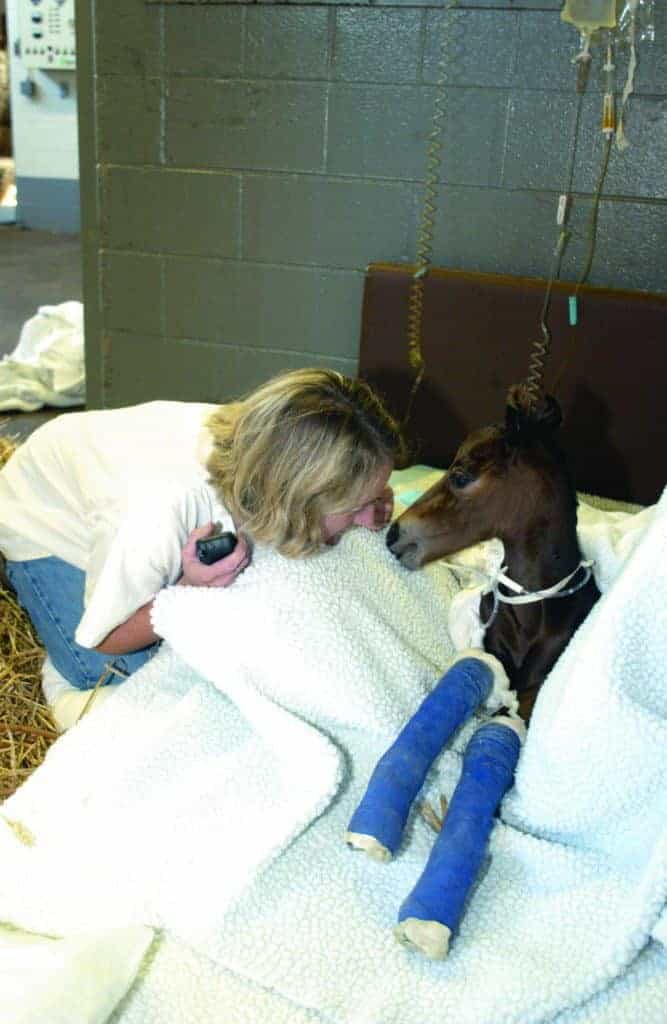
Researchers recently found that nearly half (49.5%) of horses with limb casts experience complications.
Session topics include newborn foal care, oleander toxicity, equine metabolic syndrome, and an EHV-1 update.