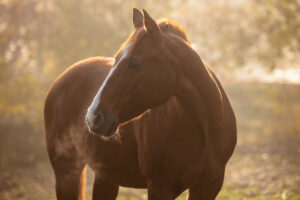
Mouth Injuries in Horses
Mouth injuries can happen in any horse, whether during elite competition or in our own stables and pastures.
News and issues for equine health professionals
Mouth injuries can happen in any horse, whether during elite competition or in our own stables and pastures.
The term “wolf teeth” is a commonly used, but poorly understood, part of the horse owner’s vocabulary.
On Jan. 22, the Texas A&M University College of Veterinary Medicine & Biomedical Sciences (CVM) Student Chapter of the American Association of Equine Practitioners (SCAAEP) hosted a workshop that attracted 250 participants from 22 veterinary schools around the nation.
Changes in a horse’s heart size due to dehydration might lead to a misdiagnosis of heart disease based on echocardiogram, according to researchers at the University of Pennsylvania’s New Bolton Center.

Internal parasite control programs, abdominal abscesses, the use of hypertonic saline, and many more were discussed at the 2010 American Association of Equine Practitioners convention medicine/GI session (interview with Dr. Robert Franklin).

Preparing your horse for winter means different things in different geographic areas. For some, winter is time to remove a horse’s shoes and give him a break, while for others winter is a prime show season.

Teams of veterinarians and farriers from around the country gathered at the fifth International Conference on Laminitis and Diseases of the Foot in Monterey, Calif., Sept. 17-18, 2010, to discuss the most cutting-edge information available for the fight to conquer laminitis.
Sandra Collins, a senior laboratory technician in the laboratory of Gene Lyons, PhD, will retire from the University of Kentucky’s Department of Veterinary Science on Jan. 3 after more than 40 years with the lab.

Discussion of compounded medications for horses, including legal/illegal use and potential risks, by Scott Stanley, PhD, of the University of California, Davis. (Presented at the 2010 American Association of Equine Practitioners convention)

Discussion of the session on sedatives and anesthetics for horses at the 2010 American Association of Equine Practitioners convention with Dr. John Hubbell of The Ohio State University.
The newly-renamed UK Veterinary Diagnostic Laboratory recently welcomed scientist Erdal Erol, DVM, MSc, PhD, as the laboratory’s new head of diagnostic microbiology.
The University of Kentucky Veterinary Diagnostic Laboratory (VDL), formerly the Livestock Disease Diagnostic Center, recently announced a change in the type of samples required to perform a test for Neorickettsia risticii, the causative organism for Potomac horse fever.

Quite a few myths and misconceptions surround the practice of basic horse hoof care. This second installment of our farriery series focuses on some of the most common misconceptions heard from horse owners in the author’s farriery practice.

2010 World Equestrian Games (WEG) Veterinary Coordinator Dr. Kent Allen summarizes the WEG’s veterinary clinic activity during the event.
Six of the 10 major vaccines to protect against equine infectious diseases were developed and created at the University of Kentucky’s Maxwell H. Gluck Equine Research Center. But that’s not the only major research accomplishment the world-renowned Gluck Center has contributed to the equine and veterinary fields.

Dr. Jean-Marie Denoix describes his experiences imaging horses on site at the World Equestrian Games (WEG).
Stay on top of the most recent Horse Health news with
"*" indicates required fields