Vet and Professional

News and issues for equine health professionals

Lab Cytology Tests

Cytology, the study of cells, involves the collection and examination of cells and fluid from organs, tissues, and body cavities. Cells naturally shed from the surfaces of mucous membranes, organs, and skin lesions, and they can be collected for

Read More

Therapeutic Options in Veterinary Research

Veterinarians desire to be the gatekeepers for horse health and welfare, so they need to be educated in therapeutic options to meet expectations of clients. Surveys performed by the AAEP in 1998 and 2002 indicated an increased use of and referral

Read More

Dentistry Part 4: Periodontal Disease

Periodontal disease is one of the most painful conditions that can occur in the horse’s mouth. The number one cause of premature tooth loss in adult horses (as in adult people) is periodontal disease. Periodontal disease can affect incisors, canine

Read More

Gait Analysis for Horses

There has been a long journey over a relatively short span of time in the world of equine gait analysis. The first studies utilized high-speed cameras and a treadmill and took place at the Swedish University of Agricultural Sciences some 35 years

Read More

DeHaven Joins AVMA as New Executive Vice President

Ron DeHaven, DVM, administrator of the USDA’s Animal Plant Health Inspection Service (APHIS), has been named the new executive vice president at the American Veterinary Medical Association (AVMA). The AVMA Executive Board voted unanimously to

Read More

Function of the Palmar Foot

Several lameness problems can exist in the rear (palmar) half of a horse’s foot; most bear the very general title of “heel pain.” The real problem is that without very careful diagnosis, lameness in this general area might be attributed to the

Read More

Obese Horses

Experts at the 2006 AAEP Convention discussed obesity in horses in depth, addressing topics such as adipobiology, insulin resistance (IR), laminitis, glucocorticoids, pituitary pars intermedia dysfunction (Cushing’s disease), and the seasonality of hormones.

Read More

The Latest on Lameness

The prevention and treatment of lameness were among the many subjects discussed at the 2006 AAEP Convention. Experts addressed topics such as oral joint supplements, nutraceuticals, shock wave effects, intrasynovial anesthesia (joint blocks), lameness evaluation under saddle, osteoporosis risk, imaging diagnostics, the pros and cons of shoeing, and joint disease.

Read More

Repro Updates

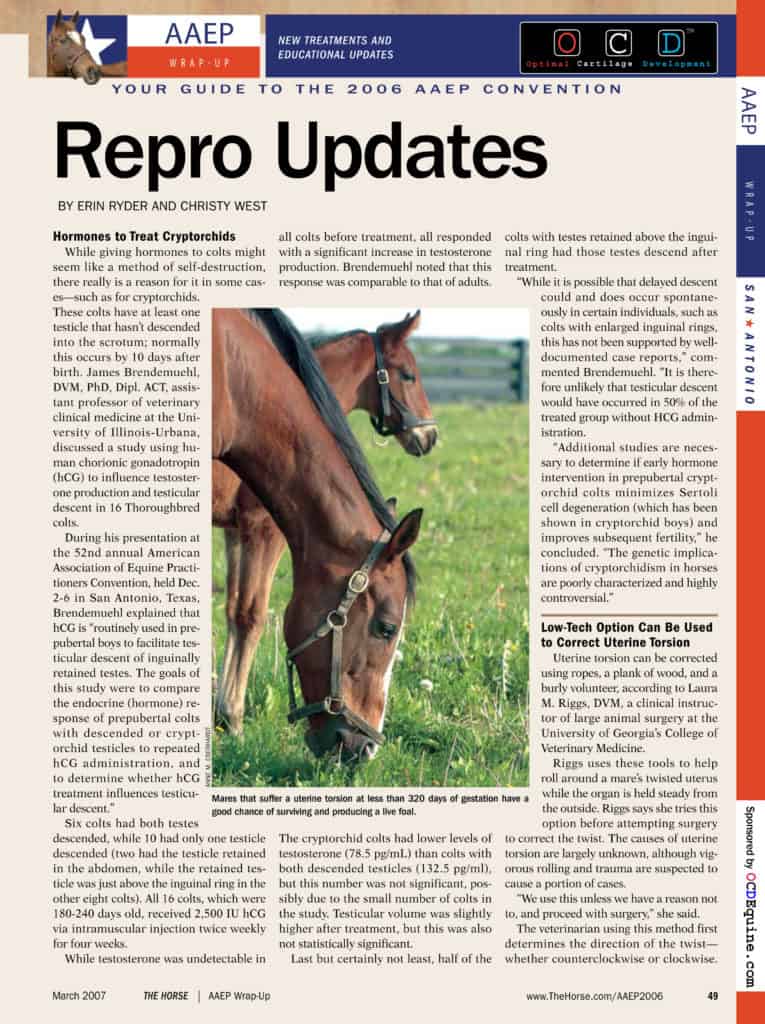
Multiple reproduction topics were discussed at the 2006 AAEP Convention, including cryptorchids, uterine torsion, ulcers, uterine inflammation, superovulation and embryo transfer, reinforcement breeding, embryo survival and monitoring, foaling and foal care tips, cloning, contagious equine metritis, and equine viral arteritis.

Read More

Horse Management and Care

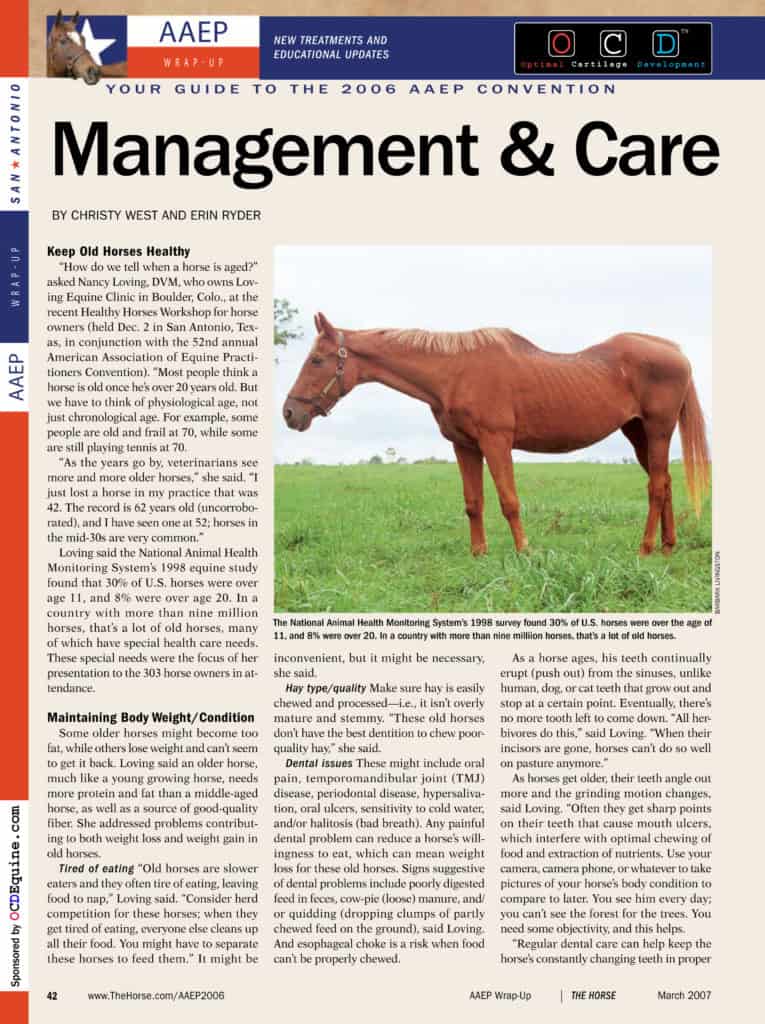
Management topics at the 2006 American Association of Equine Practitioners Convention included numerous methods and tips for keeping older horses healthy, as well as disease outbreak management, emergency care (from snakebites to fire evacuation), air quality testing, training procedures, and handling basics.

Read More

More Convention Health Reports

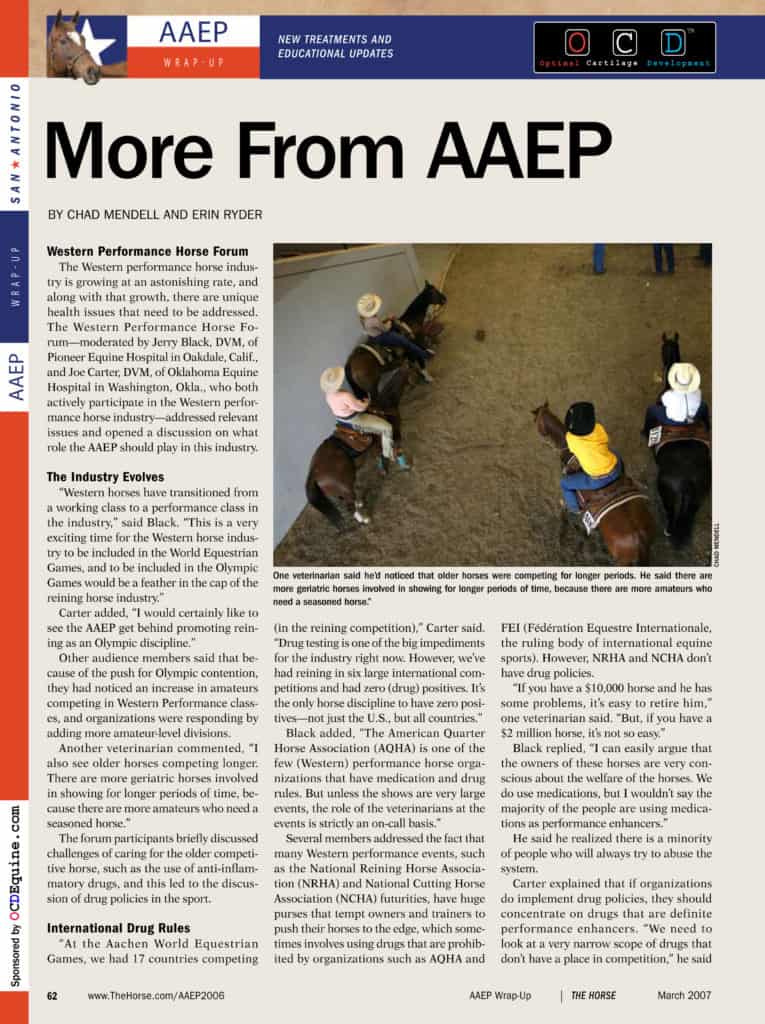
In addition to a large collection of medical and welfare topics, participants in the 2006 AAEP Convention also discussed the Western performance horse industry, incisor luxaction fractures, post-race cocaine testing, equine flu, strangles, equine infectious anemia, hurricane preparation, and air quality testing.

Read More

More From The Horse

Free Lecture to Cover Equine Pregnancy
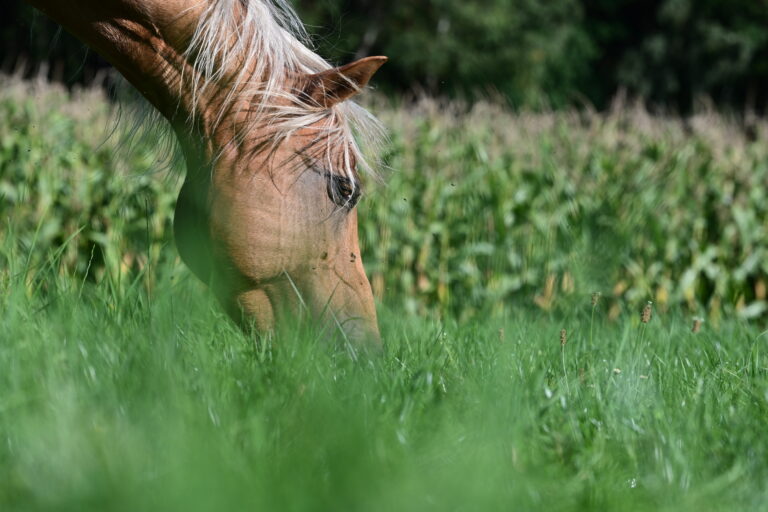
Sommer auf der Pferdeweide
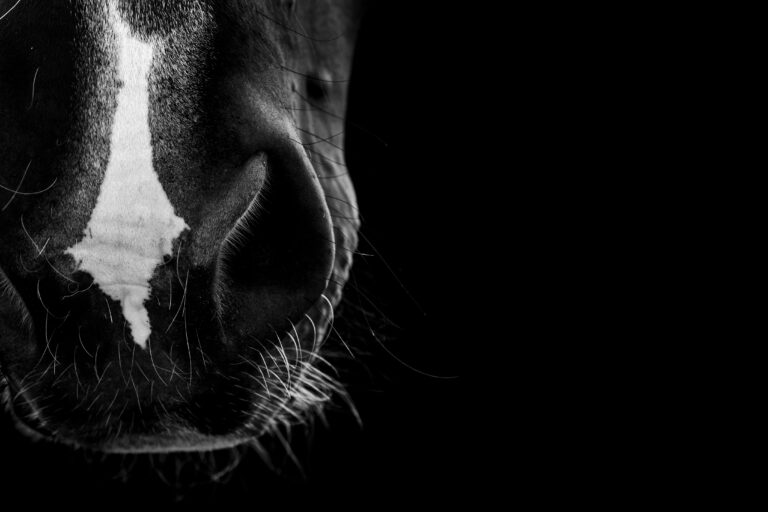
Fine art horse nose with black copy space
horse nose snout nostril detail close animal equine pont

Stay on top of the most recent Horse Health news with

FREE weekly newsletters from TheHorse.com

Weekly Poll

sponsored by:

Create a free account with TheHorse.com!

The Horse
Privacy Overview

This website uses cookies so that we can provide you with the best user experience possible. Cookie information is stored in your browser and performs functions such as recognising you when you return to our website and helping our team to understand which sections of the website you find most interesting and useful.