Strong Drug Reform in Thoroughbred Racing Urged by Owner
Prominent Thoroughbred owner George Strawbridge Jr. said racing can only grow by eliminating medications.

Prominent Thoroughbred owner George Strawbridge Jr. said racing can only grow by eliminating medications.
The money will help develop detection methods for and study the effects of ITPP, a performance enhancing drug.
New policies regarding veterinarians’, stewards’, and other officials’ race day roles have been introduced.
A judge granted the trainer a 30-day stay of action after officials suspended his license for 10 years.
The new regulations were prompted by increased use of the substance as a replacement for anabolic steroids.
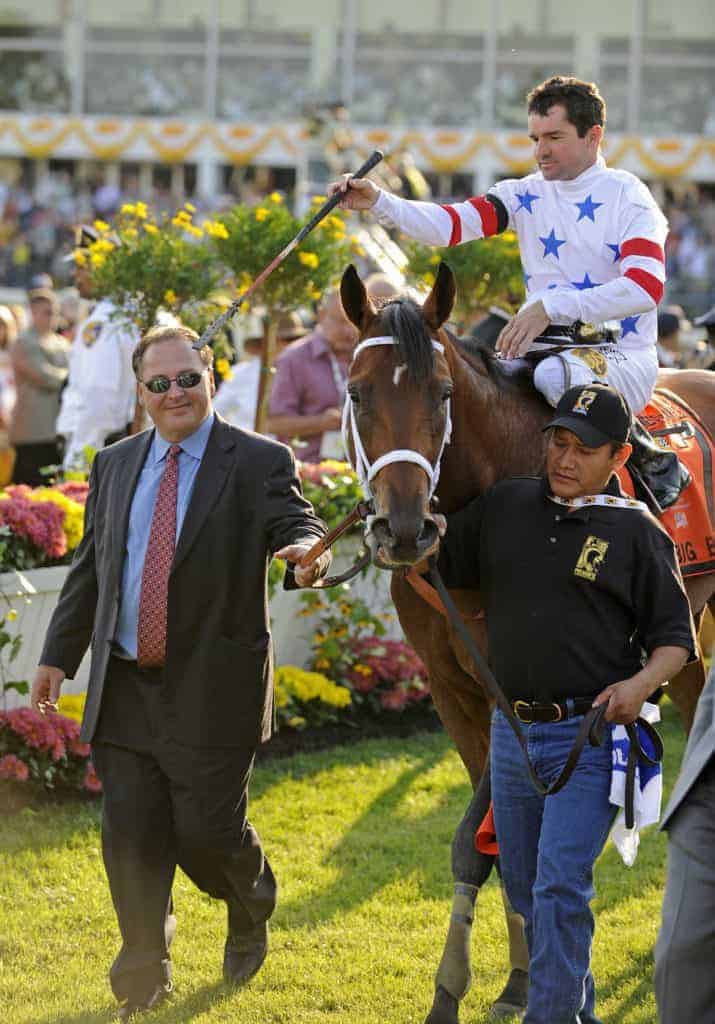
Regulators cite a pattern of rules violations–including numerous equine drug infractions–in revocation.

Race day medications, drug testing initiatives, and research committees were discussed at an Oct. 6 meeting.
Dutrow is expected to find out if he will be allowed to train again after alleged equine drug infractions.
The FEI has announced a small number of changes to its 2011 Equine Prohibited Substance List.
Gluck Center researchers have synthesized a certified reference standard for ITPP testing at UPenn’s request.
A New York lawmaker will introduce legislation banning “performance-enhancing drugs” in racing, such as Salix.

Officials: Report that shows 99.5% of samples tested “clean” in 2010 dispels claims that racing is drug-ridden
Scot Waterman, DVM, is the first animal medication and welfare adviser for the Arizona Department of Racing.
Hagyard Equine Medical Institute will participate in this year’s NTRA Professional Education Seminar.
The report indicated regulators sent 324,215 biological samples for testing in 2010. More than 99% were clean.
Can we blame Salix and race-day medications for the bad perception horse racing seems to draw from the public?