Thorough veterinary care and patient training can help transform rescue horses
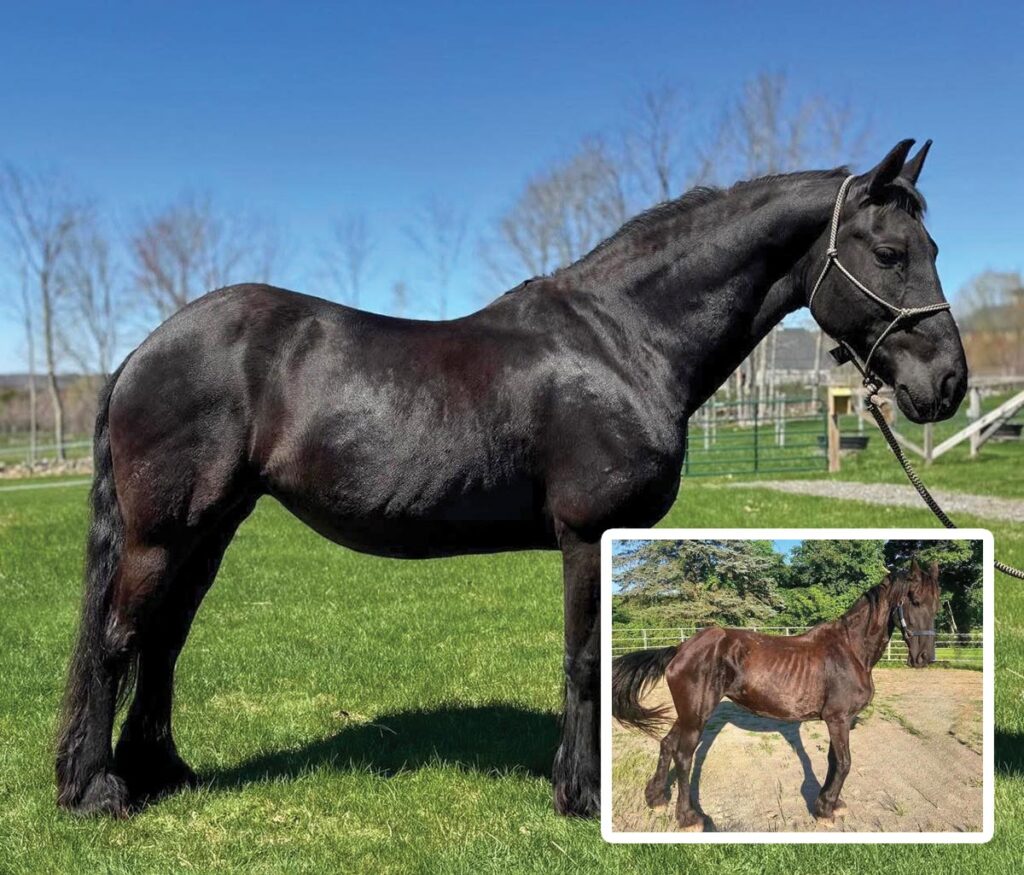
When rescue horses arrive at a new home, they often come with health issues, emotional difficulties, and unknown pasts. But with quality care and careful retraining, these horses can overcome their challenges.
Build Your Team Beforehand
Have your support system in place before adoption, says Megan Porter, manager of Horses with Hope, a privately funded equine rescue in Maine, who, together with trainer Valerie Shepard, has rehabilitated, retrained, and rehomed hundreds of rescue horses.
“The most valuable resource during the early stages … is a trusted veterinarian who can help you work through any physical components of a horse’s behavior and rehabilitation,” says Porter. “It’s also just as important to have an experienced farrier.”
In addition, research and reach out to experienced and well-regarded horse trainers in your area. “We highly recommend finding a trainer or online training platform that resonates with you and your goals prior to adopting a horse,” she adds, to round out your support team. “When questions or challenges arise, and they will, having a team in place for advice and guidance will make all the difference.”
Rescue Horse Behaviors on Arrival
Rescue horses respond much like any horse that’s faced significant changes or traumatic experiences, says Porter. She lists behaviors common to horses at intake:
- Separation anxiety Many horses struggle when separated from herd mates or adjusting to changes in their daily routine.
- Food aggression They display resource-guarding behaviors, especially if they have experienced starvation. This can manifest as food aggression toward other equids or even toward humans.
- Lack of training Overall, many of the horses lack a basic education of boundaries and appropriate response to pressure. This can also appear as fear of humans in many equids that have not been handled regularly since birth. “These animals … are missing some of the foundational building blocks necessary to form a well-rounded equine partner,” says Porter.
Address the Physical First
Natalie Lord, DVM, founder of Four Paws/Cuatro Patas, an ambulatory mixed-animal practice in Austin, Texas, and a lifetime member of Bluebonnet Equine Humane Society, in College Station, Texas, advises having a vet look at the whole horse first: “I start with a full-body veterinary exam, lameness exam including flexions, oral exam, bloodwork, and myofascial palpation.”
This thorough check allows her to find and address any discomfort that might be causing undesired behaviors before retraining begins. “It is important not to label these horses as naughty but first take the time to investigate for pain,” says Lord
This story requires a subscription to The Horse magazine.
Current magazine subscribers can click here to and continue reading.
Subscribe now and gain unlimited access to premium content.
Subscribe NowWe at The Horse work to provide you with the latest and most reliable news and information on equine health, care, management, and welfare through our magazine and TheHorse.com. Our explanatory journalism provides an understandable resource on important and sometimes complex health issues. Your subscription will help The Horse continue to offer this vital resource to horse owners of all breeds, disciplines, and experience levels.