Widespread exposure but relatively rare clinical disease makes Lyme disease diagnosis and treatment challenging
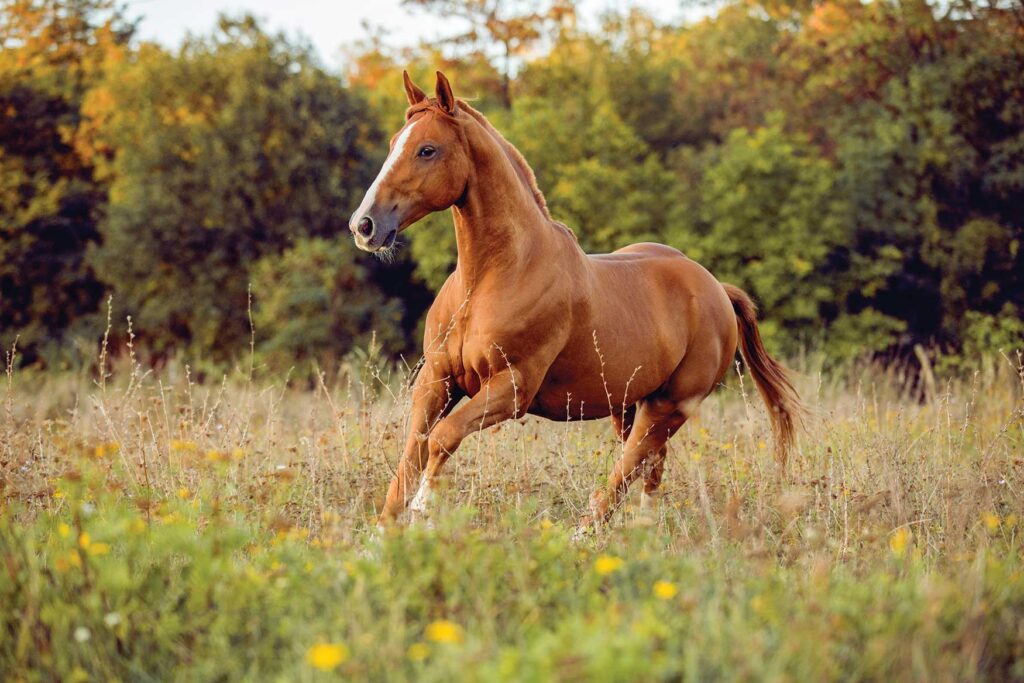
Lyme disease often leaves horse owners and veterinarians with more questions than answers. Caused by the bacterial spirochete Borrelia burgdorferi and transmitted by black-legged ticks (Ixodes spp), the infection is common in many regions of North America. Yet the jump from exposure to true clinical disease in horses remains inconsistent, controversial, and at times unclear.
Priscila Serpa, DVM, MSc, DSc, Dipl. ACVP, assistant professor at Cornell University’s College of Veterinary Medicine, in Ithaca, New York, says equine exposure to B. burgdorferi happens far more frequently than manifestation of illness. Figuring out whether a horse with subtle or nonspecific clinical signs is infected or merely exposed continues to be a core challenge.
Clinical Signs of Lyme Disease
When B. burgdorferi exposure does lead to clinical illness in horses, the disease most often presents as vague musculoskeletal, neurologic, or ophthalmic issues or behavioral changes, rather than a single defining sign.
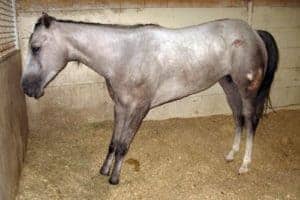
These manifestations differ from those seen in humans and dogs and frequently overlap with many other equine conditions. “Horses rarely exhibit the acute fever and lethargy common in dogs, or the bullseye rash (erythema migrans) seen in humans,” says Serpa. “Chronic lameness and stiffness are far more prominent in horses than in dogs, where acute lameness and kidney disease are classic. Neurologic and ophthalmic signs are more notable in horses than in dogs.” She adds that in humans, arthritis caused by Lyme disease typically involves a single joint, while in horses, it’s often a shifting polysynovitis affecting multiple joints.
In its B. Burgdorferi Infection and Lyme Disease Guidelines the American Association of Equine Practitioners (AAEP) lists neurologic impairment (neuroborreliosis), ocular inflammation (uveitis), nodular skin lesions (cutaneous pseudolymphoma), and inflammation of a fluid-filled sac along the crest of the neck (nuchal bursitis) among the most documented clinical signs of Lyme disease.
Neuroborreliosis involves nervous system inflammation and can produce a range of signs in horses such as the behavioral changes mentioned, head tilt, difficulty swallowing (dysphagia), cranial nerve deficits, and ataxia (incoordination). Uveitis leads to eye pain, tearing, light sensitivity, or more profound vision changes. Cutaneous pseudolymphoma refers to the benign lesions that can develop at or near tick bite sites. More recent research now supports a connection between B. burgdorferi and nuchal bursitis in some horses (more on this on page 25), an inflammatory condition of the structure cushioning the nuchal ligament.
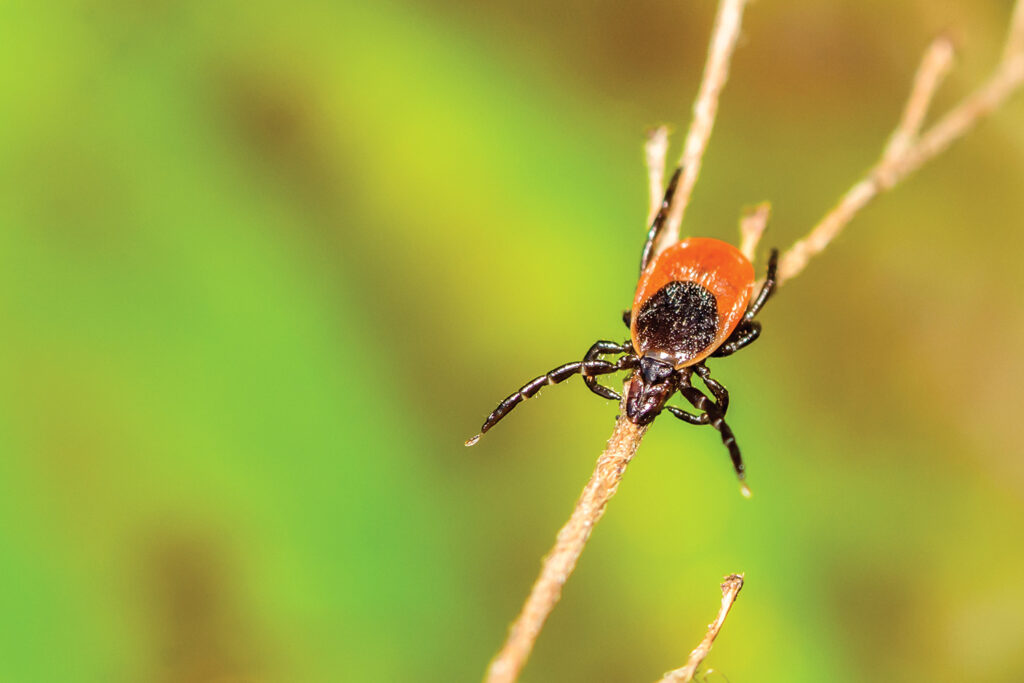
Timing adds another layer of complexity. After exposure to the agent, says Serpa, it can take three to six weeks for horses to develop antibodies when experimentally infected. The incubation time—how long it takes to develop symptoms—is unpredictable, and infected horses might never show symptoms
This story requires a subscription to The Horse magazine.
Current magazine subscribers can click here to and continue reading.
Subscribe now and gain unlimited access to premium content.
Subscribe NowWe at The Horse work to provide you with the latest and most reliable news and information on equine health, care, management, and welfare through our magazine and TheHorse.com. Our explanatory journalism provides an understandable resource on important and sometimes complex health issues. Your subscription will help The Horse continue to offer this vital resource to horse owners of all breeds, disciplines, and experience levels.