Idiopathic trigeminal-mediated headshaking (HSK) in horses is a debilitating disorder characterized by facial pain that compromises performance, daily activities, and overall quality of life, often leading to euthanasia.
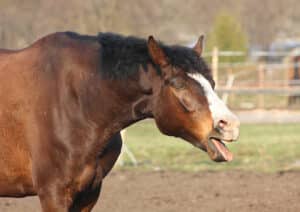
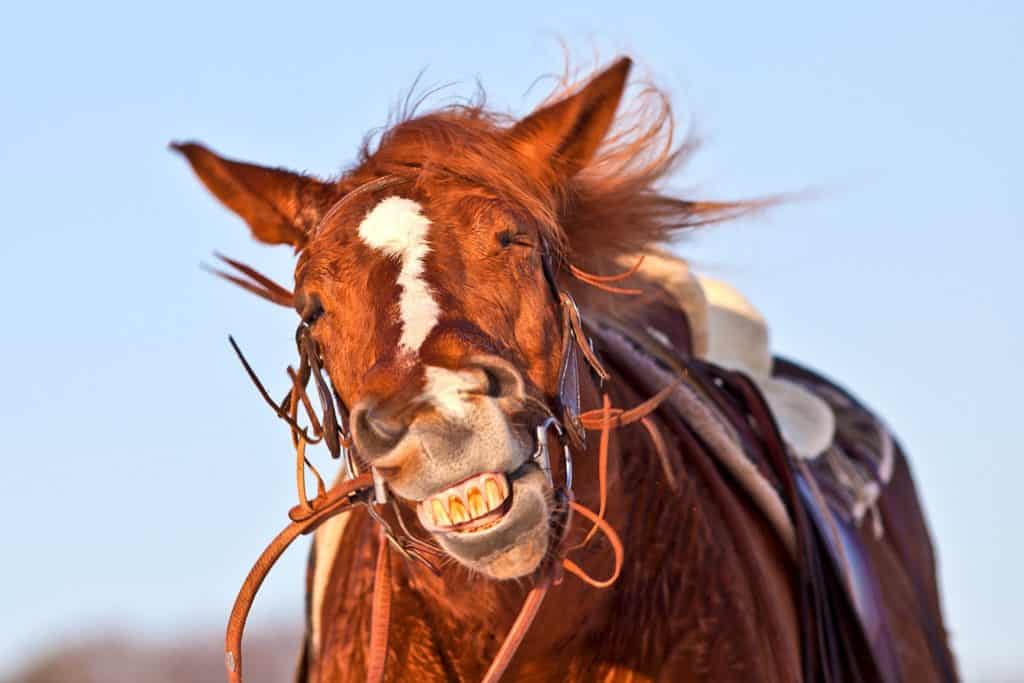
This disorder is associated with inappropriate firing of the trigeminal nerve due to a low threshold for activation, manifesting as violent vertical jerking shakes in 90% of cases, resembling an electrical shock to the horse’s nose. Anxious facial expression, rubbing the nose in the ground or against objects, striking of the face with the thoracic (front) limbs, excessive snorting, sneezing, and blinking are also common. Manifestations of pain in between episodes also occur as shown by increased facial grimace scores.
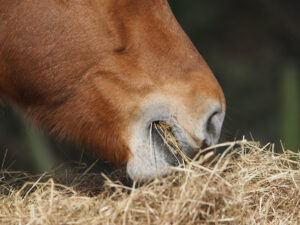
These horses become unrideable and even dangerous for those around them. The episodes can occur spontaneously or be triggered in association with exposure to UV light, wind, light touch to the nose (hay), exercise (triggers or exacerbates), and sharp sounds (e.g., metal to metal). The mean age at first episode is usually at 8 to 10 years old. Clinical manifestations can occur year-round but most commonly present in a seasonal fashion (spring, summer, and early fall).
The underlying cause(s) remains unknown, but multifactorial factors such as environment (e.g., UV light, temperature, season of the year), hormones (more common in geldings—76%), and diet (acid diets, low ionized magnesium) play an important role.
It is essential to rule out other disorders that can present with headshaking, including:
- External, middle, and inner ear infection
- Temporohyoid osteoarthropathy (THO)
- Ear ticks (Otobius megnini)
- Ear mites (Trombicula autumnalis)
- Guttural pouch disorders
- Periapical dental osteitis
- Other dental problems (e.g., wolf teeth abnormalities)
- Allergic rhinitis
- Vasomotor rhinitis
- Ocular disorders (cysts, masses)
- Intranasal masses
- Sinusitis
- Nuchal crest avulsion
- Cervical vertebral osteoarthritis, especially of the cranial cervical vertebrae
- Apparent neck pain
- Inappropriate tack, bridle, or bit
- Poor rider skills
- Herpesvirus infection causing neuritis and/or ganglionitis of the trigeminal ganglia
Caution must be practiced when performing facial surgeries involving the paranasal sinuses because the infraorbital nerve is contained in the infraorbital canal, a thin osseous canal that can be easily damaged and trigger signs indistinguishable from those of idiopathic headshaking. Masses or any other alteration or damage to the infraorbital canal will trigger signs of headshaking due to severe pain. Idiopathic trigeminal-mediated headshaking has no known macroscopic or histochemical abnormalities; therefore, it’s presumed to be a functional disorder. What makes the nerve trigger in a seasonal manner or all year remains uncertain.
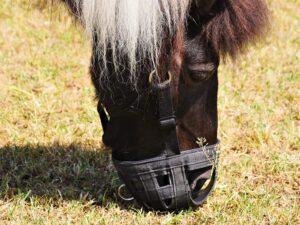
Because the cause(s) is unknown, it has been challenging to manage this disorder. However, several modalities have been tried with variable results, from environmental (moving to a different geographical area, avoiding exposure to UV light, modifying riding practices) and dietary modification (alkalinization of diet), supplements (magnesium with boron), and physical devices (e.g., nose nets, face masks, or goggles with UV light protection), to various types of electrostimulation (e.g., percutaneous infraorbital nerve stimulation, electroacupuncture, and transmagnetic stimulation) and drugs with various mechanisms of action (channel blockers, antihistamines, antiseizure medication). The goal of electrostimulation is to alter the sensory input to the trigeminal complex. Environmental and dietary modification, physical devices, and electrostimulation should be attempted first whenever possible before considering pharmacological intervention; without knowing the pathophysiology of the disease, clinicians cannot select a targeted therapy. In addition, with these therapies come the risks of extra-label use of some drugs, limited or absent pharmacokinetic studies for the horse, unknown established dosages, and potential adverse effects with variable results.
Recent studies have shed some light with regard to possible biomarkers of disease (e.g., calcitonin gene-related peptide in cerebrospinal fluid , although not specific) and the identification of cannabinoid receptors in the trigeminal ganglion, which might be a potential target for therapeutic management while the underlying cause is identified. The search for answers must continue to address this important welfare issue that affects our equine companions.
Editor’s note: This is an excerpt from Equine Disease Quarterly, Vol. 35, Issue 3, funded by Equus/Standardbred Station Inc. and M&J Insurance. It was written by Monica Aleman, MVZ Cert., PhD, Dipl. ACVIM, a professor at the University of California, Davis.