Here’s why horses get kicked, how to treat kick injuries, and tips on preventing them.

Horses are naturally at risk of being kicked by another horse. Whether it’s simply play, a warning signal to demonstrate herd status, or a defense mechanism over food, kicking is a natural equine behavior. But the force behind a 1,000-plus-pound horse’s kick can pack some serious punch and potentially cause a great deal of damage.
“This is why so many higher-end show horses live in a stall and are turned out in a private paddock,” says Beau Whitaker, DVM, CERP, an equine rehabilitation and lameness specialist at Brazos Valley Equine Hospitals’ Salado, Texas, branch.
Whitaker adds that he sees as many injuries on the horses doing the kicking as those getting kicked. In these cases, typically, stalled horses kick the walls or a metal gate. “We often see fractured splint bones from kicking and horses that have capped hocks.”
Adam D’Agostino, director of equestrian/head Western coach at Alfred University, in New York, even had a mare sustain a nondisplaced radial fracture when she kicked another horse.It was clear the mare had sustained a fracture, and that meant calling the vet out to the farm right away, he says.
Not all kicks result in a fracture, of course, and you might not witness the injuring kick occur. Each case is treated individually based on the injury severity and location.
“Typically, conservative care and pain management is sufficient to heal most kick injuries,” says Matthew Davis, DVM, who has a special interest in lameness and chiropractic and owns Davis Equine LLC, in Adrian, Michigan. “While it is horse-specific, you want to give horses enough pain relief to be comfortable and to keep them calm when stalled for recovery, so they don’t put themselves at risk for a (more severe) injury.”
How Can I Tell if My Horse Was Kicked?
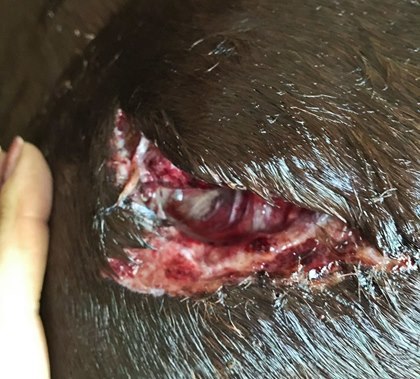
Sometimes it’s obvious a horse has been kicked because, like D’Agostino, you saw the altercation, or there is hoofprint on the horse’s skin. A laceration, open wound, or a hematoma or other swelling is also a sign a horse might have been kicked, says Whitaker.
“Local swelling from the fluids that collect in the area where the horse is kicked is very common,” says Whitaker. “I once saw a horse with a hematoma the size of a basketball.”
Davis says in many cases acute lameness is the only presenting clinical sign. Horse owners might think their horses have a foot abscess because they are limping. But if a horse has a nondisplaced fracture from the impact (when a bone cracks but remains in proper alignment), he will be visibly distressed. Rather than shifting weight off a leg as happens with an abscess, the horse will be sweating and hobbling, he explains.
“Most commonly, the customer does not know the horse was kicked but (it) comes in from turnout acutely lame, quite lame,” he says. “Unfortunately, on a thorough exam, a veterinarian can’t find the source of lameness either.”
In early 2024 Davis saw a gelding with a challenging diagnosis. The horse’s owner described the horse as painful, especially when direct pressure was applied to the inside of the horse’s radius—the large bone located above the knee (or carpal) joint.
Davis says the bone appeared normal on radiographs (X rays): “On the vet side, the troubling part about kicks is that a fracture line can take seven to 10 days or, in some cases, up to 14 days to show up.”
Ultimately, this horse was diagnosed with a nondisplaced radial fracture. In these cases Davis usually prescribes two months of stall rest or until the fracture is much less visible on radiographs. Then he adds hand- walking, and he rechecks radiographs every 30 days. Most horses return to regular work and turnout at four to six months.
“If you don’t confine a horse with an incomplete fracture, it becomes a complete fracture, and then you have a dead horse,” Davis says. “In my first year of practice, I saw a horse with a kick injury to the hind leg. The horse was quite lame, but we couldn’t see anything on radiographs until the last week of the horse’s six-week stall rest.”
The owner walked the horse into the aisle to allow for stall cleaning and, when the horse turned, the tibia shattered into multiple pieces. The horse had to be euthanized, and Davis says this is a good example of why he recommends following up with serial radiographs to monitor healing.
Horses kick body parts besides legs, though, of course. They kick shoulders and heads, too. Whitaker has seen hematomas develop on the shoulder and stifle most commonly and cases where a kick damages the radial or suprascapular nerve over the shoulder area.
Radial nerve damage results in the horse’s inability to extend the forelimb and resist gravity, leading to the inability to bear weight.
“When the suprascapular nerve gets damaged and the muscles atrophy (waste) over the scapula, that is shoulder sweeney. Once inflammation goes down, the nerves can recover over time, but they look pretty serious when they happen, and the atrophy can be permanent.”
Kick injuries to the head can result in skull or depression fractures. Typically, horses sustaining these injuries bleed from the nose, eyes, or ears.
“Even though you may or may not see it happen, these are easier to diagnose,” says Davis. “Management of these fractures is highly variable.”
While kick injuries tend to happen during turnout, they can also occur in the horse show pen. And it’s not always because a rider failed to heed a red ribbon in another horse’s tail. Occasionally, a horse simply kicks another while working on the rail.
“A horse came out of nowhere and kicked the horse I was showing in the head,” D’Agostino says. “The horse was fine where it got kicked but ended up cutting his leg when trying to jump away from the other horse and developed cellulitis.”
Fortunately, managers of larger shows have a veterinarian on the grounds, so it’s possible to have the horse examined quickly. When a practitioner isn’t on the premises—either at a show or home—D’Agostino emphasizes the importance of calling one.
“Anytime there is an injury like a kick, it is important to call the veterinarian to make sure they are aware that the patient in their care has been injured,” D’Agostino says. “Together, you can decide if they need to come to the farm.”
How Will My Veterinarian Treat a Kick Injury?
Treatment depends on the severity and location of the horse’s injury. In best-case scenarios, a kick is like a punch in the arm for people. It’s sore and bruised, but a few days of conservative care, including cold hosing and anti-inflammatories, can take care of the situation.
When a horse develops a hematoma, it tends to be on the chest and hindquarters. The body typically resorbs minor hematomas on its own, but veterinarians might open larger ones to drain. Both Whitaker and Davis say they wait seven to 10 days before opening a hematoma so that any internal bleeding has a chance to stop. The horse gets a tetanus shot, regardless of whether he is up to date on vaccines, to avoid tetanus toxoid infection and receives a course of antibiotics.
“I like to use draining as a last resort because once the skin is open, it increases the risk of infection and secondary problems,” Davis says, noting that most hematomas resolve with conservative management, including cold hosing, poultice, and exercise, if the horse is comfortable enough to move.
Not all cases are that simple. Unfortunately, some kicks fracture bones—most often in the limbs. Veterinarians prescribe extended stall rest depending on the severity of the fracture.
Whitaker says he’s seen fracture cases where a piece of bone separates—called sequestration—and dies. “In those cases, I have to go in and remove fragments,” he says. “Those horses are out of work for a while, but they can come back to their previous performance level.”
As for a mare in D’Agostino’s barn that sustained the fracture from another horse’s kick, after four months of stall rest and a careful rehabilitation program, starting in hand and gradually increasing to under saddle work, the mare is back in full use and competing over fences.
“The mare resolved her injury pretty quickly considering it was a limb fracture,” he says. “The combination of the timing and utilizing our veterinarian’s recommendations helped us get this mare to full recovery, and I am absolutely certain it saved her from a career-ending injury.”
When the kick involves a scapula, the initial goal is to get the inflammation down as quickly as possible to help the suprascapular nerve recover, says Whitaker. This typically involves a combination of steroidal and non-steroidal anti-inflammatory drugs (NSAIDs), cold therapy, and topical anti-inflammatories such as diclofenac cream.
“Vitamin E is useful systemically for nerve repair,” he says. He also uses laser therapy. “Nerve damage can be permanent, but these horses often return to function if the damage is not too severe.”
In cases where there is head trauma from a kick, Davis recommends feeding the horse in a stall with grain, hay, and water at chest level to reduce the time the head is down. The theory is like what you do after rolling your ankle—reduce swelling with elevation.
“Cold packs on the head can also help control swelling and bleeding,” he says. “If the fracture enters the sinus, we put some of these horses on broad-spectrum antibiotics.”
Oftentimes, when there is a skull fracture or depression fracture, some bone fragments detach from the skull and die. Those sequestra must be surgically removed.
“Removing the fractures is a surgical procedure under a standing sedation that is not terribly involved as long as the fragments are localized,” Davis says. “I have also had cases where we took the fragments out, cleaned the fragments, and placed them back in the skull like a puzzle and closed the flap. The face is very forgiving because of the large blood supply.”
When treating pain Davis likes alternating between acetaminophen and an NSAID such as Bute or flunixin meglumine (Banamine) based on results of two studies. The first appears in the 2016 AAEP proceedings, which includes “Acetaminophen/Paracetamol Efficacy in a Reversible Model of Equine Foot Pain” by Jonathan Foreman, DVM, MS, Dipl. ACVIM, associate dean for academic and student affairs at University of Illinois College of Veterinary Medicine, in Urbana, and the second is “Pharmacokinetics of Tylenol in a Mechanically Induced Lameness Model” by Melissa Mercer, DVM, MS, PhD, Dipl. ACVIM-LA, an adjunct at the Virginia-Maryland College of Veterinary Medicine, in Blacksburg, which was published in the May 2023 Equine Veterinary Journal. Both found that alternating between acetaminophen and one of the two medications was as effective as administering Banamine alone.
“I use the two medications because it approaches pain from two different mechanisms,” Davis says. “If a horse is really painful, I’ll use an opioid, either subcutaneously or intramuscularly, for a day or two until the profound pain is under control.”
In any situation where the horse’s routine is interrupted, especially when managing stress associated with being stall-bound, D’Agostino likes to use a product to manage horses’ stomach health; he puts them on omeprazole for at least a few days and adds a gastric support supplement “to help their stomach neutralize,” he says. “NSAIDs are great, but with long-term use, they are caustic on the horse’s stomach and other organs.”
How Can I Limit My Horse’s Risk of Being Kicked?
Unfortunately you can’t always predict horse behavior or change their inborn instincts. However, you can reduce the risk of them sustaining a kick injury with these tips.
Keep horses with hind shoes in separate pastures. The impact of metal striking any part of another horse’s body increases the injury severity. “A kick with rear shoes is more serious than when a horse is barefoot,” says Whitaker. “A bunch of horses turned out with rear shoes are more prone to getting more serious injuries than if they are not shod behind.”
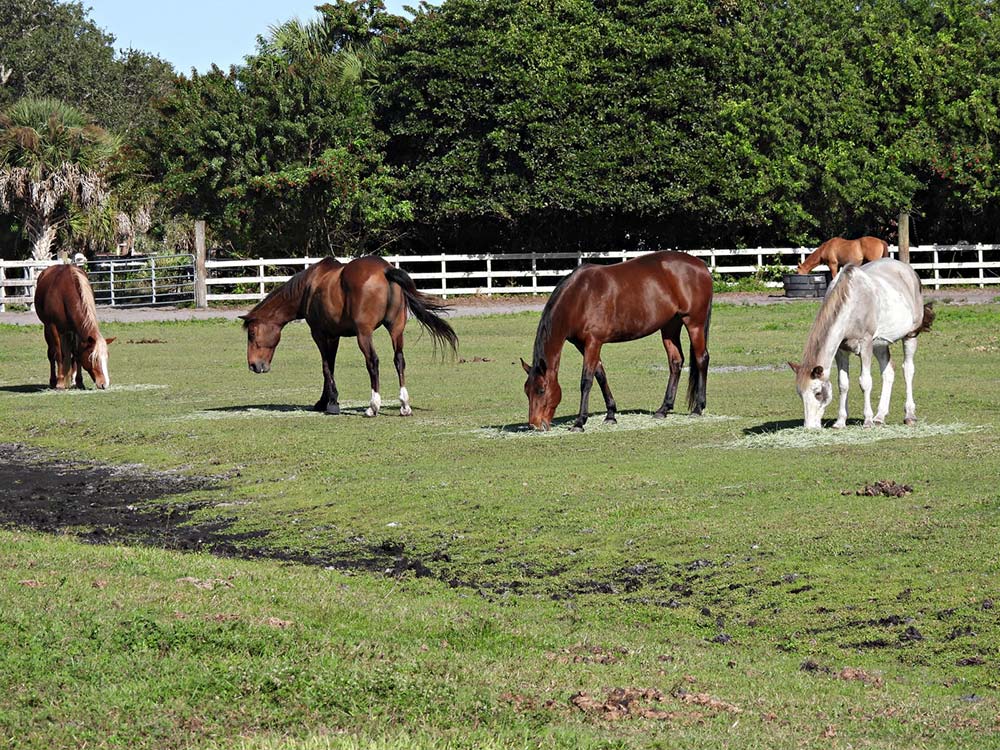
When feeding in group settings, spread out hay piles and feeders to allow horses enough space to limit fights over resources, says Whitaker. “A lot of kicks happen when horses are eating and get protective of their food, so I think much of that can be prevented by how you manage feeding,” he adds.
Know the horses on your property. To reduce the risk associated with kick-related injuries in stalled horses, be mindful of which horses get along or aggravate one another when selecting stall neighbors.
Introduce new horses to the herd slowly and in an area that provides enough space for them to escape.
Take-Home Message
Even with the best management, your horse might still experience a kick injury. Knowing how to respond can give your horse the best opportunity for a full recovery. “If you suspect your horse has been kicked, keep the horse inside and quiet until it can be seen by the veterinarian and have X rays taken,” Davis says. “If they have a nondisplaced fracture you want to do all you can to avoid a (complete) fracture. Nondisplaced fractures can be managed conservatively with stall rest, and the horse can recover without surgery. Ideally, this is the way to go.”