National Stud at Newmarket Quarantined for EHV- 1
The affected filly is receiving veterinary care and is expected to make a full recovery.


The affected filly is receiving veterinary care and is expected to make a full recovery.

While equine social learning might be possible in some situations, it doesn’t seem to work with spatial detour tasks.

While environmental factors, such as nutrition and training, shape sustainability, genetics influence it, as well.

Scientists studied the kinematics of both horse and rider to better understand exactly what goes on during collection.
The organization’s plan includes six studies focused on equine influenza, African horse sickness, and glanders.

Horses trained with ground work learned to recognize finger pointing faster than those trained with other methods.

This marks the first time such a connection has been made in any mammalian species.

Upward fixation of the patella resolved in 97% of horses undergoing a medial patellar ligament splitting procedure.

Heart rate variability gives a broader and possibly more accurate look at fetal well-being than heart rate alone.

Hyperflexion was more common in the 2008 World Cup than the 1992 Olympic Games in dressage classes, researchers found.

In many cases, a good shelter with adequate food is enough to keep horses warm during winter weather, researchers found.

It’s a question that can polarize equestrians. Here, one researcher shares what she’s learned on the topic.
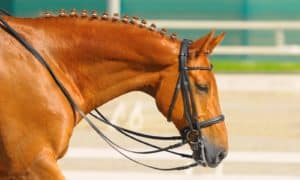
Top international equitation scientists offer tips to ensure you use your riding reins in a horse-friendly, ethical way.

As a result, one vet said efforts to prevent laminitis of common origins could reduce the disease’s impact more.

Bridles, reins, and martingales serve a variety of biomechanics functions. Here’s what you should know.
Researchers recently diagnosed the first homozygous case of Warmblood fragile foal syndrome (WFFS), a genetic disorder.