Stephanie L. Church, Editorial Director

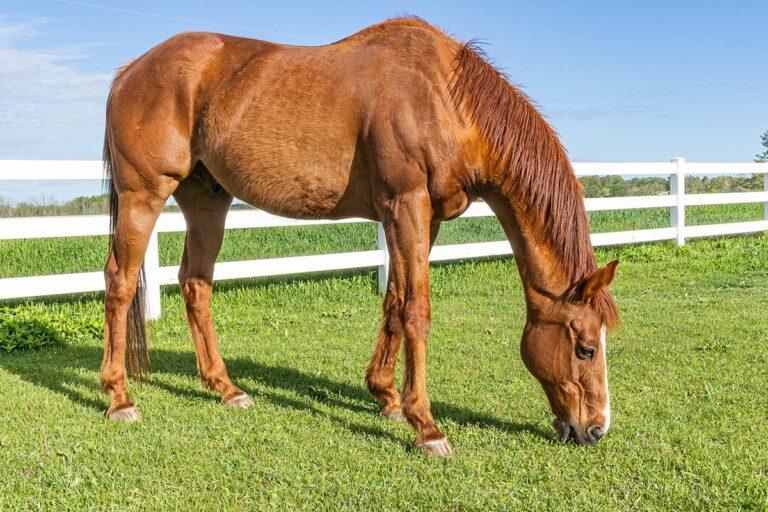
Stephanie L. Church, editorial director for The Horse and Stable Management, grew up riding and caring for her family’s horses in Central Virginia and received a B.A. in journalism and equestrian studies from Averett University. She joined The Horse in 1999 and has led the editorial team since 2010. A 4-H and Pony Club graduate, she enjoys dressage, eventing, and trail riding. Her heart horse, It Happened Again (“Happy,” pictured), a former graded-stakes-winning Thoroughbred gelding, was her longtime mount and remains a lasting inspiration. She now has an 8-year-old off-track Thoroughbred, Dune of Pilat (“Dune”), and is enjoying building a partnership with him. Stephanie is based in Lexington, Kentucky.

Articles by: Stephanie L. Church, Editorial Director

EIA Detected in Australia

On June 8, the Queensland, Australia, Department of Primary Industries and Fisheries (DPI&F) reported that equine infectious anemia (EIA) was confirmed on a central coast property. While the disease is detected frequently along western

Read More

New Colic Drug Available

Veterinarians in the United States have a new tool to use in their diagnosis and treatment of colic, which gives them an early, 30-minute window in which to decide whether or not the colic might require more intensive medical therapy or surgery.

Read More

Agricultural Guidelines for Horse Operations Published

Rutgers Cooperative Extension and the Rutgers Equine Science Center have published the eagerly awaited Agricultural Management Practices for Commercial Equine Operations.

Considered to be the first comprehensive set of guidelines in th”P>Rutgers Cooperative Extension and the Rutgers Equine Science Center have published the eagerly awaited Agricultural Management Practices f”>Rutgers Cooperative Extension and

Read More

New Topical Osteoarthritis Treatment Available

The FDA recently approved a new non-steroidal anti-inflammatory drug (NSAID) that can be applied to the skin over a horse’s joint to relieve pain of osteoarthritis. The approval represents the first topical equine pharmaceutical formulation

Read More

$1M Awarded in Equitrol Lawsuit; Farnam Plans Appeal

A jury awarded $1,007,500 to plaintiffs who alleged in a lawsuit that Farnam’s Equitrol, a feed-through fly control product, was defectively designed and caused harm to their sport horses. Farnam countered with a press release.

Read More

Rolex Three-Day Footing Sticky, But Safe

Multiple deluges did not prove dangerous for horses at the Rolex Kentucky Three-Day Event, held April 22-25 in Lexington. Many well-conditioned horses slogged through the mud on April 24 to meet–if not beat–their optimum cross country course times with few injuries. The April 25 jumping test was much wetter, but still safe. Fifty-five of 82 horses completed the competition.

This year

Read More

Ireland Officials Issue EVA Alert

Ireland’s Department of Agriculture and Rural Development (DARD) issued advice on April 5 to horse breeders because of concerns over the perceived risk increase for equine viral arteritis (EVA).

Tests on horses from two Irish studs have shown evidence of exposure to the disease, and the positive test results are believed to be linked to a previously reported outbreak of EVA at an Irish

Read More

Salmonella In Central Kentucky

On May 8, a Central Kentucky equine hospital sent out letters to area clients, farm managers, and veterinarians notifying them that an increased number of salmonella cases had been detected at the clinic this year, and explaining the methods

Read More

WNV Detected in Illinois Birds

Three dead birds in Illinois have tested positive for West Nile virus (WNV) since this year’s statewide mosquito-borne disease surveillance began on May 1. One crow was collected in Rantoul County and positive results were confirmed on May 21.

Read More

On-Watch for WNV in the United Kingdom

It was nearly five years ago when U.S. scientists were caught unaware by the deadly West Nile virus (WNV) and faced the puzzle of how that virus would adapt to a naïve population of birds and mammals in our various climates. United Kingdom

Read More

Vetalog Returns to Market

Beginning May 4, equine practitioners were able to order Fort Dodge Animal Health’s corticosteroid anti-inflammatory medication Vetalog (triamcinolone acetate) again, after all forms of the product had been unavailable for about two years. The

Read More

Arizona and Colorado Log Equine WNV Cases

The tally of states with 2004 U.S. West Nile virus (WNV) equine cases has risen to five with the addition of Arizona and Colorado to the group this week. Alabama, Florida, and Texas had already logged equine cases this year.

Arizona’s

Read More

New Vaccine Will Not Interfere With WNV Diagnostics

Scientists recently determined that vaccination with Merial Limited’s Recombitek equine West Nile virus (WNV) vaccine would not confuse results if a horse were to be tested for recent WNV exposure or clinical infection.

At the Western

Read More

EVA Uniform Methods and Rules Released

Today the USDA Animal and Plant Health Inspection Service (APHIS) announced the release of the United States’ Equine Viral Arteritis (EVA) Uniform Methods and Rules (UM&R), which were effective April 19 and will serve as a standard for handling EVA in breeding and other situations in this country. The United States is the only major horse-breeding country without a current EVA control

Read More

U.K. Horse Owners: Be Wary of WNV in Exported Horses

Horse owners in the United Kingdom (U.K.) are being reminded to protect horses they are exporting to the United States from West Nile virus (WNV). However, no WNV vaccine is available in the UK.

According to an article in the online

Read More

More From The Horse

electrolytes for horses; Why Do Electrolytes Encourage Horses to Drink?
spring pasture, turnout tips, horse turn out, horse in pasture, grazing, spring, spring turnout
Horses in their stable
What's New With Weaning?

Stay on top of the most recent Horse Health news with

FREE weekly newsletters from TheHorse.com

Sponsored Content

Weekly Poll

sponsored by:

How often do you apply fly spray to your horse during peak fly season?
176 votes · 176 answers

Readers’ Most Popular

The Horse
Privacy Overview

This website uses cookies so that we can provide you with the best user experience possible. Cookie information is stored in your browser and performs functions such as recognising you when you return to our website and helping our team to understand which sections of the website you find most interesting and useful.