Haylie Pfeffer, Digital Editor, holds a degree in equine studies with a concentration in communications and a minor in social media marketing. She is a Pennsylvania native and, as a horse owner herself, has a passion for helping owners provide the best care for their horses. When she is not writing or in the barn, she is spending time with her dog, Clementine.
Stephanie L. Church, Editorial Director
February 17, 2006
Four equine vaccines have been developed and approved for West Nile virus (WNV) in the past five years, one of which was the first DNA vaccine for any mammal. The pace of this progress is unheard of in industries that make vaccines for other
What is being done to ensure a level playing field for horses and horsemen? That was a key question discussed at the American Association of Equine Practitioners’ Racing Forum on Dec. 3 during the group’s annual convention in Seattle, Wash.
The main topics of concern at the American Association of Equine Practitioner’s convention Biologic and Therapeutic Agents Forum were veterinary compounding, judicious use of antibiotics, plasma products, and the ability to update current
About 75 people attended the Foot Lameness Table Topic during the AAEP Convention. It was moderated by Andy Parks, VMD, of the University of Georgia, and Tracy Turner, DVM, MS, Dipl. ACVS, a private practitioner in Minnesota. One of the first
At the 2005 AAEP Convention held Dec. 3-7 in Seattle, Wash., the founders of Days End Farm Horse Rescue received the Lavin Cup, which is the AAEP’s equine welfare award named for longtime racetrack practitioner Gary Lavin, VMD, of Kentucky.
This year’s table topic on alternative therapies discussed mostly acupuncture and chiropractic and how to best incorporate them into a veterinary practice for diagnosis and treatment. Facilitators Rhonda Rathgeber, DVM, PhD, of Hagyard Equine
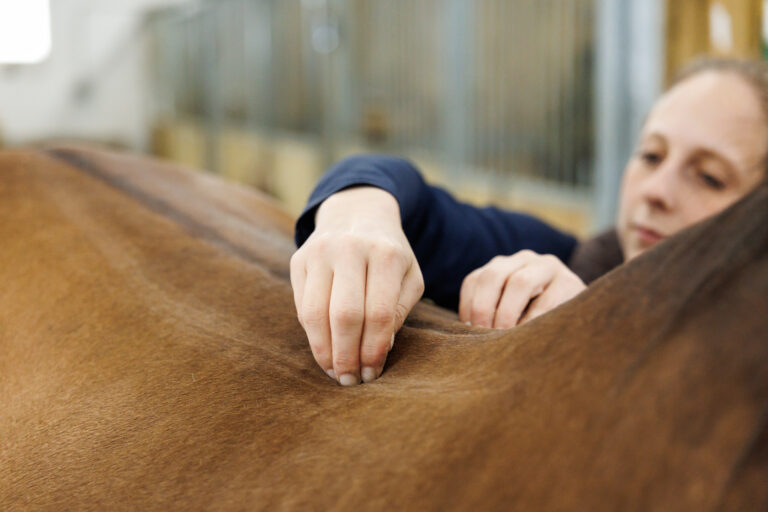
Kent Allen, DVM, of Virginia Equine Imaging, and Jerry Black, DVM, of Pioneer Equine in California, facilitated a table topic discussion of sore backs during the 2005 American Association of Equine Practitioner’s convention held Dec. 3-7 in
Steve O’Grady, BVSc, MRCVS, of Northern Virginia Equine, said a sheared heel is a “created situation” and a “poorly understood phenomenon.” He said the condition was first described by Bill Moyer, DVM, in 1975. “The diagnosis and treatment is th
Using fly larvae to debride wounds is an age-old medicinal treatment that is finding new uses in modern medicine. Scott E. Morrison, DVM, of Rood and Riddle Equine Hospital in Lexington, Ky., spoke on using sterile maggot debridement therapy for foot
“A plain old float just isn’t good enough anymore,” explained Mary DeLorey, DVM, owner of Northwest Equine Dentistry in Washington, during the 51st Annual AAEP Convention, in Seattle, Wash., Dec. 3-7, 2005. A demand for more comprehensive dental
What is an unwanted horse? An unwanted horse is a horse within the domestic equine population that is deemed by its owner to no longer be useful or needed, said Nat Messer, DVM, Dipl. ABVP, during the Horseman’s Day session at the 51st annual
The first sight of blood can prompt a frantic call to the veterinarian, but a second examination of the wound with a cool head might prove it to be less of an emergency. To help horse owners distinguish between emergencies and a wound that
What causes laminitis? Is it the same as founder? Should I remove shoes from a horse with acute laminitis? Should I soak his feet? Does laminitis always have devastating consequences?