N.M. Horse Processing Plant Wins Permit
A meat plant in New Mexico has received a federal permit to begin processing horses.


A meat plant in New Mexico has received a federal permit to begin processing horses.

Miniature Horses might be small, but their health needs are just as sizable as their full-sized counterparts.
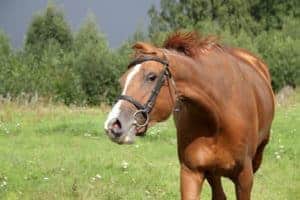
Researchers found a feed supplement designed to combat headshaking provided little relief to affected horses.
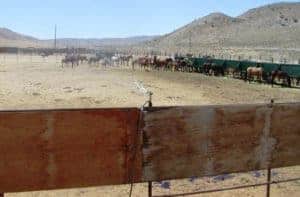
The BLM’s Palomino Valley Wild Horse and Burro Center installed sprinklers to reduce heat levels in corrals.

Horses are equine athletes that must be properly conditioned to perform.
The National Forest System lacks the resources and staff to keep up with growing recreation demands.

Osteochondrosis is the central topic of a special issue of the Veterinary Journal.

Horse owners are encouraged to get their animals tested for equine infectious anemia (EIA).
The BLM is seeking comment on the environmental assessment for the Humboldt herd area wild horse gather plan.
Ohio horsemen will pay more to offset the cost of equine drug testing under a resolution adopted June 27.
Ellis Park recently removed an inordinate amount of rock from its dirt surface to improve the track’s safety.
The new “Code of Practice for the Care and Handling of Equines” was released on June 27.
The legislation could have a positive effect on horse racing and the horse industry.
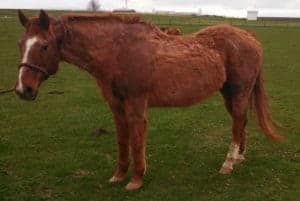
One researcher describes the differences between two common equine endocrine disorders: EMS and PPID.
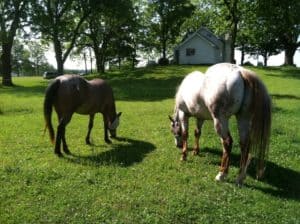
What makes a palomino golden or pintos splotched as if covered in paint? In this UK Lecture presentation, Dr. Kathy Graves shares the basics of equine coat color genetics and how base colors, dilute genes, and certain coat patterns are inherited.
Eighteen members of the UK Ag Equine Programs attended the annual Equine Science Society Symposium.