How to support better outcomes for overweight horses
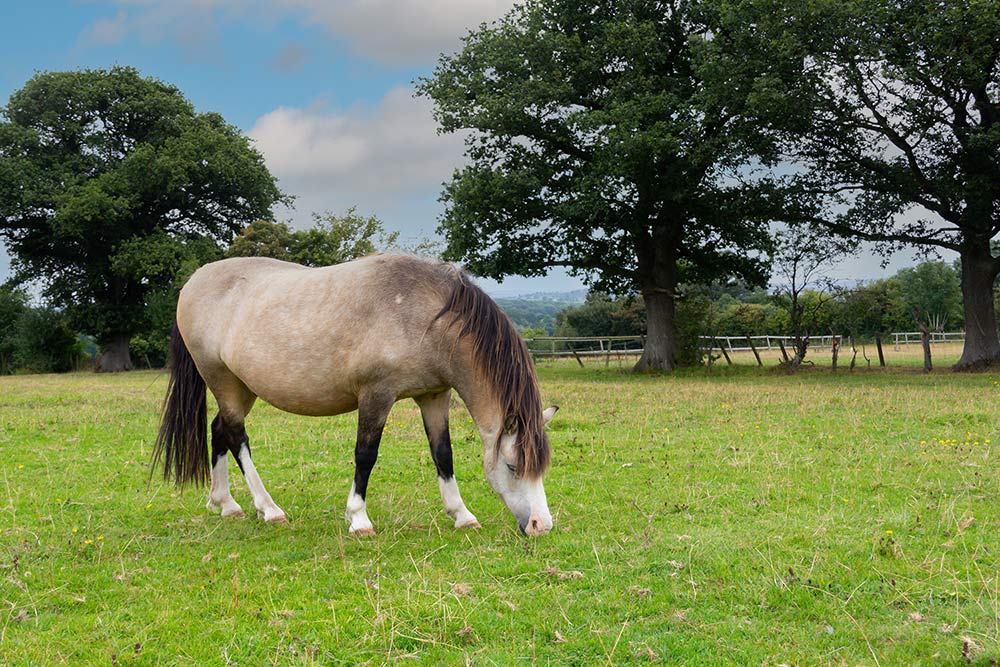
The term easy keeper can be misleading because these horses can be extremely challenging to manage. Easy keeper describes a horse that readily maintains his body weight without supplemental calories beyond forage. Without careful oversight these horses end up overweight or even obese.
“Equine obesity has become such a prevalent issue that I currently spend a great deal of time helping horse owners find natural, healthy, and appropriate feeding practices for their overweight horses—and it’s not just as simple as feeding them less, although that is often part of the equation,” notes Rachel Mottet, PhD, equine nutritionist and owner of Legacy Equine Nutrition, an independent equine nutrition consulting business based in Ocala, Florida.
Obesity causes significant health issues, and its increasing prevalence demands attention. “It is estimated that in the United States approximately half of the horse population is overweight or obese,” explains Alex Rankovic, PhD, research associate in companion animal and equine nutrition at the University of Guelph, in Ontario, Canada.
“I’ve seen figures reported by North Carolina State University estimating that around 50% of horses are overweight and, of that number, 15-30% are considered obese,” adds Mottet.
Obesity raises animals’ risk of developing adverse health conditions and can shorten lifespan. “For horses specifically, obesity increases their risk of debilitating endocrine and metabolic disorders, as well as painful orthopedic conditions such as laminitis and osteoarthritis,” says Rankovic. “Obesity can also negatively affect a horse’s reproductive performance, their ability to thermoregulate, and their overall exercise tolerance, further compromising health and well-being.”
Figuring out how to manage easy keepers and prevent weight gain—or help them lose weight safely—can be daunting. In this article we’ll break down some must-know tips and tricks for navigating the difficulties of managing an easy keeper.
Overweight Horse Care Challenges
Again, easy keepers might not actually be easy to keep. Overweight or obese horses often need changes in both diet and exercise to return to a healthy condition. However, individual feeding practices and forage restriction pose complications because horses are herd animals that have evolved to trickle feed.
Numerous risk factors contribute to equine obesity, but genetics and breed play a critical role. Horses’ unique metabolic qualities and genetic tendencies can lead to different body condition outcomes in a herd on the same diet.
“Ponies, cobs, and draft horses are more prone to gain weight due to their thrifty nature,” notes Rankovic. “Age, dominance within the herd, and workload also influence a horse’s risk of becoming obese. For example, younger growing horses are less likely to become overweight.” A herd typically includes horses of different breeds, ages, and workloads, which can make providing optimal care a struggle. Strategies must support a healthy body condition without compromising horses’ social nature.
Another common issue with managing overweight horses is not recognizing the problem in the first place. “Many horse owners may not accurately assess their (horses’) body condition due to misconceptions or lack of education,” says Rankovic. “Misguided beliefs about ideal body weight, influences by personal perceptions, trainer recommendations, or competition standards can lead to overfeeding and inadequate weight management.”
Lastly, while free-choice forage generally benefits horses, easy keepers or those not in regular work can gain excessive weight on unrestricted access to high-quality forage. Balancing natural grazing and herd living with the need to prevent weight gain in easy keepers can be difficult, but a variety of tools and tactics can help horse owners manage them more effectively.
Successful practical management of the easy keeper rests on three pillars: feed, forage, and exercise.
Feed or Concentrate
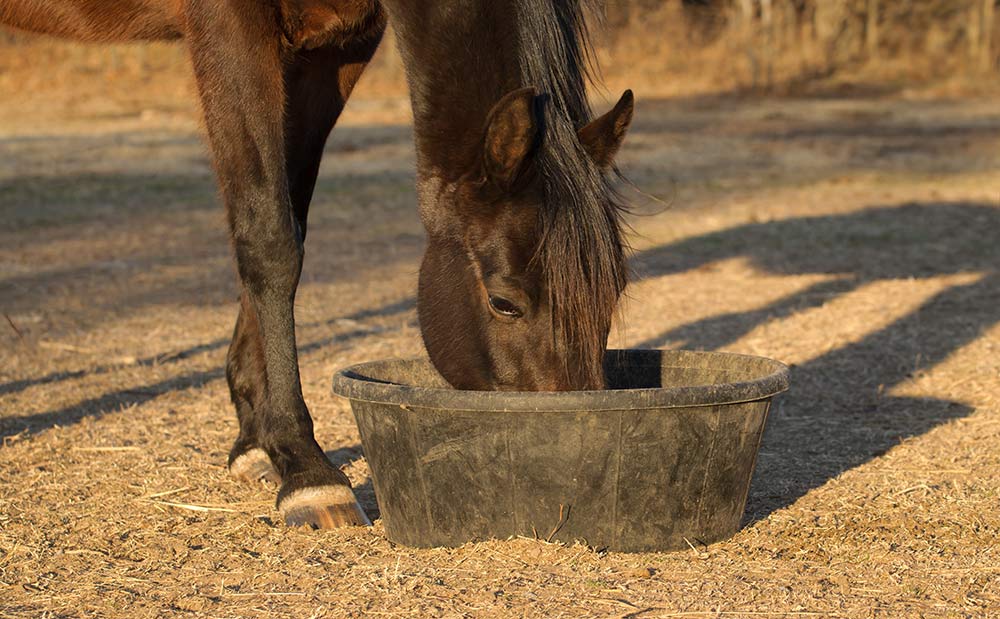
When you evaluate calorie intake, consider everything the horse consumes daily. “Assessing dietary intake requires understanding the type, quality, and quantity of all feed the horse is receiving, including concentrates, forages, supplements, and treats,” notes Rankovic. “For accuracy, feed should be weighed rather than measured by volume.” A kitchen scale works well for this task.
You can eliminate calorie-dense concentrates, supplemental oils, and treats from the diet to reduce your horse’s calorie intake. However, even easy keepers need supplemental vitamins and minerals. These horses should transition from calorie-dense concentrates such as performance feeds to a ration balancer.
A ration balancer provides a concentrated source of vitamins, minerals, and protein without adding excess calories to the diet. “Even in obese horses, I never skip the ration balancer,” says Mottet. “Please do not cut this from their diet to help cut calories.”
To determine if a product is a ration balancer, refer to the recommended feeding rate on the product label. Ration balancers have lower feeding rates than other products, normally about 1-2 pounds daily for your average horse.
Forage Management
Horse owners might find it confusing when a horse becomes obese despite consuming only hay and a ration balancer. They imagine the picturesque scene of horses grazing rolling hills of lush pasture and want the same for their own horse. However, the quality of hay and pasture domestic horses consume typically far exceeds the quality of forage on which their ancestors thrived. Therefore, free-choice doesn’t work for all horses.
Forage Quality
When hay makes up most of what a horse consumes in a day, understanding its calorie—or digestible energy—content becomes essential, because weight management depends on calories consumed versus calories burned.
“Moderate-quality hay is my go-to in these cases,” notes Mottet. Replacing high-energy early maturity hay with later-maturity hay that provides fewer calories helps maximize forage intake for these horses. The only way to accurately determine the calorie content of hay is through a lab analysis. Contact your local feed store, agricultural outreach or extension specialist, or equine nutritionist to get more information on testing your hay.
It can often be done at minimal or no cost through county extension facilities. When weighing your horse’s hay ration, try using a luggage or fish scale.
Slowing Forage Intake
Even with easy keepers we want to maximize forage intake; however, as we established earlier in the article, the free-choice access to hay or pasture that works for many horses might cause obesity in easy keepers. “A common mistake is the belief that horses will self-regulate, and that overweight and obese horses should be fed free-choice forage,” says Mottet. “Horses do not have good self-regulation skills when it comes to intake. There is variability in how much individual horses will eat but, in general, if it’s available and palatable, unless they’re sick or unless it’s been sitting out for a long time, they’ll consume it over time.
“Their digestive tract is designed to continuously eat small meals, and there is no known signal that tells them their daily intake quota has been met, especially if there’s quality forage available,” she adds.
Limiting forage intake remains critical for calorie control with easy keepers, but you must keep in mind horses’ status as trickle feeders. Their gastrointestinal tract has not evolved for meal feeding; they must consume small amounts of fiber all the time. This often poses a dilemma because it’s impractical to feed your horse a small allowance of hay 12 times a day. Instead, we rely on slow feeders.
“Slow feeder systems are my go-to, so it takes the horse longer periods of time to eat less—again, mimicking the natural eating habit … with less intake overall,” says Mottet. Horse owners have a variety of slow feeder options, and no one option will suit all easy keepers. The hole or opening size and feeder or net type depends on your horse’s individual needs and the management at your facility.
As for easy keepers’ pasture intake, some horses left to their own devices eat more than 2% of their body weight in dry matter, often resulting in excess weight gain. But confining them to the barn or a small pen isn’t the solution; horses need ample space to move, be with herd mates, and forage on either hay or pasture.
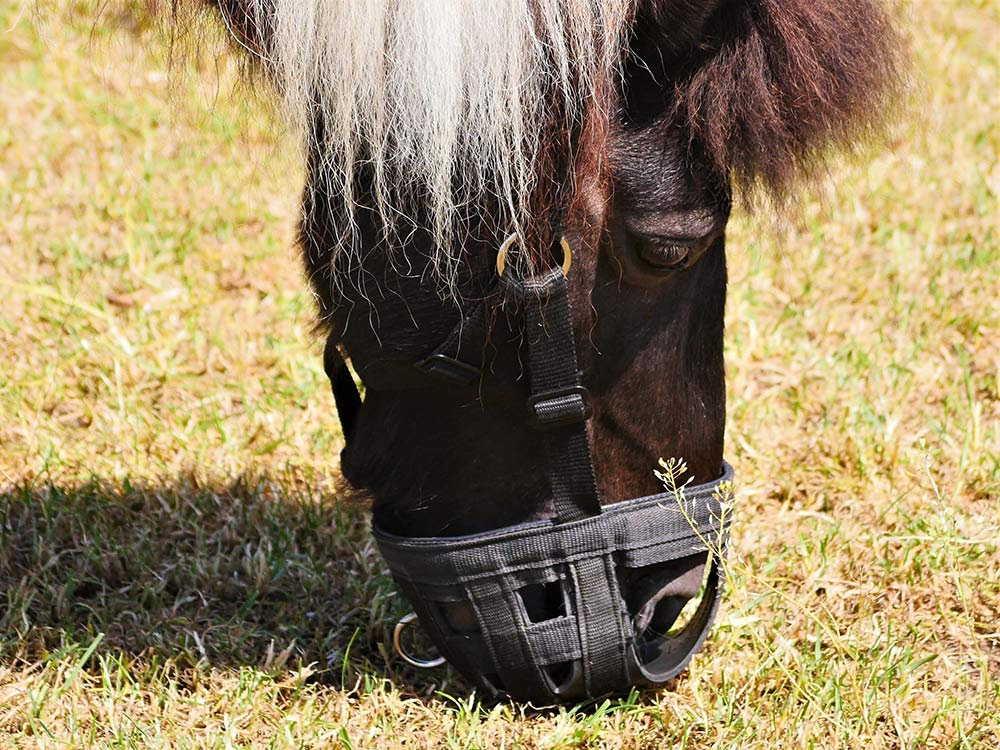
“Ideally, horses should still be turned out, but this should be done in a dry lot or with the horse wearing a grazing muzzle if on pasture,” says Rankovic. “If using a grazing muzzle, it should be kept on 100% of the time the horse is on pasture, and it is important that the horse can still drink with their muzzle on.”
Indeed, slowing easy keepers’ forage intake with a slow feeder or grazing muzzle still allows for trickle feeding behaviors. Additionally, nutritionists again recommend later-maturity hay for these animals.
Exercise
Critically, these horses must exercise. Many easy keepers need more bouts of exercise weekly and of greater intensity. “Walking your horse to the mailbox and back does not count, but aiming for three to four-plus days per week of exercise that incorporates 20-30 minutes of moderate activity each ride can be a great thing for an overweight (sound) horse,” notes Mottet.
Confirming if your horse achieves 20-30 minutes of moderate activity during your sessions can be difficult. Active trotting or cantering for a total of 20-30 minutes during the ride would be considered moderate. Try using a ride-tracking app to ensure you achieve this guideline.
Take-Home Message
Obesity compromises horses’ health and quality of life. Extra weight puts a strain their bodies, limits their movement, and shortens their lives. Focus on balancing these horses’ diets, controlling their calories, and increasing their regular exercise to help them stay healthy and active. This will then promote their well-being and longevity.