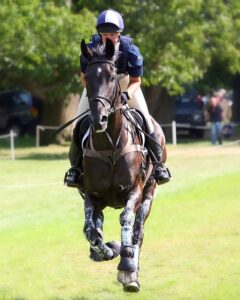
Learn about the subtle cues indicating horses like the work they do
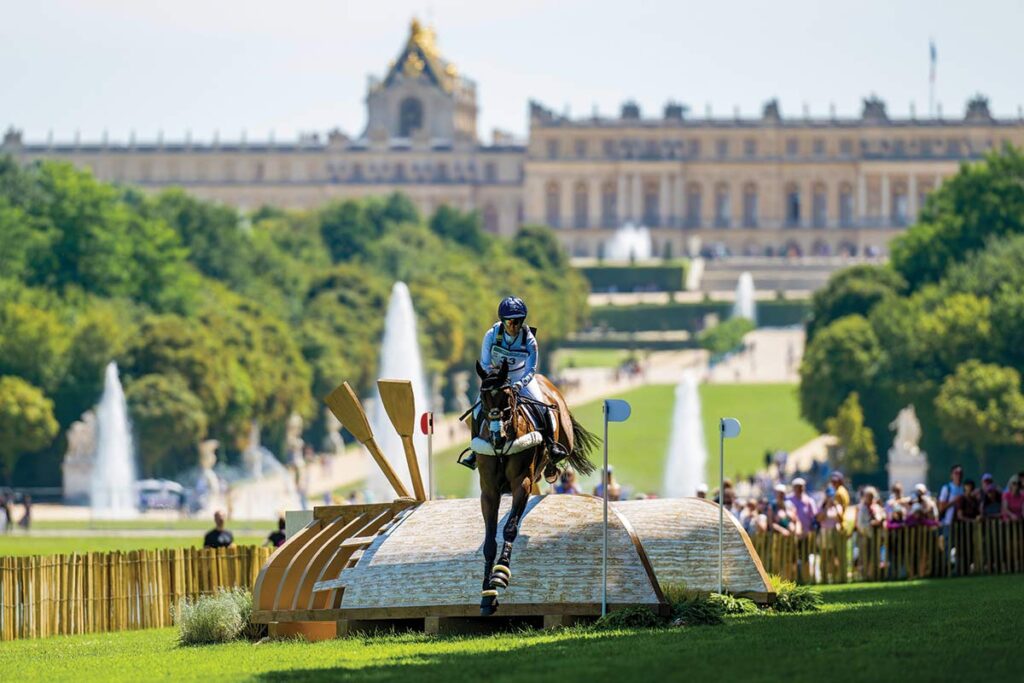
In late July 2024 amidst the backdrop of France’s prestigious Palace of Versailles gardens, the world’s top equine athletes surged, sweated, and soared.
After torrential rain drenched the eventing cross-country course to its roots, 62 Olympic steeds thundered across mud-beaten paths, trudged through foot-deep water complexes, and sailed—seemingly effortlessly, even eagerly—over 45 baroque jumps stretched across 3.2 miles of skill-stretching terrain.
To the thousands of spectators cheering from behind the safety ribbons, these horses showed every bit as much vigor, drive, and passion as their riders going for the gold. Surely these horses love their job, right?
Certainly, horses can enjoy their work, say equitation scientists, but the signs aren’t always clear or obvious.
Does Your Horse Enjoy His Work?
People often anthropomorphize about horses’ enthusiasm for their jobs and assume horses have the same motivation to succeed and work toward goals that they do, says Julie Fiedler, PhD candidate at the University of Melbourne, in Australia. “They tend to project a human work ethic onto their horses,” she says.
Therefore, recognizing the horse-specific signs of enjoyment during work matters, she says. Can you spot them?
1. He’s easy to catch, groom, and tack up.
If your horse comes right up to you to get haltered, he probably associates you and your work sessions with something attractive or pleasant, says Australian equitation-science-based trainer Andy Booth, who is based in Chamadelle, France. If you’re always chasing your horse in the fi eld while bribing him with a feed bucket, or if he’s turning his rear end to you when you approach the stall door, he’s most likely made an aversive or unpleasant association.
Hard-to-catch horses aren’t the problem; you are, says Booth. “Be less of a pain,” he says, quoting the late horse trainer Ray Hunt. “Then maybe your horse will start liking to spend time with you again.”
Horses that flinch, move away, pin their ears, or threaten during grooming and tacking might also have bad associations with working, says Orla Doherty, MVB, MSc, PhD, MRCVS, of the University of Limerick, in Ireland. They could be experiencing pain, such as from poorly fi tting tack or unresolved back issues.
2. She chooses to go to the arena.
Some riders, such as Karim Laghouag of France, 2024 Olympic team silver medalist in eventing, let their horses choose where to go during training rides, such as left for the jumping ring versus right for the forest. “He likes choosing left for the arena,” Laghouag says, referring to his mount Triton Fontaine. “He’s a powerful, energetic horse, so I think he really appreciates all that exercise.”
The horse’s choice might reflect a clear preference—a promising sign for welfare and job satisfaction, says Andrew McLean, PhD, BSc, Dipl. Ed., founder of the Australian Equine Behaviour Centre, in Victoria. But scientifically speaking, we still don’t know whether horses understand the consequences of choosing one direction versus another.
Horses might feel safer in an arena than outside one, says Marco Pagliai, a science-focused trainer in Tuscany, Italy. That’s especially true for horses used to stalls/small enclosures. “For us, the forest is beautiful,” he says. “For them, it can be frightening.”
3. He has calm facial expressions and body language.
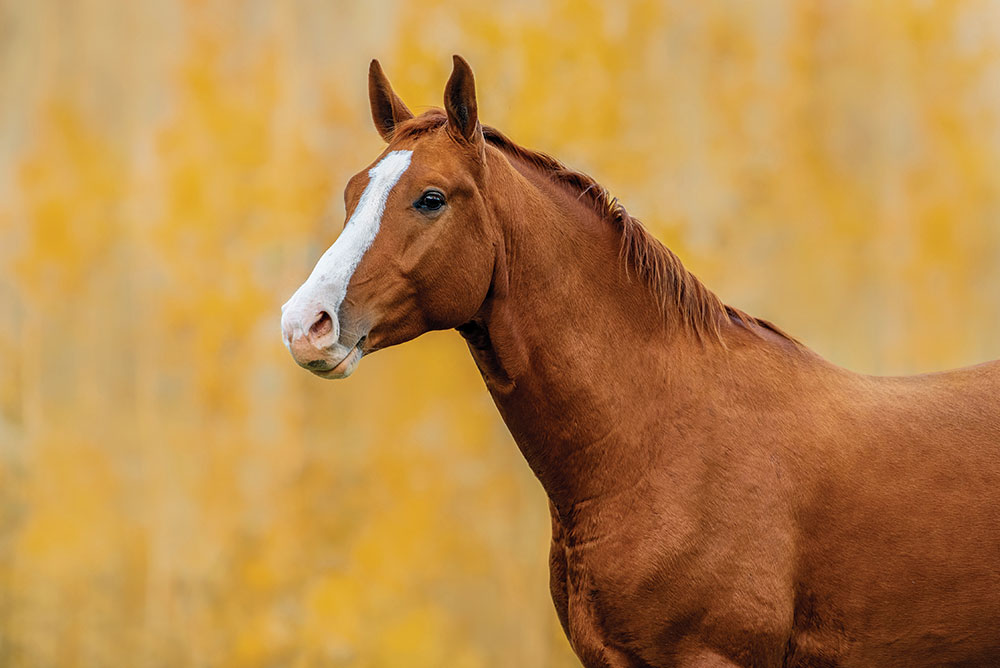
Scientists have made significant progress in interpreting horses’ facial expressions and body language, validating facial grimace scales and behavior ethograms that reflect how horses feel. For the moment they focus on pain or stress, both of which limit horses’ comfort during work. Horses with “worry wrinkles” and a swishing tail, for example, probably aren’t having a good time, McLean says.
Behavioral cues, including mouth restlessness, tongue movements, or head tossing, might serve as early indicators of pain—especially when the trainer applies pressure near the bit or the horse wears a tight noseband, Doherty says.
We can’t just assume we know what relaxed horses look like—even if we think we do. Owners must learn to recognize evidence-based signs of negative emotions by studying the Ridden Horse Pain Ethogram, EquiFACS, and other ethograms and seeking guidance from qualified experts.
4. She’s curious and engaged.
For Pagliai the strongest sign a horse likes her job is when she shows genuine interest.
“They’ll come up to me with their eyes bright and make eye contact, with their ears forward, showing me that they’re curious about what’s going to happen next,” he says. “They tell us with their body language they’re actively wanting to get involved.”
5. He’s willing and cooperative.
Horses might appear willing when they respond calmly and easily to cues. But McLean questions whether true willingness exists; more likely, the horse has learned the expected response through conditioning.
“They’re not unwilling or willing,” he says. “They are what they are.”
Likewise, horses don’t cooperate or not cooperate, because this implies a humanlike intention to join forces, McLean adds.
Horses might have undergone so much habituation training that they become particularly unreactive, which has nothing to do with contentment, he adds. And if the horse has had abusive training, he might have reached the point of learned helplessness, in which he doesn’t bother reacting anymore.
Finally, tight equipment such as restrictive nosebands can block horses from expressing natural behaviors, creating a misleading image of comfort or willingness, adds Doherty. “If you take off the noseband, you might see a different story,” she says.
6. She just loves to jump.
A horse that jumps confidently, calmly, and without hesitation might genuinely feel good about it—especially if she’s been trained ethically, says McLean. “She jumps straight away without showing fearful signs (including wide-open eyes, flared nostrils, and a high head) every single time,” he says. “She sees the jump ahead of her and is happy to jump it.”
Still, such apparent enthusiasm might actually be quite the opposite, says Pagliai. Horses might rush at jumps not out of joy but to escape discomfort or fear. “Many people interpret this behavior as excitement,” he says. “But the reality is their horses might charge the jump just to get it over with.”
7. He makes a soft blow-snort noise.
Behaviors such as pinned ears or tail swishing signal discomfort or stress. A soft snort, however, offers a sign of positive emotion (TheHorse.com/159377), says Mathilde Stomp, PhD, equine ethologist at Bureau Bankiva, in Burgundy, France.
Not to be confused with the short, sharp snorts horses make when tense or startled, soft-blow snorts suggest relaxation, comfort, and likely enjoyment, Stomp says. In her more recent research she and colleagues found horses make these sounds especially when working on loose reins.
Although the soft snort suggests something positive, it doesn’t guarantee the horse enjoys his job, she adds. It simply indicates he finds that moment pleasant.
When we assume horses like their jobs—and get it wrong—this can lead to compromised welfare, Fiedler says. So even if you’re feeling confident your horses are happy, “it’s still okay to invite a qualified equine behaviorist into the stable for a review.”
Assessing Job Satisfaction
Horses reveal emotions through behavior and physiological parameters, McLean says. Heart rate, heart rate variability, and infrared eye temperature can indicate bonding and emotional arousal, adds Paolo Baragli, DVM, PhD, of the University of Pisa, in Italy.
Taking measurements on moving horses can be difficult so Baragli recommends collecting data just before and after work. That’s a good time to check for pessimism and optimism using cognitive bias tests, too.
For the full picture people should combine these results with horses’ body language and facial expressions, he says. And with rapidly developing artificial intelligence (AI) tools, we’ll soon be able to detect and analyze these signs in real time.
Improving Horses’ Job Satisfaction
Ensuring a horse enjoys his job starts with matching him to the work physically and mentally, Pagliai says. Breed and bloodlines can help but offer no guarantee.
Watch a horse for signs he fits the intended discipline and level—putting aside your own expectations—and adjust accordingly. “Maybe it’s the wrong discipline for him,” he says. “Or maybe he just needs more time.”
Horses should work in an evidence-based fitness program to build strength, endurance, balance, and agility. Mentally, they benefit from training built on equine learning theory. McLean says trainers should respect the 10 First Principles of Horse Training.
Ethical training can help horses enjoy responding correctly to cues, causing a dopamine spike—a feel-good hormone surge in the brain, he says.
Giving horses agency—the right to choose which game to play, when to change games, and when to take a break—makes training more enjoyable, our sources agree.
Moving forward, breeders can select for curiosity and eagerness to learn, Pagliai says.
The Bigger Picture: Do Horses Actually Have Jobs?
The very question of whether horses like their jobs merits a more welfare-centered focus, say McLean and Pagliai.
Wanting horses to feel happy in their work reflects good intentions, but the concept itself “puts us into a really false narrative,” McLean says.
“It sounds like a duty the horse has to us, as if he has some sort of responsibility,” he says. “But a horse doesn’t owe us anything. It’s a tremendous privilege to have a horse.”
Pagliai agrees. While domestic horses trained and managed using evidence-based principles might benefit from better feed and care than in the wild, he says that doesn’t entitle us to something in return.
“It’s our job and our responsibility to get to know everything about a horse’s ethology and cognition, and meet his needs, and train him well so that he enjoys that time with us,” says McLean.
That might seem challenging given “their nature is actually to be energy-savers,” Pagliai adds. But through ethical practices training and riding can enrich their lives.
“There’s practically no end to the amount of stimuli horses could learn to respond to,” McLean says. “So, a life with more interactions is better than one with few interactions. As long as what we’re asking is biologically and biomechanically possible … I think these horses can be really happy with their work.”
Take-Home Message
Good equine welfare goes beyond preventing pain and discomfort—it also means creating conditions where horses can feel safe, confident, and engaged in their work. At Versailles, Olympic horses displayed power, focus, and ease. Understanding what helps horses thrive—at any level—means learning to read the signs they show through movement, behavior, and body language.