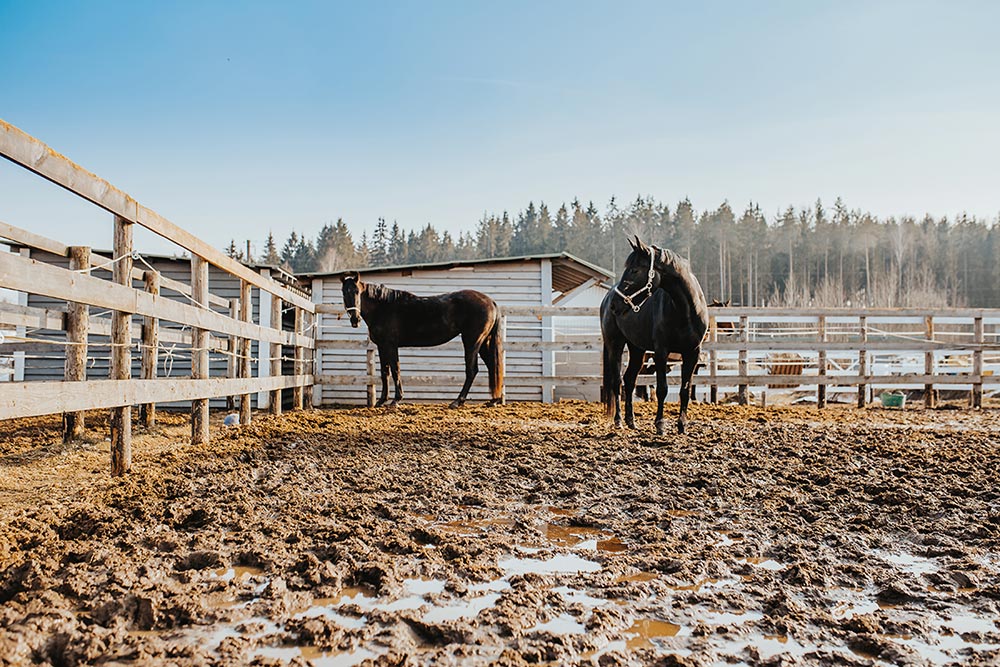
As temperatures drop and pastures turn soggy, many horse owners brace for the return of thrush in their horses’ feet. This bacterial infection can range from a mild nuisance to a painful cause of lameness, but with proper management it remains among the most preventable hoof problems.
“Thrush is caused by opportunistic organisms that are present just about everywhere,” says Steve Kraus, CJF, head of farrier services at Cornell University’s College of Veterinary Medicine, in Ithaca, New York. “It’s more likely that horses with poor conformation and uneven landing or loading problems are candidates to develop thrush.”
By understanding how environmental conditions, hoof structure, and daily management contribute to thrush, horse owners can take steps to prevent it.
Why Thrush Strikes in Fall and Winter
Fall and winter often bring what could be considered ideal conditions for thrush. “In some parts of the country, there is usually more moisture and less daylight (to help dry out that moisture), which may promote the conditions that thrush develops,” says Kraus. “However, I do not know if there is any clinical evidence for this.”
Thrush commonly occurs in wet or unsanitary environments caused by inadequate drainage or poor management techniques. Prolonged exposure to mud and manure breaks down the frog’s protective outer layer, allowing bacteria and fungi to invade the softer tissues beneath. The disease tends to develop in the central sulcus or collateral grooves of the frog, where moisture and debris can become trapped.
The bacteria involved in thrush are anaerobic—meaning they thrive without oxygen—so this trapped mud and tightly packed debris that block air circulation serve as an ideal environment for infection.
Recognizing the Early Warning Signs of Thrush
Most owners recognize thrush by its telltale black discharge and strong, unpleasant odor. But catching it before it reaches that stage is key.
Krause says he sees thrush more frequently in upright or club-footed horses, likely because their hooves land toe-first instead of heel-first, reducing the frog stimulation that keeps them healthy. Similarly, horses that toe in or toe out tend to land unevenly, which can cause small tears or separations in the frog where bacteria can enter and multiply, he explains.
“Toe-in or toe-out conformation causes one side of the hoof to land first,” Kraus explains. “That uneven loading tears the frog, which opens it up to the introduction of the microorganisms that cause thrush.”
Subtle signs such as small fissures, soft spots, or an abnormal frog texture should prompt closer inspection—and, ideally, a quick response before infection sets in.
Management Strategies for Thrush Prevention
Keeping horses’ environment dry and clean can dramatically reduce the risk of thrush, says Krause. He recommends a two-pronged approach: hoof care and environmental management.
- Daily hoof care Pick out your horse’s hooves at least once daily, more often in wet weather, to expose the frog to oxygen and prevent organic matter from becoming trapped. Check for soft spots, cracks, or foul odors. “If you see abnormal fissures or unusually soft frog tissue, regular treatment with an antibacterial product (such as a topical product containing iodine) is recommended,” Kraus adds.
- Routine farrier visits Have your horses trimmed properly every six to eight weeks to help maintain hoof balance and healthy frog contact with the ground. This promotes natural stimulation and circulation while reducing debris- and moisture-trapping cracks and crevices.
- Manure Removal Remove manure from your horses’ environment regularly, especially small dry lots or loafing areas where horses spend much of their time during wet months.
- Drainage and runoff control Regrade paddocks to prevent water pooling. Reinforce low-lying or high-traffic areas, such as around gates, with geotextile fabric or permeable materials such as gravel to minimize mud buildup. Barn roof water needs to be directed away from the (turnout) area” and barn entrances, says Krause. “If grass cannot be maintained in a paddock, topsoil needs removal and replacement with stone dust or similar material.”
- Stall Hygiene Keep stalls clean and dry; use absorbent materials and remove wet spots daily.
Even in wet climates strategic management can keep conditions under control. “If possible, eliminate the causes,” Kraus says. “Poor conformation creates chronic thrush which may never be resolved, but improving the environment goes a long way.”
When to Call the Vet or Farrier for Thrush in Horses
While mild cases of thrush often respond well to regular cleaning and topical treatment, more severe or painful cases need professional attention. “If a horse is lame from thrush, consult a veterinarian to find a good treatment,” Kraus says. Left untreated, infection can invade deeper tissues of the foot, potentially affecting the digital cushion, which helps diffuse force and protect structures in the heel, or sensitive laminae, which suspend the coffin bone inside the hoof capsule.
Your farrier can also help identify hoof balance issues or conformation faults that might predispose a horse to chronic thrush. In some cases addressing the mechanical causes—such as uneven landing or lack of frog contact—can prevent recurrence. Your farrier might choose to use pads or adjust the balance of your horse’s hooves with shoes based on his individual needs.
Take-Home Message
Thrush occurs most often in fall and winter, but daily attention, clean and dry footing, and routine farrier care can help horse owners stave off the bacteria that cause this frustrating condition.
“Just being proactive makes all the difference,” says Kraus. “If you keep the frog healthy and the environment clean, you can prevent most thrush before it ever starts.”