This condition does not damage muscles but indicates tissue microdamage has occurred—and that’s not necessarily a bad thing
Most equestrians have experienced, at some point, the unmistakable aching and soreness that seeps into their muscles the day after getting back in the saddle for the first time in a long time, or following a particularly long, tough ride. Delayed-onset muscle soreness (DOMS) is a well-characterized phenomenon in human sports medicine yet remains relatively underexplored in the context of equine physiology.
Recognizing DOMS in horses matters because of its often-subtle presentation, and it could be misinterpreted as behavioral resistance, lameness, or other more serious conditions, such as rhabdomyolysis (tying up). So, what exactly causes DOMS, what does its occurrence tell us about our horses’ fitness levels, and how can we best manage it? We’ve turned to experts in the field and emerging research for answers.
Defining DOMS in the Horse
Researchers describe DOMS in horses as muscular discomfort and stiff ness that generally emerges 24 to 72 hours after undergoing unusual exercise to which the body isn’t accustomed1. “DOMS typically occurs in muscles used more intensely or for a longer duration than normal, and this increased activity results in some muscle (micro) damage,” explains Michael Lindinger, PhD, editor-in-chief of the European Journal of Applied Physiology and president of the Nutraceutical Alliance, in Guelph, Ontario, Canada. “The amount and duration of soreness are generally proportional to the amount of muscle damage.”
In humans, scientists have established this soreness results from microscopic damage to muscle fibers, particularly following eccentric muscle contractions—movements in which muscles lengthen while load bearing2. “In horses, this type of movement happens in every gallop stride, which produces a mixture of eccentric and concentric muscle contractions,” says Catherine McGowan, BVSc, MANZCVSC, Dipl. ECEIM, CertVBM, PhD, FHEA, FRCVS, specialist and emeritus professor of equine internal medicine in the Department of Equine Clinical Science at the University of Liverpool, in England.
The current research suggests the muscle microtrauma seen in DOMS initiates a cascade of inflammatory responses that stimulate tissue repair and adaptation. More specifically, the mechanical stress of eccentric contractions results in microdamage to the sarcomeres—the contractile units of muscle fibers2,3. The subsequent inflammatory response results in soreness, stiffness, and a temporary reduction in strength or flexibility.
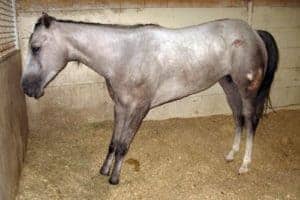
In equine athletes specifically, clinical signs of DOMS can include a shortened stride or reduced impulsion, resistance to forward movement, back or hindquarter soreness on palpation, and pain-associated behavioral changes. Lindinger covers the process in detail below.
Timeline and Sequence of Physiological Events in a Horse Experiencing DOMS
Michael Lindinger, PhD, editor-in-chief of the European Journal of Applied Physiology and president of the Nutraceutical Alliance, in Guelph, Ontario, Canada, describes how signs of DOMS appear in a horse:
- Excessive contraction intensity (force, speed) or duration of exercise—especially with downhill activities—can trigger muscle damage.
- An increase in reactive oxygen species (ROS) within muscles results in oxidative damage of lipids in muscle membranes, causing them to leak. There might also be contractile apparatus damage through disruptions in interactions between the muscle filament proteins actin and myosin.
- During the 24-48 hours after the unaccustomed activity, muscles continue to break down and leak, and an increase in pain-inducing metabolites (chemical compounds) occurs at pain-sensitive nerve endings. This increase in molecules in damaged muscles is what causes the pain.
- Dissipation of metabolites over a few days eventually results in the resolution of pain sensation.
- Muscle repair starts occurring within 48 hours of damage and could take up to three weeks to fully repair and recover. Avoid excessive physical activities during this period.
DOMS as a Fitness Benchmark
Beyond the aches and pains, what can post-exercise muscle soreness tell us about the health and fitness of our equine athletes? “DOMS itself does not cause tissue damage but, rather, is an indicator that tissue (micro) damage has already occurred,” Lindinger says. “Training programs for horses that have been sedentary need to keep in mind that increased activity may result in tissue damage and, therefore, DOMS
This story requires a subscription to The Horse magazine.
Current magazine subscribers can click here to and continue reading.
Subscribe now and gain unlimited access to premium content.
Subscribe NowWe at The Horse work to provide you with the latest and most reliable news and information on equine health, care, management, and welfare through our magazine and TheHorse.com. Our explanatory journalism provides an understandable resource on important and sometimes complex health issues. Your subscription will help The Horse continue to offer this vital resource to horse owners of all breeds, disciplines, and experience levels.